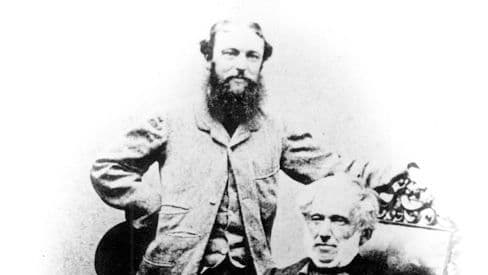
Thomas Jeckyll was a British architect and designer whose work helped shape the Aesthetic Movement and the development of Anglo-Japanese design in Britain. Born in Wymondham, Norfolk, he established an architectural practice in Norwich in 1854, initially specialising in Gothic Revival church restoration.
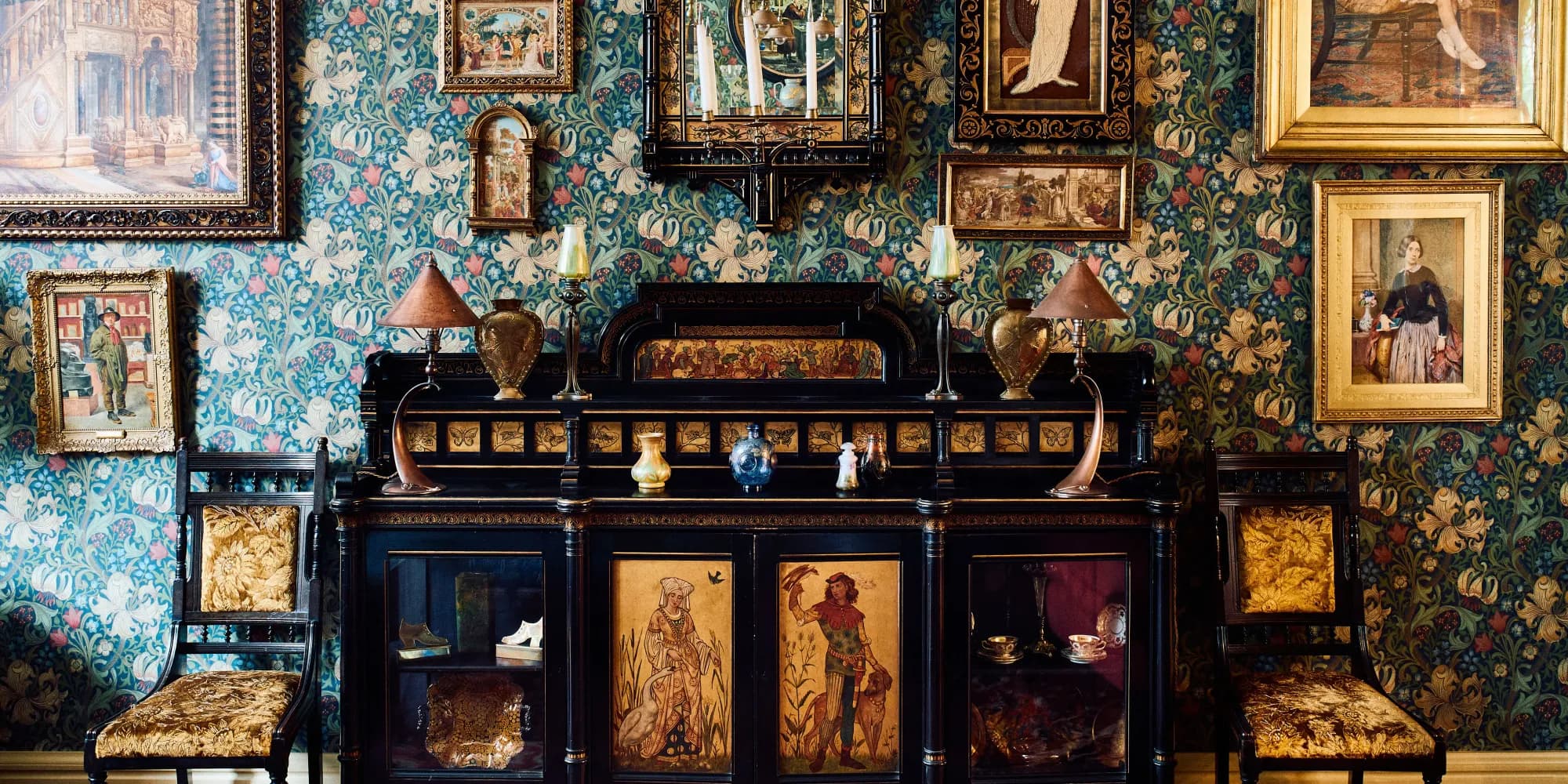
By the 1860s, Jeckyll had expanded into furniture, interiors and decorative metalwork, combining Japanese-inspired ornament with Gothic Revival, Queen Anne and English vernacular forms. His most important manufacturing partnership was with the Norwich firm Barnard, Bishop & Barnards. The elaborate “Norwich Gates” created for the 1862 International Exhibition established his national reputation and made him an influential figure in Britain’s wrought-iron revival.
Jeckyll also designed metalwork for Robbins & Co. of Dudley, a firm associated with his younger brother Henry Jeckell. Following a serious decline in his mental health, Jeckyll was admitted to an asylum in Norwich, where he died in 1881. Henry appears to have continued acting as an intermediary for his designs, which may explain objects bearing dates from the final years of Thomas’s life.
Jeckyll is now recognised particularly for his Anglo-Japanese furniture and metalwork, as well as his original scheme for the celebrated Peacock Room later completed by James McNeill Whistler.
Illustrated: Public domain, via Wikimedia Commons