Roy Lichtenstein was one of the defining figures of American Pop Art, transforming the visual language of comic books, advertising, and mass media into some of the most recognisable artworks of the twentieth century.
Born in New York City, Lichtenstein studied at Ohio State University before serving in the US Army during the Second World War. By the early 1960s he had developed the bold, graphic style that would come to define his career.
Drawing inspiration from commercial printing techniques, Lichtenstein became known for his use of Ben-Day dots, thick black outlines, and flattened blocks of colour. Works such as Whaam! (1963) and Drowning Girl (1963) elevated imagery borrowed from comic strips into monumental paintings that challenged traditional distinctions between “high” art and popular culture. Beneath their polished surfaces, his works often explored themes of consumerism, romance, conflict, and the manufactured nature of modern visual experience.
Throughout his career, Lichtenstein continually reinvented his practice, producing paintings, sculptures, prints, and large-scale public commissions. He also engaged directly with the history of art, reinterpreting works by artists including Picasso, Monet, and Mondrian through his unmistakable Pop aesthetic. His ability to merge irony, precision, and visual immediacy established him as one of the central voices of post-war American art.
Printmaking and Pop Art
Printmaking was a crucial extension of Lichtenstein’s practice, allowing him to further explore repetition, mechanical reproduction and graphic clarity. He worked primarily in screenprint, often translating his iconic painted imagery into carefully controlled printed editions. His printed works revisited themes from his paintings—comic strips, consumer objects and stylised portraits—while emphasising the flatness and precision of commercial printing techniques. These works reinforced his conceptual interest in mass production, with the print medium serving as both subject and method within his broader Pop Art philosophy.
Lichtenstein played a central role in redefining the relationship between fine art and popular culture, helping to establish Pop Art as one of the defining movements of the twentieth century. His exploration of mechanical reproduction and visual appropriation has had a lasting impact on contemporary art, particularly in relation to printmaking, advertising aesthetics and postmodern theory.
Today, Roy Lichtenstein’s work is held in major international collections including The Museum of Modern Art, New York; the Tate, London; and the Art Institute of Chicago. His imagery remains emblematic of Pop Art itself: bright, sharp, instantly familiar, and quietly subversive beneath the surface sheen.
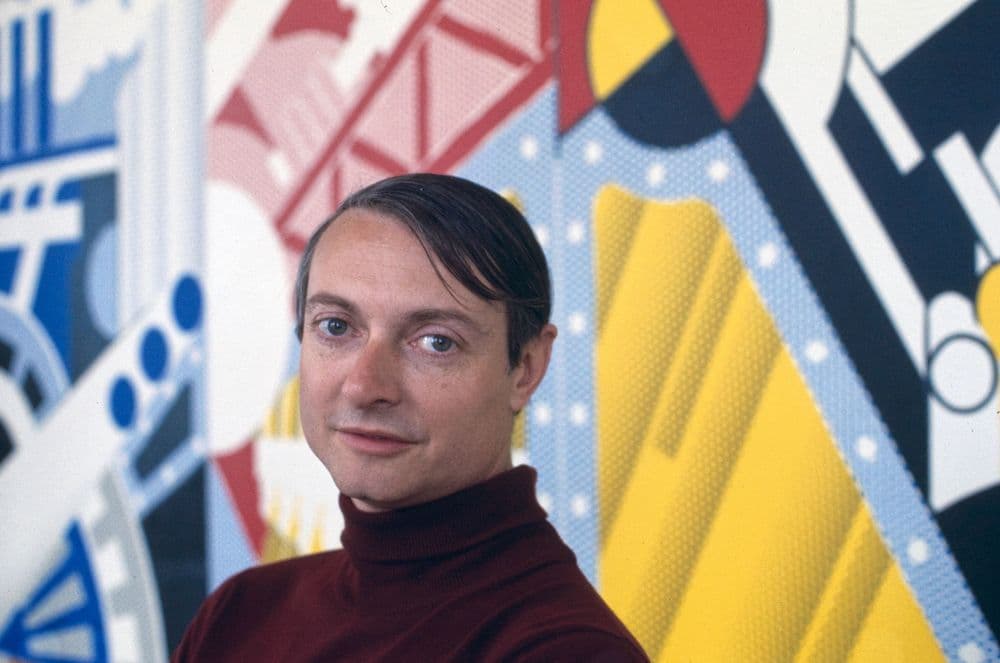
Illustrated: Gotfryd, Bernard, photographer, Public domain, via Wikimedia Commons