Early Life and Background
Christopher Bucklow was born in Flixton, Greater Manchester, UK in 1957 and grew up in England before embarking on a distinguished career as both artist and art historian. After completing a degree in art history in 1978, he worked for many years as a curator in the Prints and Drawings Department of the Victoria & Albert Museum in London, where he developed deep knowledge of historical photography and Romantic art, interests that would later inform his own artistic practice.
Artistic Practice and Methodology
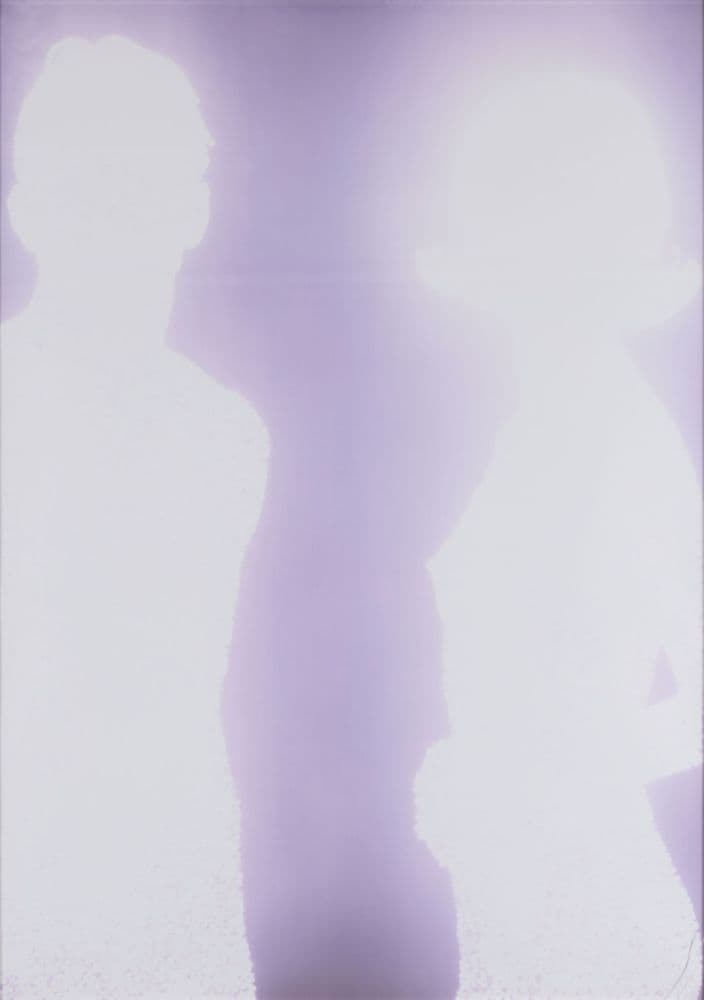
Bucklow’s work spans photography, painting, drawing, and conceptual inquiry, and he is best known for the ongoing photographic series Guests (1993–present), which uses an intricate pinhole-camera technique to create life-sized silhouettes composed of thousands of tiny solar exposures. These luminous, otherworldly images explore questions of identity, perception, memory, and the passage of time, marrying scientific curiosity with contemplative introspection.
Initially working in conceptual and sculptural modes in the late 1980s and early 1990s, Bucklow developed a unique approach to photography that positions him as one of the important figures in British pinhole and cameraless photographic practice. His Guests and related Tetrarch series bring together personal mythology, dream psychology, and technical innovation in a signature body of work that he has continued to explore for decades, often alongside improvisational paintings that similarly interrogate interior experience and symbolic form.
Influence and Legacy
Bucklow’s early-2000s practice, combining photography, digital imaging, and experimental processes, positioned him at the intersection of conceptual and photographic art in the UK. His works explored themes of perception, memory, and the transformation of natural and urban environments, reflecting contemporary interests in the relationship between image, technology, and consciousness. Exhibitions included solo shows at Victoria Miro Gallery, London, and group exhibitions at Tate Britain and the Saatchi Gallery. His work appeared in ArtReview, Frieze, and critical monographs on contemporary photography, situating him within ongoing debates on the medium’s evolving possibilities.