Sir Robin Philipson was a leading figure in twentieth-century Scottish painting, known for his bold, expressive style and his sustained exploration of recurring motifs. Over the course of his career, he returned to subjects that allowed for both formal experimentation and emotional intensity, developing a highly personal visual language.
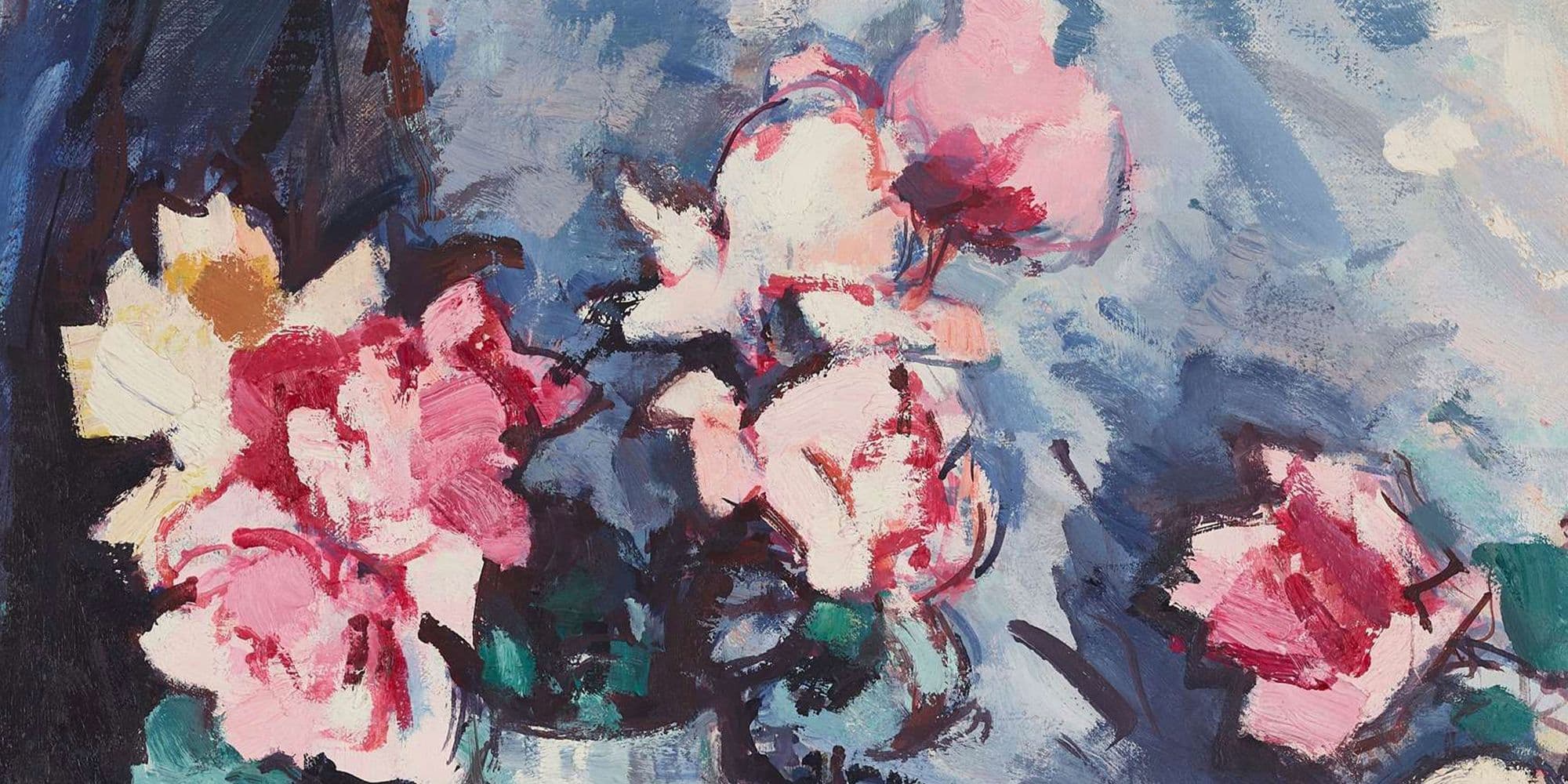
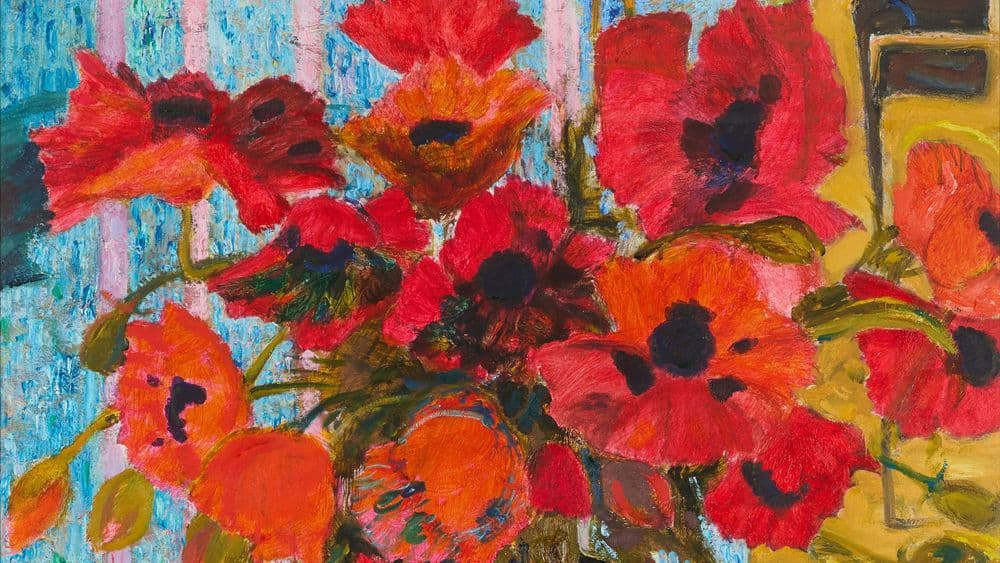
Among his most celebrated works are his poppy paintings, which became a defining focus in the later years of his life. Drawn to what he described as their “splendour” and the interplay of “cold and warm reds,” Philipson approached these compositions with a methodical yet painterly technique. Building forms through pale underlayers before applying successive glazes of translucent colour, he achieved surfaces of remarkable depth and luminosity. These large-scale works balance delicacy with power, transforming a simple floral subject into something monumental and immersive.
Earlier in his career, Philipson explored more visceral themes, notably in his cockfighting series. Inspired by experiences in India, these paintings are charged with movement and drama, often approaching abstraction in their depiction of clashing forms. Set against stark, simplified grounds, the compositions convey both violence and ritual, and brought him significant critical recognition.
Alongside his painting practice, Philipson had a distinguished academic career, serving as Head of the School of Drawing and Painting at Edinburgh College of Art. Following his retirement, he devoted himself fully to painting, producing some of his most iconic work.