Born Elise Müller in 1885, Elyse Ashe Lord’s early life is so poorly documented that her date of birth is widely incorrectly reproduced.
Growing anti-German sentiment caused her to anglicise her first name when she married Reverend Thomas Ashe Lord around 1908. Her artistic training was at Heatherley’s School of Art in Chelsea, one of the few British institutions that focused on portraiture, figurative painting, printmaking and illustration.
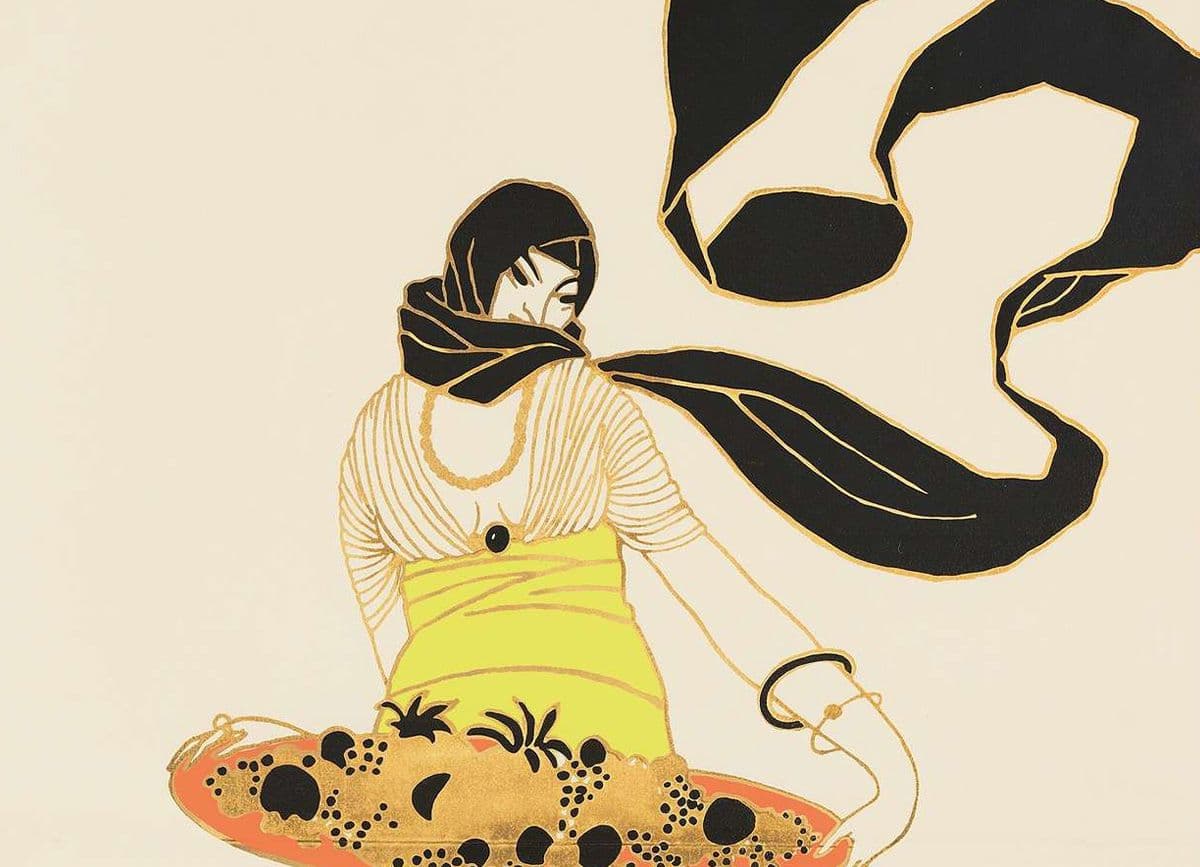
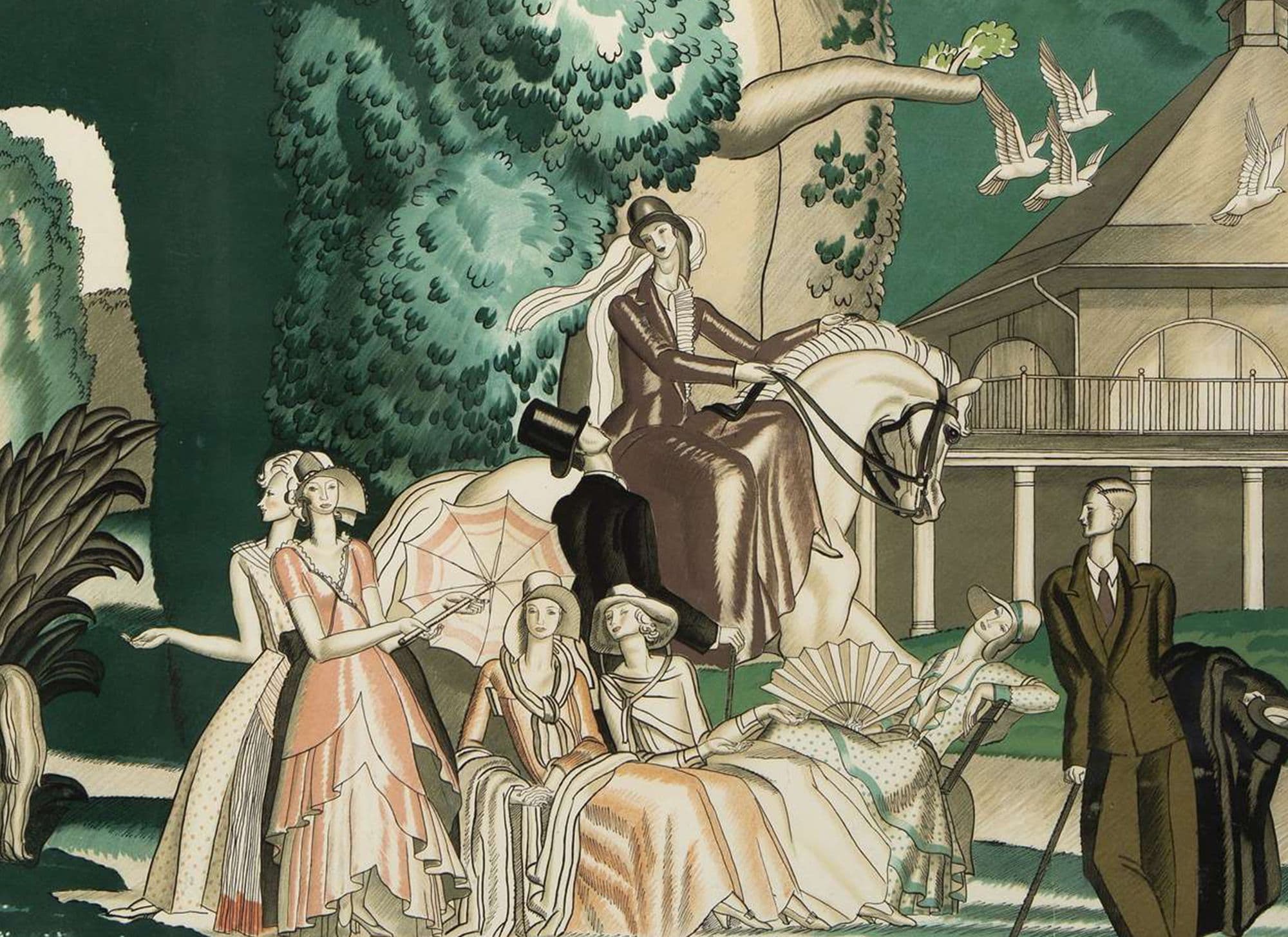
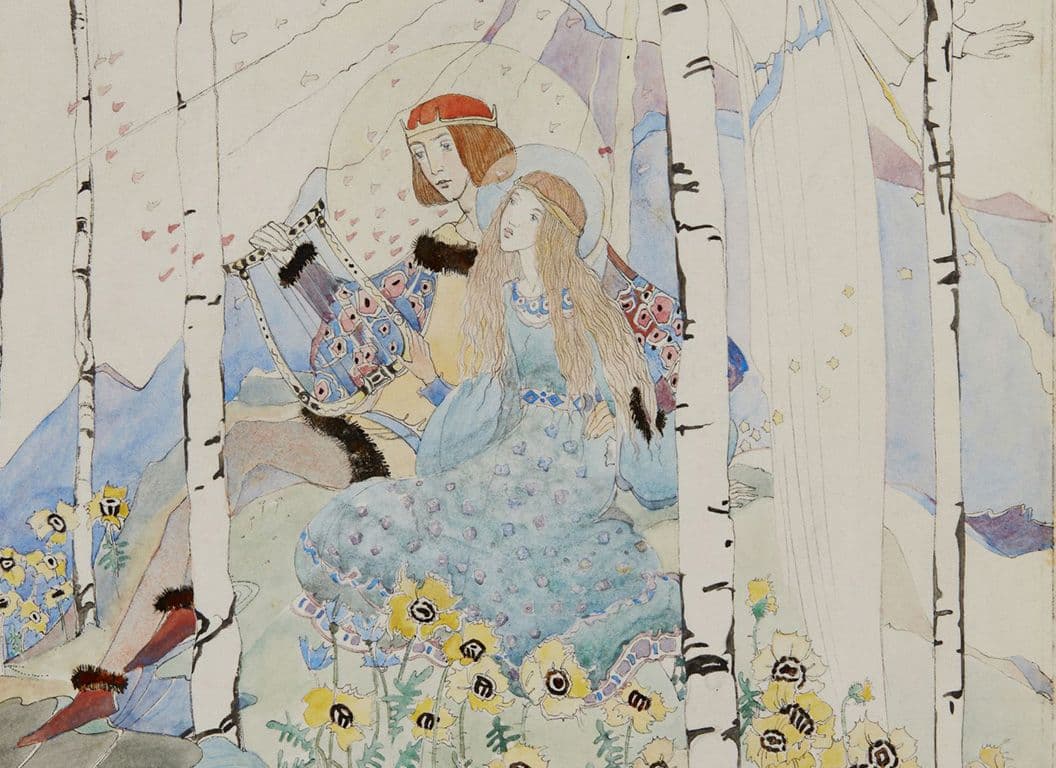
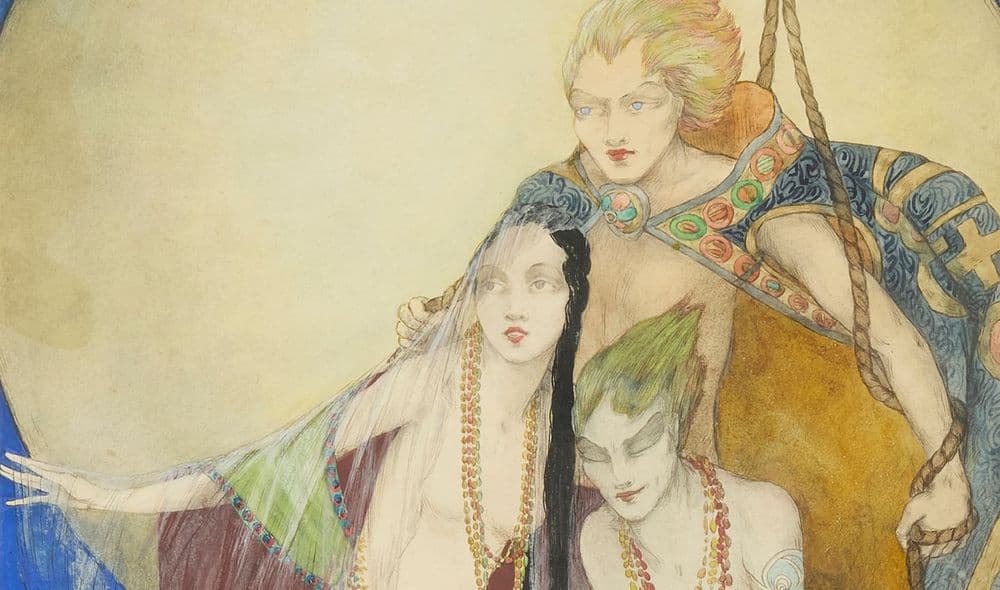
Until 1921 Lord focused on the medium of watercolour, yet it is for her coloured etchings that she is best known. Lord developed her technique, using drypoint etching for the line and combining it with woodblock printing, using the latter to build up layers of colour. Contemporary accounts praise Lord’s fastidious practice, always present to supervise ‘all of her own printing’ and keeping the first ten impressions for herself. Her estate thus contained progressions of the same print, illustrating the building up of colour, or multiples complete with pencil annotations suggesting edits.
Lord’s subject matter is largely Asian, despite her having never travelled to the region. The original source of her interest is unclear, but the 1914 British Museum exhibition of Chinese paintings has been proposed as a possible catalyst. Lord herself commented on the role of Arthur Waley’s translations of Chinese poetry in allowing her access to Eastern culture. The influence of ceramics, textiles and scrolls from Persia, India, Japan and other countries within the region also shine through in her designs. The Studio journalist Georg Bröchner congratulates Lord as having ‘through sheer artistic intuition…sensed…the spirit and visioned the peculiar beauty…of the Orient’, which whilst a Europe-centric perspective, demonstrates the high regard in which her work was held as imitative reception of Asian art.
Her first exhibition took place in 1919, but it was not until her Brook Street Gallery showing of seventy drawings in 1921 that her work was critically recognised. In the following year the Studio features Lord, describing her submissions to the Liverpool Autumn Exhibition as ‘charming small works’. A 1924 article in the same publication is devoted to Lord’s etchings, praising the quality of her work as ‘rich in true merit and great charm’. Her ascendancy within artistic circles continued throughout the 1920’s, as she was elected a member of the Royal Institute of Painters in Water Colours in 1922 and in 1927 the Lefevre Gallery held a large exhibition of 33 watercolours on silk and 54 prints.
She exhibited at the Paris Salon, at which she won a silver medal, and at the Chicago Society of Etchers, her renown now stretching far beyond Britain. In less than a decade Lord had graduated from a little-known artist to a figure with ‘a singularly ready appreciation on both sides of the Atlantic’.
Much like her early years, outside of her professional output, Lord leaves little paper trail in later life. Exhibition labels for the 1920’s and through the mid 1930’s place her at various addresses in northwest Kent. At some point, however, they relocated to Boars Hill near Oxford where, in 1943, her husband died. Lord survived him for another nearly thirty years and was reputedly a reclusive widow of considerable financial means. Whether she continued working after WWII is not known, her output was none the less prolific. Attributing a date and a title to an Elyse Ashe Lord etching is a challenge given the regular lack of both details, a situation confounded by the absence of a catalogue raisonné. Nonetheless Lord’s total output numbers at least 350 unique designs.
Following her death in 1971 Lord left her estate to her then publisher H. C. Dickens and it is likely that he added the pencil annotations ‘Print by Elyse Lord’ or similar. The current owner acquired the works offered here directly from Lord’s publisher.