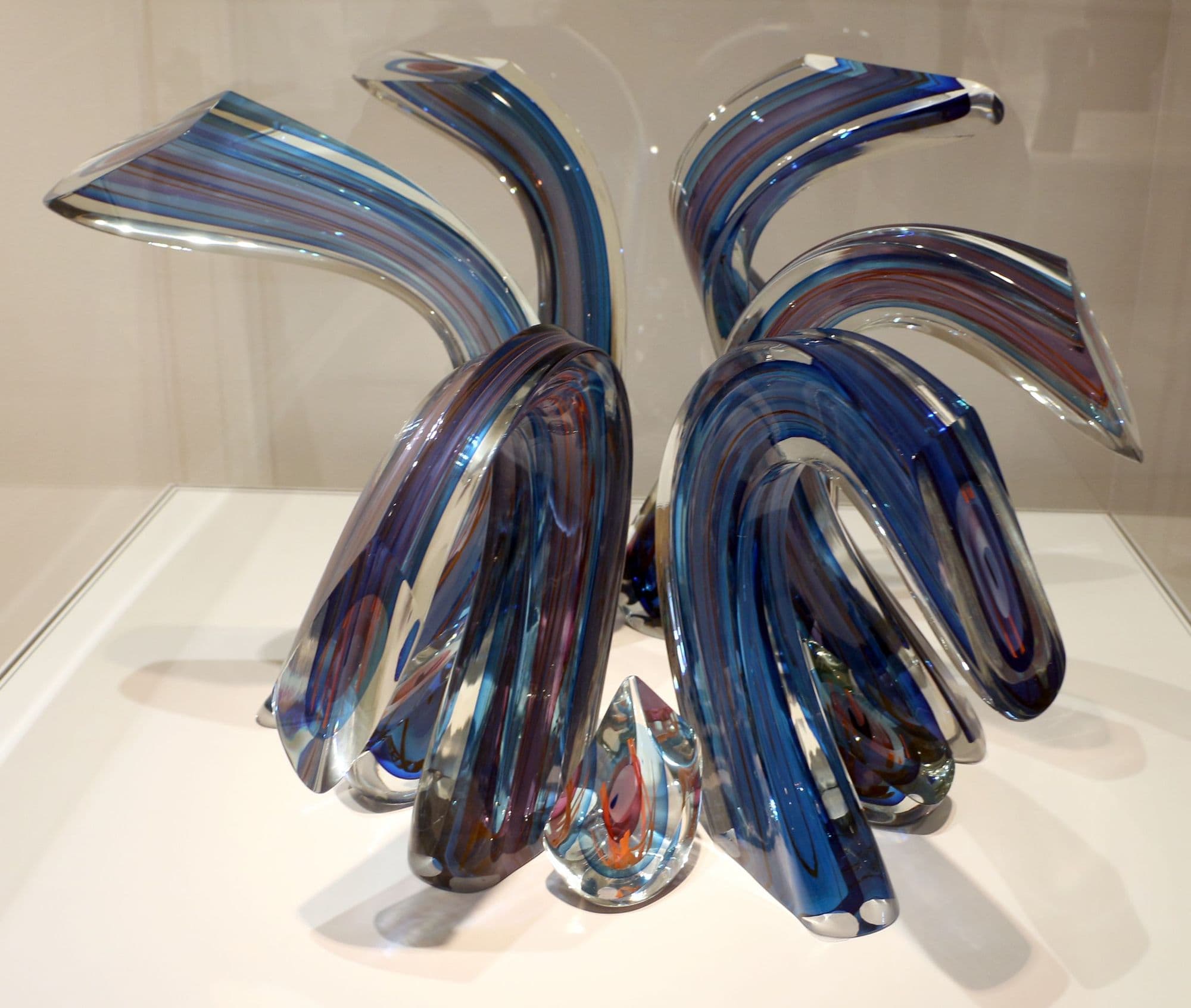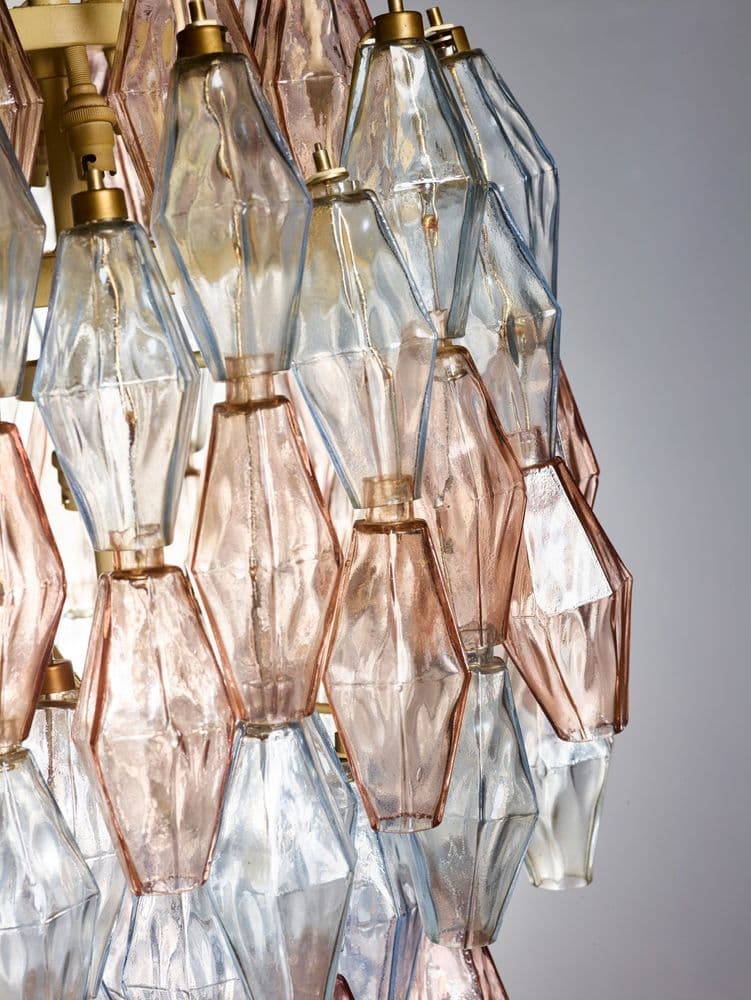
Carlo Scarpa was one of the most influential figures in 20th-century Italian glass design, playing a central role in shaping modern Murano while bridging traditional craftsmanship and architectural thinking. Best known as an architect, Scarpa’s work in glass was equally significant, redefining what Venetian glass could be in the modern era.
Scarpa worked closely with Venini from the mid-1930s through the 1940s, a period that marked a turning point for Murano glass. Rather than relying on historical revival, he introduced a rigorous, design-led approach rooted in structure, material and surface. His glass objects are characterised by clarity of form, restrained colour palettes and a deep understanding of technique often pushing traditional methods such as sommerso, battuto and murrine in new directions.
Unlike later studio glass artists, Scarpa did not work independently at the furnace. Instead, he collaborated intensively with master glassmakers, respecting Murano’s collective working culture while asserting a strong individual vision. This balance between designer and maker became a defining feature of modern Venetian glass production.
Scarpa’s influence extended far beyond Murano. His approach to glass mirrored his architectural practice: precise, tactile and deeply attentive to material. Surfaces were never decorative for their own sake; they were integral to the object’s meaning. This philosophy would later resonate with studio glass artists internationally, particularly those interested in form, restraint and process.