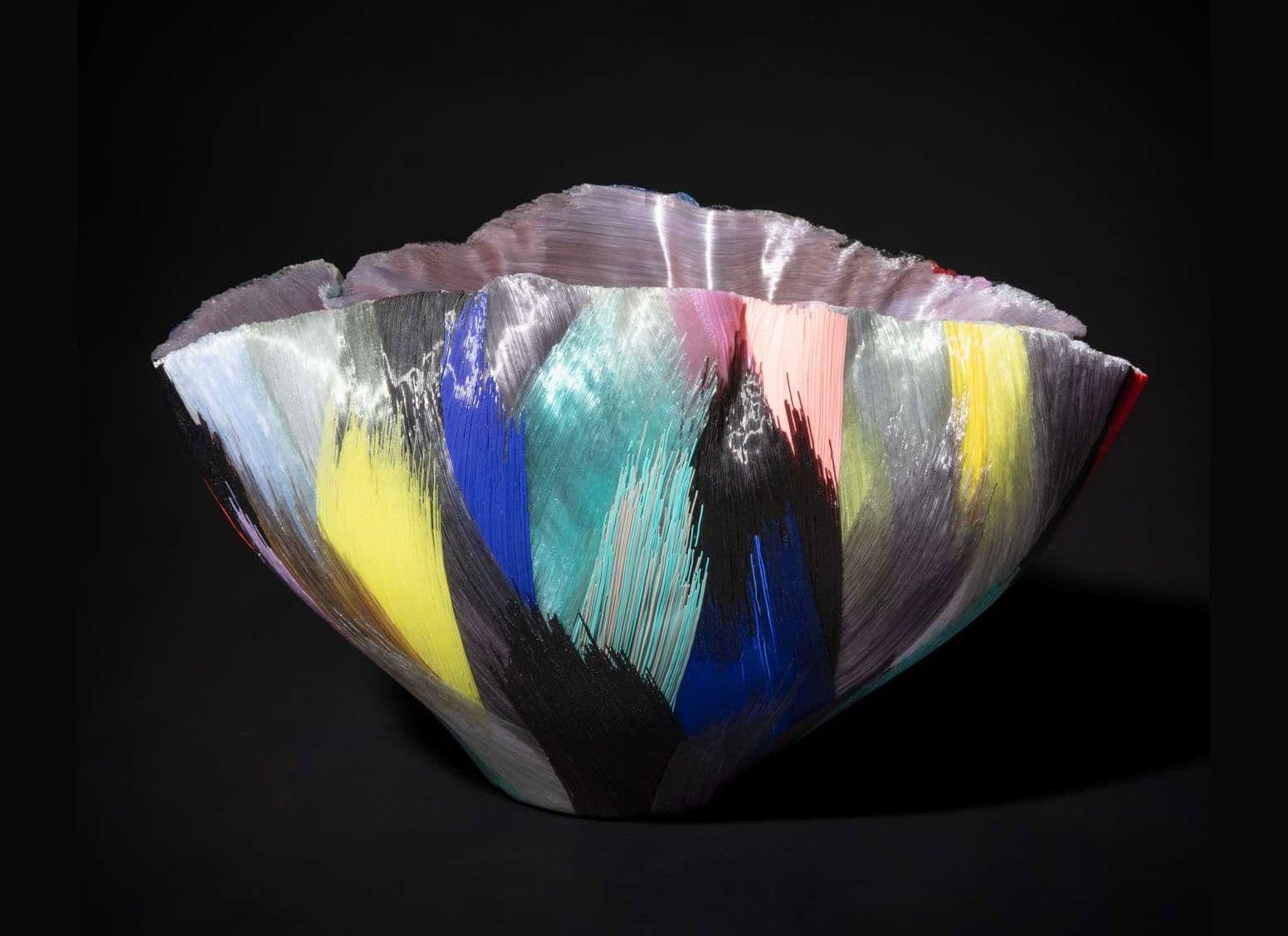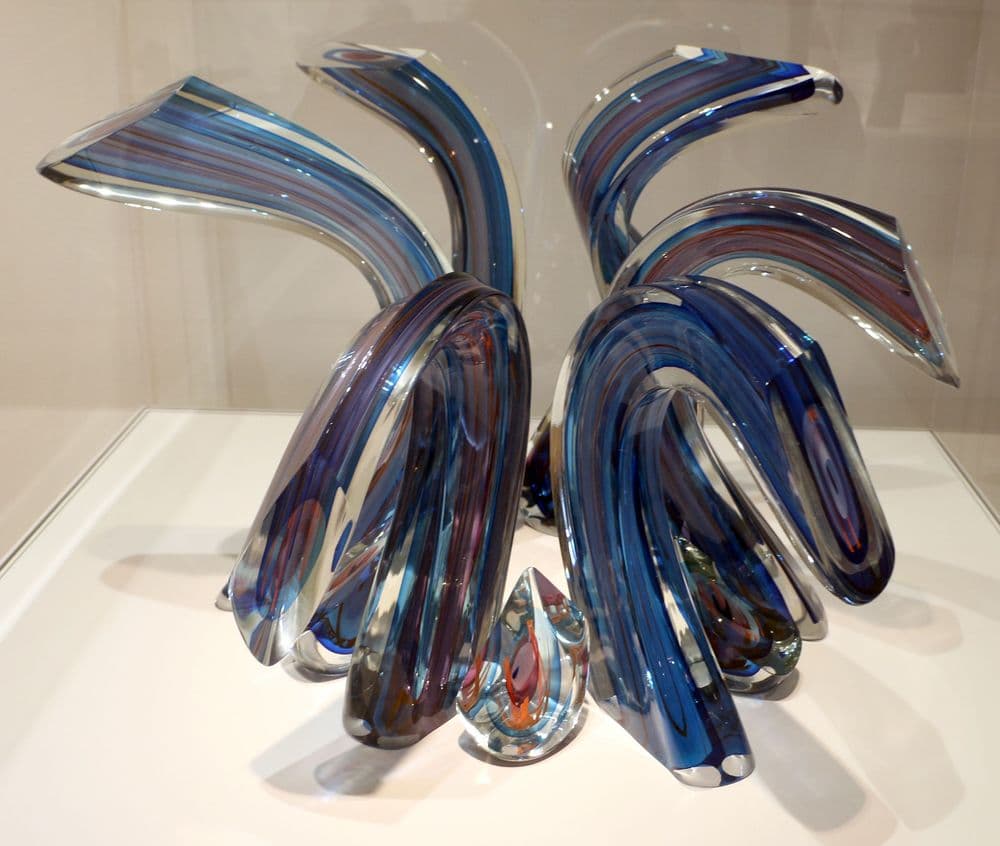
Harvey Littleton is widely recognised as the founder of the American Studio Glass movement and one of the most influential figures in 20th-century glassmaking. His contribution was not simply technical, but conceptual: Littleton changed how glass was understood, shifting it from an industrial material to a medium for individual artistic expression.
Trained initially as a ceramicist, Littleton came to glass through experimentation rather than tradition. In the early 1960s, he began exploring whether glass could be melted and worked in small studio furnaces, rather than large factory settings. This question led to a series of landmark workshops at the Toledo Museum of Art, which are now considered the starting point of the studio glass movement in the United States.
Littleton’s own work reflects this spirit of inquiry. His vessels are often restrained in form, with a focus on balance, proportion and surface rather than decoration. Rather than treating glass as spectacle, he approached it as a material to be understood and controlled, allowing the maker’s hand to remain visible. This emphasis on process and individuality became central to studio glass practice worldwide.
Equally important was Littleton’s role as a teacher. Through his long career at the University of Wisconsin–Madison, he influenced a generation of artists who would go on to define American studio glass, including Dale Chihuly and Marvin Lipofsky. His legacy is therefore both physical and pedagogical.
Today, Harvey Littleton’s glass is held in major museum collections and continues to be sought after by collectors.