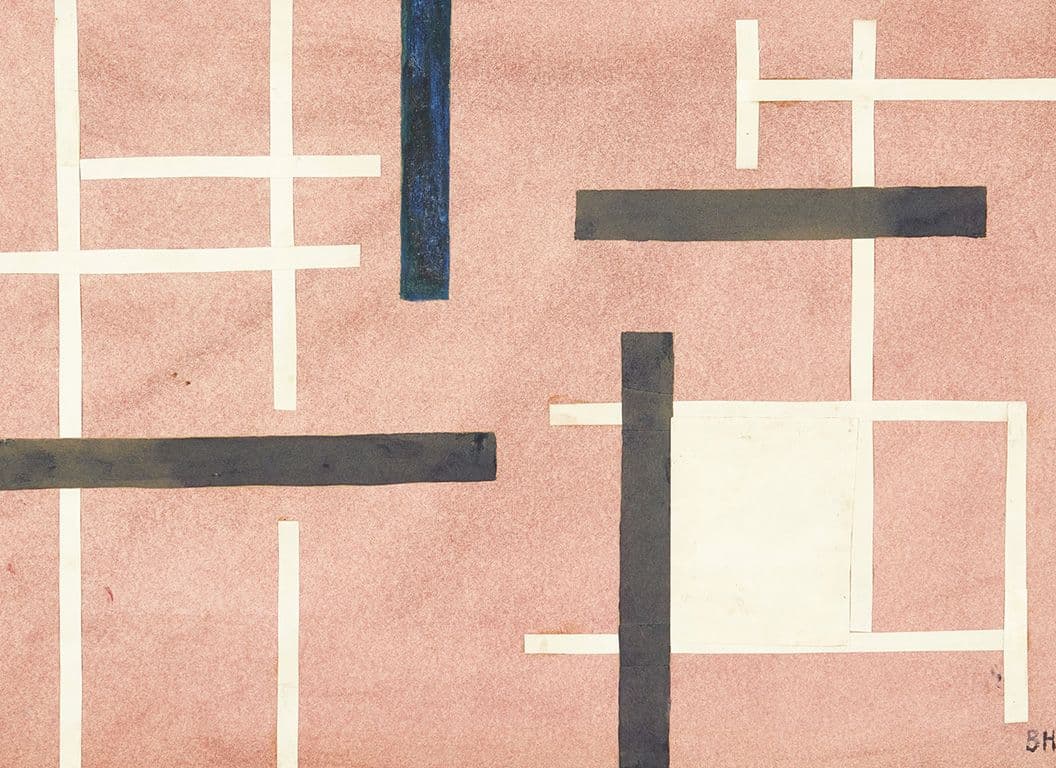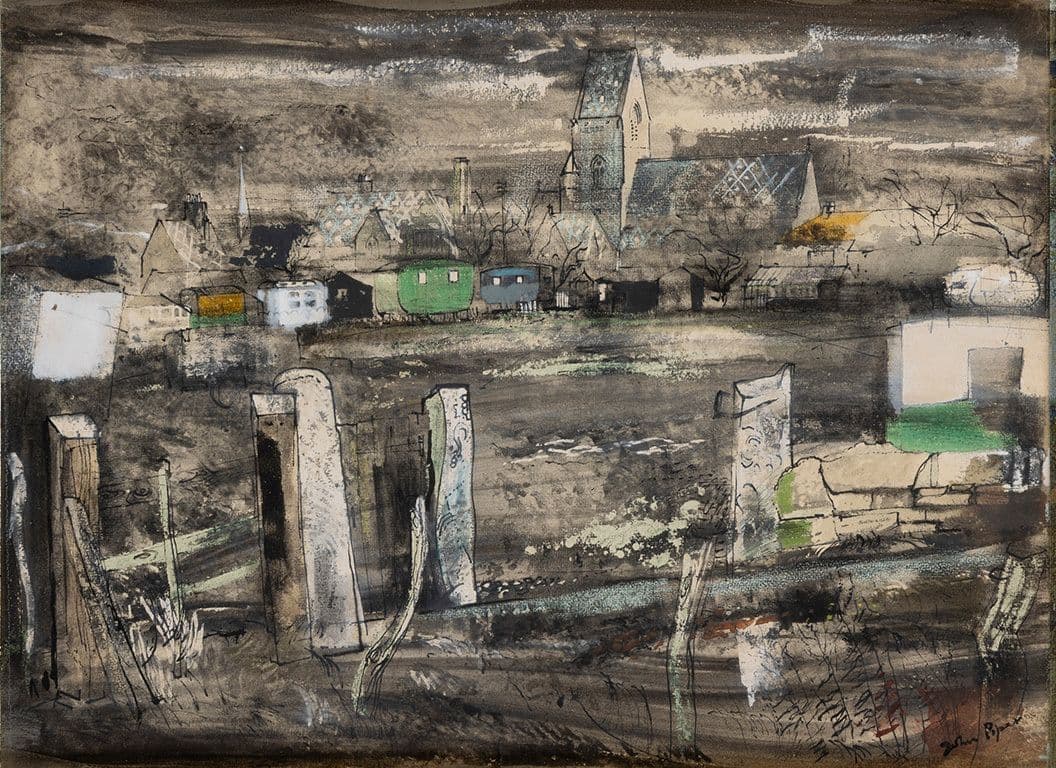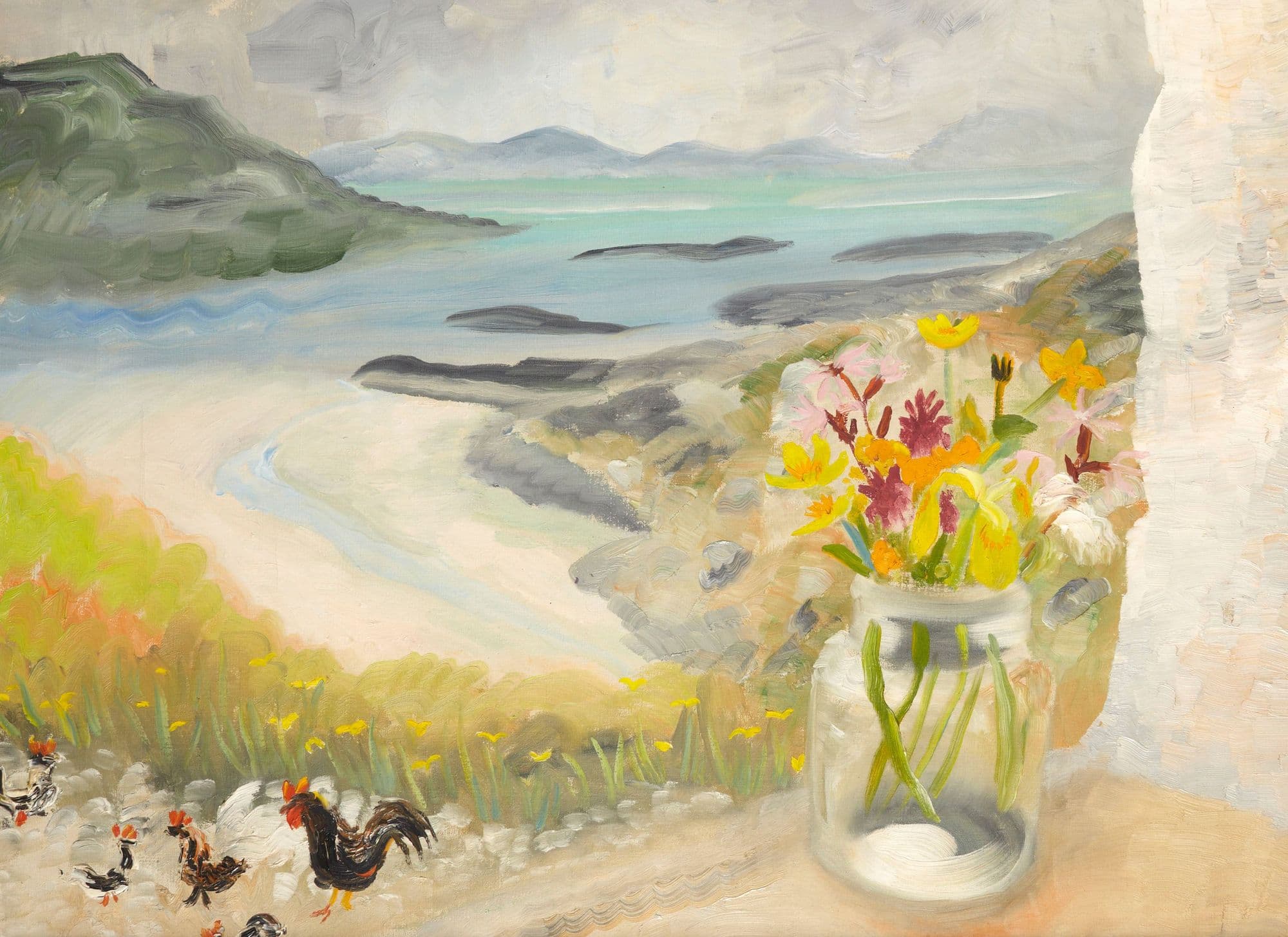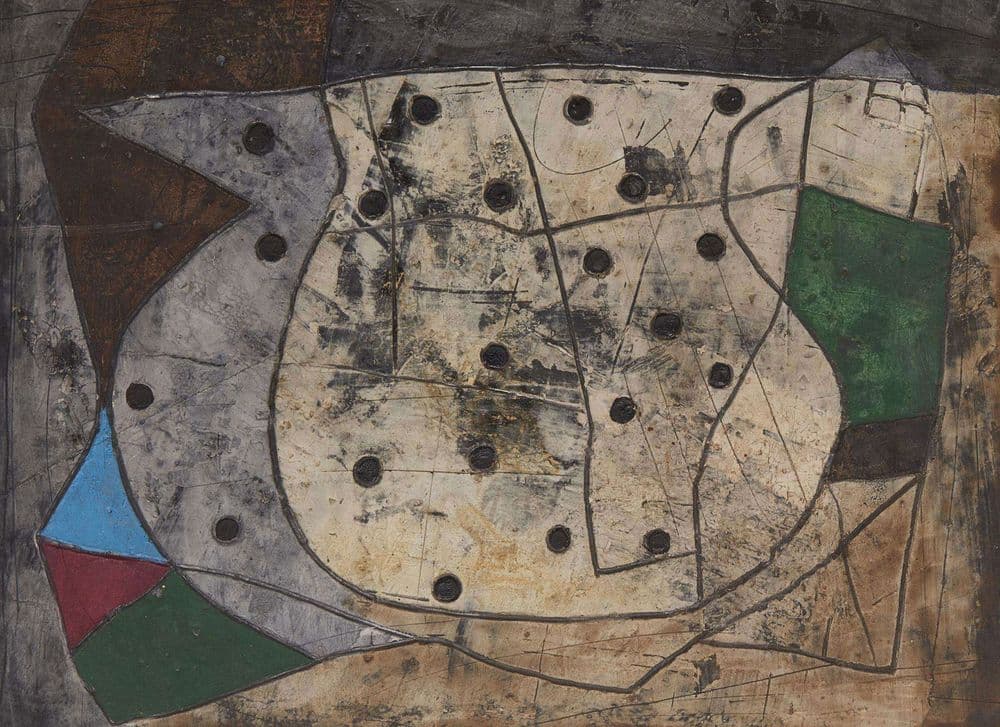
Bryan Ingham was a fiercely independent artist whose long and productive career embodied the spirit of Modern British Art. Educated at Central St. Martins and the Royal College of Art, Ingham combined rigorous formal training with a determination to forge his own path. Choosing to live and work in Cornwall, he became a significant figure within the St Ives School, drawing inspiration from both British modernist predecessors like Ben Nicholson and Peter Lanyon, as well as influential European artists such as Mondrian, Braque, and Picasso.
Bryan Ingham was an independent and dedicated artist, who furrowed his own artistic path throughout a long and productive career, attributing his successful endeavours to ‘sheer, bloody hard work.’
Born and raised in Yorkshire, he was introduced to poetry and music by his bachelor uncle, who also forged in him a deep love of reading, despite his struggles at school. His first encounter with visual art and painting was through attendance at Scouts, where one evening a female artist shared her watercolours with the troop; Ingham fell in love and was inspired to start painting himself.
Later called up to the RAF, as an ‘artistic sort of airman,’ he was fortunate enough to be paired in accommodation with a designer who had attended the Royal College of Art, who further encouraged Ingham’s creative instincts and set him up still-life studies to work from. Ingham returned to Britain following his was service armed with the ambition to be an artist.
Ingham’s ensuing formal training took place at Central St. Martins and then the Royal College of Art, as the young artist felt a move to London entirely necessary to both his personal and creative development. He gained attention from senior staff for his talent, and on the strength of his work generated numerous job offers at graduation and a grant allowing him to spend a year in Italy, travelling and then studying at the British Academy in Rome.
At this stage, Ingham seemed poised to become an establishment artist, with works already receiving prime positions and sales at the Royal Academy. Yet, eternally independent, he instead made the decision to purchase a remote cottage on the Lizard peninsula in west Cornwall, following in the footsteps of Ben Nicholson and Barbara Hepworth. He maintained this for the rest of his life, and worked there for long periods every year, interspersed with trips abroad, particularly to northern Germany, and times when he lived elsewhere in Cornwall, most notably at St. Ives. This commitment to Cornwall drew him into both the inspiration and social network of the St. Ives School, of which he became an important figure.
Throughout his career, Ingham worked in a variety of mediums, creating a large body of work that drew on the rich artistic legacy of Britain, and artists such as Nicholson and Peter Lanyon, alongside the wider continental influences of Mondrian, Braque and Picasso.