Early Life and Background
Brian DeGraw was born in 1974 in the United States and grew up immersed in a creative
environment that combined music, visual culture, and performance. Initially known for his
work as a musician and co‑founder of the influential band Gang Gang Dance, DeGraw’s
engagement with sound and collaborative practice informed his transition into the visual arts.
His path into art was shaped by his deep interest in texture, rhythm, and sensorial experience,
leading him to explore visual media that reflect similar concerns with repetition, time, and
presence.
Artistic Practice
DeGraw’s work spans installation, sculpture, sound, film, and conceptual projects, often
blurring the boundaries between auditory and visual experience. His practice is characterised
by a sensitive engagement with material, temporal processes, and modes of perception that
echo his background in music. Rather than focusing on traditional painting or object‑making,
DeGraw’s projects frequently involve ephemeral or site‑responsive elements, inviting
audiences to engage with sound, space, and corporeal experience simultaneously.
Sound is not just a subject in his work but an active component of many installations, where
tonal expression informs visual structure and spatial composition. His films and sculptural
works often emphasise repetition, resonance, and the ways in which time unfolds in
environments beyond the fixed frame. Through collaborative projects and solo explorations,
DeGraw’s work navigates between abstraction and feeling, mapping sensory experience onto
visual and auditory forms.
Influence and Legacy
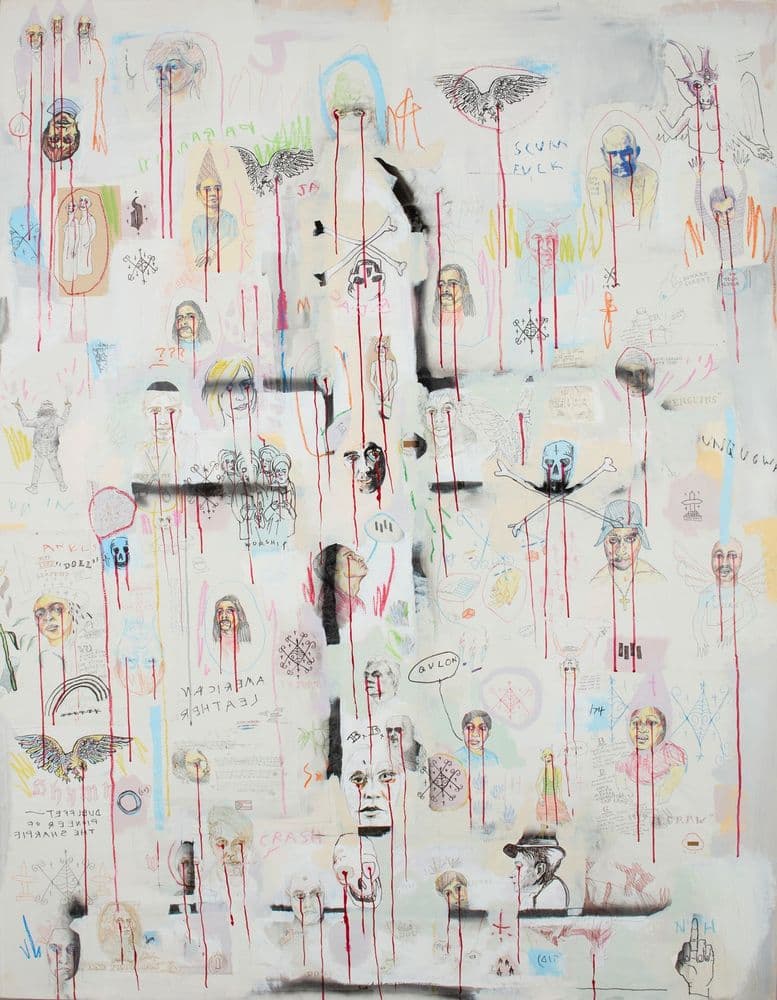
Degraw’s practice in the early 2000s engaged abstraction, painting, and installation to explore
improvisation, materiality, and performative processes. His work reflected broader shifts in
contemporary art around process-driven experimentation and the integration of multiple
media. Exhibited widely in New York galleries, including solo shows at Miguel Abreu Gallery and
group exhibitions at the New Museum, Degraw’s paintings and installations were discussed in
Artforum, Modern Painters, and The Brooklyn Rail, positioning him within critical conversations
around post-minimalist abstraction.
Represented by galleries with a focus on cross disciplinary practices, Degraw attracted collectors and institutions interested in hybrid,
experimental approaches. Situated in the early-2000s New York art market, his work
contributed to dialogues around improvisation, performativity, and the expanding scope of
contemporary painting, establishing a legacy as a significant figure in early 21st-century
American abstraction.