Which materials and motifs are most popular in mourning pieces?
Gemstones, commonly monochrome in colour such as jet, onyx and pearls, are also commonly seen incorporated in decorative symbolic motifs such as crucifixes.
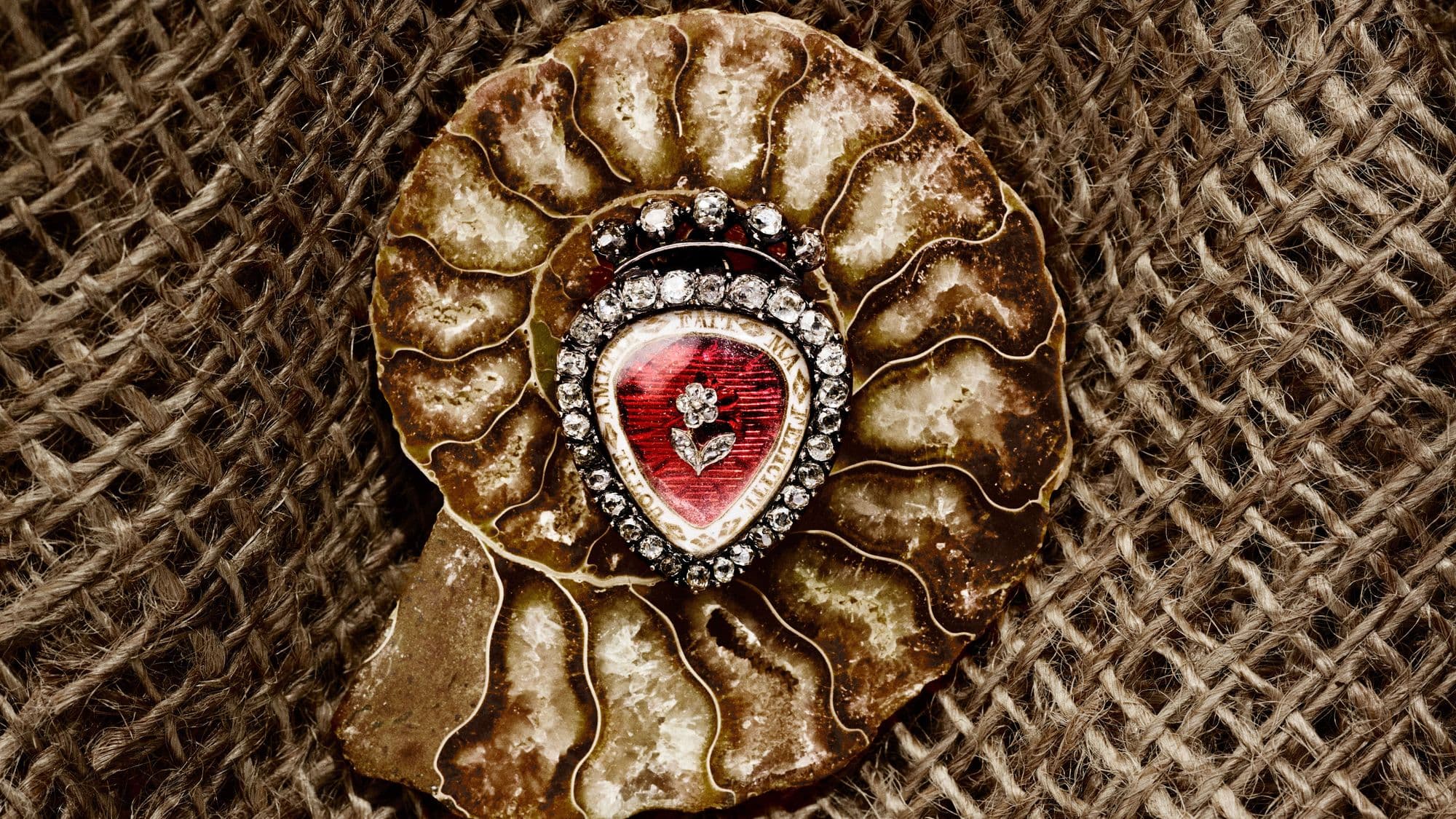
Enamel decoration is a recurrent feature of designs, with black enamel detailing arguably synonymous with mourning, incorporating sweet Forget Me Nots and other floral motifs, macabre symbols such as skull and cross bones, short sentimental adages or personal details of the deceased. The 1810s saw a surge in popularity of snake motifs, and coiling snakes with crosshatched snakeskin patterns are a motif recurrent throughout this period.
Mourning miniatures can be seen from the late 18th century, memorialising the departed by the medium of portraiture or with sombre, monochromatic illustrations of symbolic subjects, such as inconsolable mourners by tombstones, weeping willows or symbolically broken columns.
Do all mourning pieces incorporate hairwork?
Many associate mourning jewellery with the practice of hairwork, an art which allowed a loved one to incorporate the hair of their memorialised within the mourning piece. In fact, hair was often supplemented from stock, as demand led to the British import of hair from overseas to aid the creation of hairwork designs.
Hairwork details, most commonly encased below glazed panels or rock crystal, are of varying design, with early examples often encompassing hair woven, plait-like in a manner reminiscent of the memorialised. The decadence of Victorian times witnessed a move towards intricacy, with hair arranged with great care to form a detailed design or motif, such as an urn or a mourning scene.
Of course, even where not integral to the design of the piece, mourning jewellery may incorporate a discreet panel of hair to the reverse or interior, held close to the wearer yet concealed from the public eye.
Can I buy find mourning jewellery without hairwork detailing?
The concept of hairwork is divisive, and it is fair to observe that wearing the hair of a stranger (however long since departed!) doesn’t carry universal appeal. Much hairwork has been removed or replaced from mourning jewellery, in an effort.
Indeed, notions of ghoulishness have led many pieces to be trimmed of these details, with hairwork panels removed or replaced to overcome the negative associations which have accompanied changing times and facilitate more universal appeal.
This has in fact served to bolster the rarity of intact hairwork pieces, and impressive examples which have survived untouched carry a premium.
Does mourning jewellery still exist in modern times?
Whilst contemporary jewellery rarely incorporates antiquated Victorian symbolism, gothic enamel or intricate hair work panels, recent years have witnessed a modern take on mourning jewellery, with new technology and craftsmanship allowing a fresh take on a centuries old sentiment. The romantic notion of holding a lost loved one near is not lost.