A New Era of Jewellery Design
The First World War transformed society across Europe. Women entered professions previously reserved for men, fashion became less restrictive and architecture, transport and technology embraced modern ideas.
Jewellery evolved alongside these changes. Rather than the delicate garlands and floral motifs of the Belle Époque, designers began favouring bold geometric compositions, strong symmetry and clean architectural lines. Jewellery became an expression of confidence, independence and optimism, perfectly complementing the shorter hairstyles and streamlined fashions of the 1920s.
The movement took its name from the Exposition Internationale des Arts Décoratifs et Industriels Modernes, held in Paris in 1925, an exhibition that defined one of the twentieth century's most influential design movements.
The Hallmarks of Art Deco Jewellery
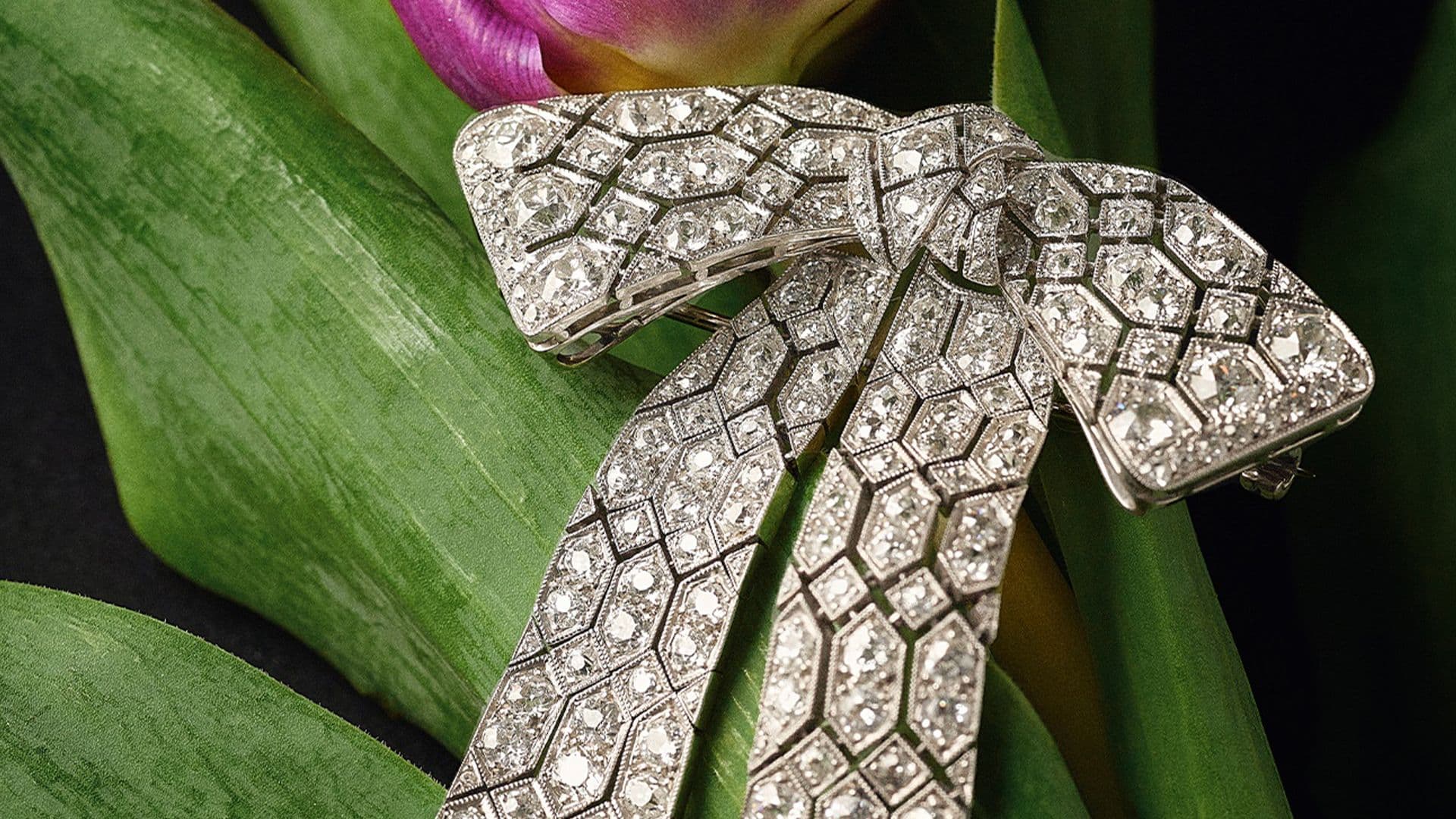
Although every maker interpreted the style differently, Art Deco jewellery is often recognised by several defining characteristics:
- Bold geometric patterns
- Platinum settings
- Step-cut and calibre-cut gemstones
- Strong symmetry
- Contrasting colours, particularly diamonds with onyx, emeralds, sapphires or rubies
- Millegrain detailing
- Clean architectural forms
These characteristics created jewellery that felt unmistakably modern while remaining remarkably timeless.
The Great Jewellery Houses
Some of the world's most celebrated jewellers helped define the Art Deco aesthetic.
Cartier became synonymous with sophisticated geometric design, while Van Cleef & Arpels developed elegant compositions that balanced precision with movement. René Boivin, Raymond Templier, Georges Fouquet and Janesich each contributed distinctive interpretations, pushing jewellery design beyond traditional ornament towards wearable works of art. Many of their creations remain among the most desirable pieces to appear at auction today.
Egyptomania and a Changing World
Art Deco drew inspiration from far beyond Europe. Howard Carter's discovery of Tutankhamun's tomb in 1922 sparked a fascination with ancient Egyptian art that quickly found its way into jewellery. Lotus flowers, scarabs and geometric Egyptian motifs appeared alongside influences from China, Japan and India, reflecting a period of expanding international travel and cultural exchange.
Designers also embraced materials such as carved jade, coral, lacquer and enamel, combining them with diamonds and platinum to create jewellery unlike anything seen before.