Why Are Star Rubies and Star Sapphires Cut as Cabochons?
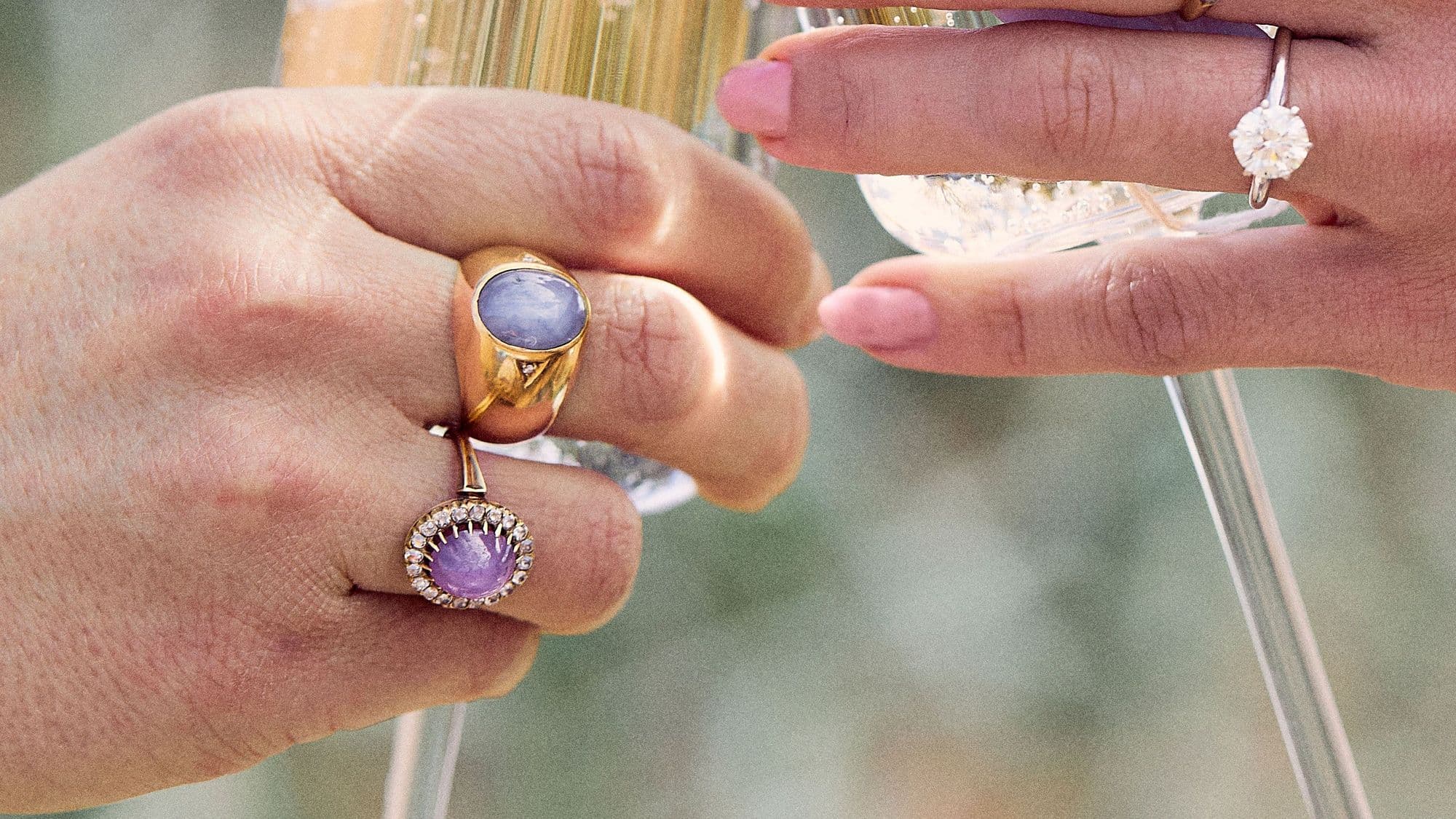
Unlike transparent faceted gemstones, star rubies and star sapphires are usually fashioned as cabochons, with a smooth, rounded dome rather than multiple facets. This style of cutting is essential for displaying asterism at its best.
Gem cutters carefully orient the stone so that the inclusions lie parallel to the base of the cabochon. When positioned correctly, the reflected light forms a distinct star that appears centred on the dome. A high, symmetrical cabochon often produces the strongest and most attractive effect.
The result is a gemstone that seems almost alive, with the star dancing across its surface as it catches the light.
What is a Star Ruby?
Star rubies possess a unique combination of rarity, colour and optical beauty. The rich red tones associated with ruby create a dramatic backdrop for the bright star that emerges across the stone.
When viewed under a focused light source, the effect can be particularly vivid, revealing delicate rays that move elegantly over the curved surface. For many collectors and gemologists, this interaction between light and crystal structure is one of the most enchanting sights in the gemstone world.
What is a Star Sapphire?
Star sapphires display the same mesmerising phenomenon in a range of colours, from deep blues to softer cornflower and dusty-blue hues.
The contrast between the cool colour of the sapphire and the bright star often makes the effect especially easy to appreciate. As the stone is moved, the star appears to glide effortlessly across the surface, showcasing the remarkable natural architecture hidden within the crystal. No two stones display the effect in exactly the same way, making every example unique.
What Makes a Star Ruby or Star Sapphire Valuable?
The finest star stones combine vivid colour with a sharp, well-centred star that moves smoothly across the surface as the gemstone is turned beneath a light source.
Collectors also look for:
- Strong, clearly defined rays
- Rich, even colour
- Good transparency
- Symmetrical cabochon cutting
- Minimal damage or fractures
- Natural, untreated examples where possible
Exceptional stones possessing all of these qualities are considerably rarer than ordinary cabochon sapphires or rubies and are highly sought after at auction.
Growth Marks in Corundum
Rubies and sapphires both belong to the mineral species corundum, and natural examples often reveal clues to their formation deep within the earth.
One particularly fascinating feature is the presence of angular growth patterns within the crystal. These growth marks are formed naturally as the gemstone develops over millions of years and can sometimes be observed beneath the surface.
For gemologists, such features provide valuable evidence of natural origin. Unlike many laboratory-grown stones, natural corundum often displays distinctive growth structures that reflect its geological history.
Far from being flaws, these internal characteristics tell the story of a gemstone's creation.
Celebrating Nature's Imperfections
Star rubies and star sapphires remind us that beauty in gemstones is not always about perfection. Sometimes it is the very features that would be considered imperfections in other stones that create something extraordinary.
The delicate inclusions responsible for asterism transform ordinary light into a moving star, producing an effect that has fascinated collectors for centuries.
Combined with the natural growth features preserved within the crystal, these gems offer a rare opportunity to appreciate both the artistry of nature and the science of gem formation.
In a market that often celebrates flawless clarity, star stones stand as a beautiful reminder that sometimes imperfections are what make a gemstone truly exceptional.