Diamond-Set Piaget Watches
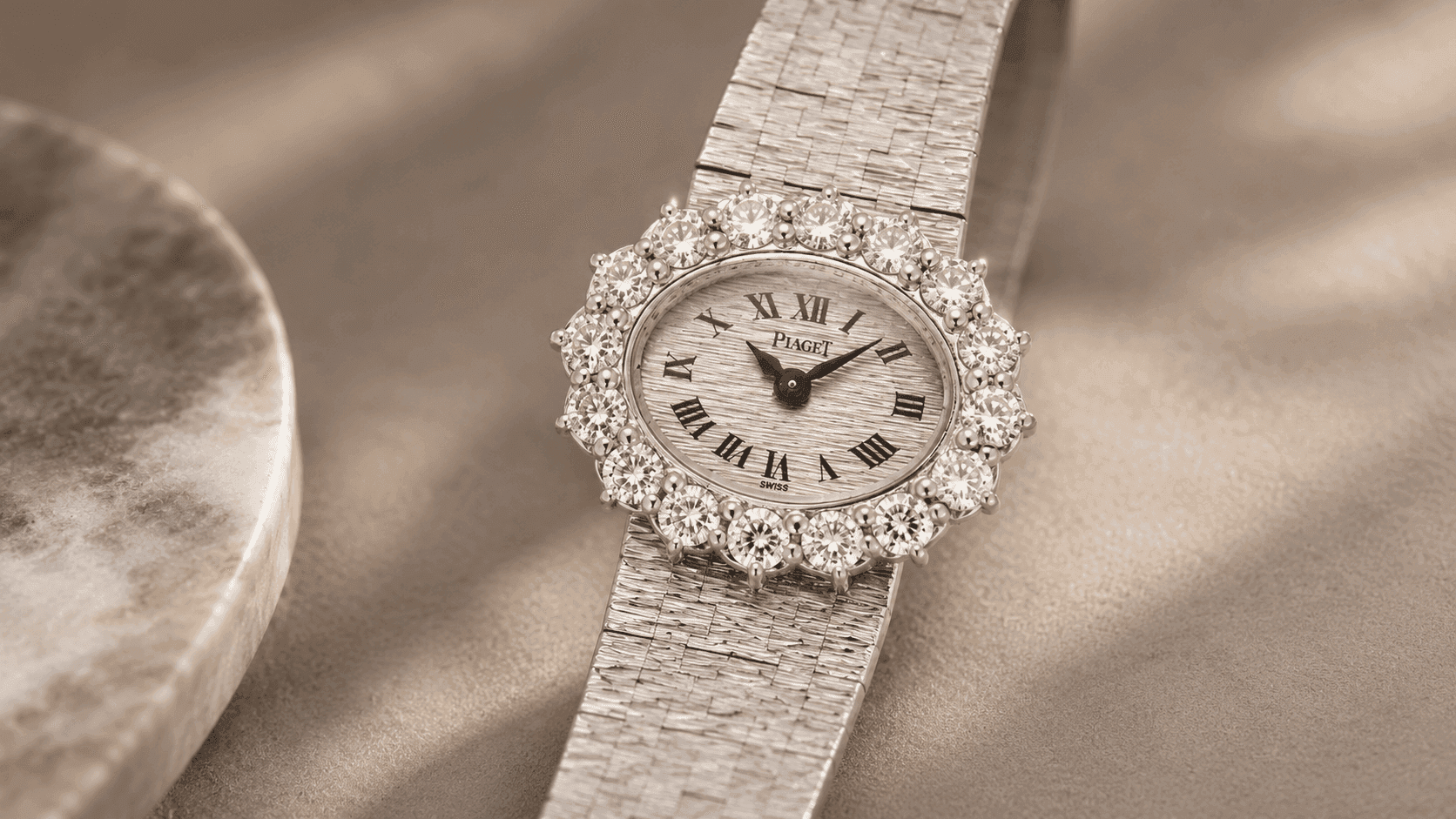
Gem-setting became another important feature of Piaget's designs during this period. Diamonds were frequently incorporated into watch cases, bezels and bracelets, adding another dimension to the company's jewellery-inspired approach. The setting of these stones required precision, particularly where diamonds were integrated into complex bracelet designs or unconventional case shapes.
In the finest examples, the stones complement the watch rather than overwhelm it. For collectors, the quality of the gem-setting is an important consideration, alongside the condition of the case, bracelet and movement. Originality is particularly significant, as later alterations or replacement stones can affect the character and desirability of a vintage watch.
Piaget Stone Dials and Unusual Materials
Piaget's experimentation extended beyond gold and diamonds. During the 1960s and 1970s, the company became particularly associated with watches featuring ornamental stone dials, including lapis lazuli, malachite, tiger's eye and other decorative materials. These natural stones introduced colour, texture and individuality to the designs.
Because the patterns and markings of natural stone vary, each dial can have a subtly different appearance. The use of such materials also reflects the broader design culture of the period, when bold colour and expressive jewellery were increasingly fashionable. Combined with Piaget's ultra-thin movements and elaborate gold bracelets, these dials helped establish a highly recognisable aesthetic.
Piaget and the Rise of the Luxury Jewellery Watch
The success of Piaget during the 1960s and 1970s reflected a changing relationship between watches, fashion and jewellery. While many Swiss manufacturers continued to emphasise technical innovation and traditional watchmaking, Piaget demonstrated that a wristwatch could also be a statement of personal style. Its designs were often striking, sometimes extravagant and frequently unlike anything being produced by other watchmakers. This approach helped establish Piaget as an important name in both haute horlogerie and fine jewellery.
The company became particularly associated with the international social and cultural world of the period, when distinctive watches and jewellery formed part of a broader expression of luxury and individuality.
Why Are Vintage Piaget Watches Collectable?
Vintage Piaget watches appeal to collectors for several reasons.
Exceptional craftsmanship: The quality of the gold bracelets, finishing and gem-setting is often extraordinary, particularly in examples from the 1960s and 1970s.
Distinctive design: Piaget's willingness to experiment with materials, shapes and decorative techniques produced watches that remain instantly recognisable.
Ultra-thin watchmaking: Beneath the decorative designs lies a history of technical innovation, particularly in the development of slim mechanical movements.
Originality and condition: Well-preserved examples retaining their original dials, bracelets and settings are particularly interesting to collectors.
Provenance: Original purchase receipts, boxes and other documentation can provide valuable information about a watch's history and help establish its authenticity and ownership.
What to Look for When Buying a Vintage Piaget Watch
When considering a vintage Piaget watch, there are several details worth examining.
- Bracelet condition: Look for signs of excessive stretching, damaged links, previous repairs or alterations.
- Originality: Assess whether the dial, hands, case and bracelet are consistent with the watch's period of manufacture.
- Gem-setting: Examine the condition and security of any diamonds or other stones.
- Movement: Establish the movement type and consider its condition and service history.
- Hallmarks and signatures: Check for appropriate Piaget signatures, case markings and precious-metal hallmarks.
- Provenance: Original receipts, certificates, boxes and other documentation can help establish a watch's history.
Condition is especially important with vintage jewellery watches, where the bracelet and decorative elements can be as significant as the movement itself.