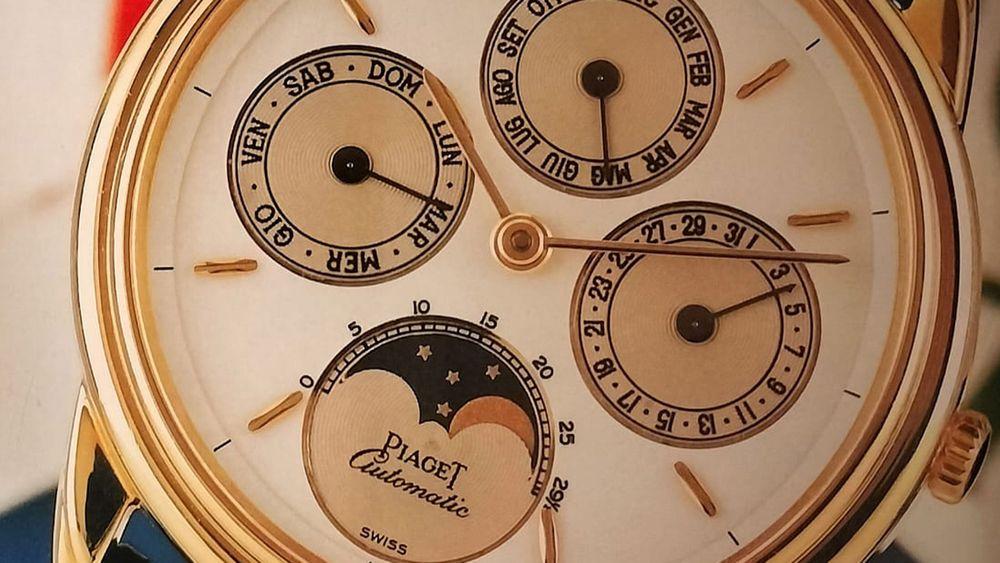
Founded in 1874 in La Côte-aux-Fées, Switzerland, Piaget is a Swiss luxury watchmaker and jeweller celebrated for its ultra-thin movements, distinctive designs and exceptional goldsmithing. From its beginnings as a specialist movement manufacturer, Piaget developed into one of the most recognisable names in fine watchmaking and jewellery.
The History of Piaget
Georges-Édouard Piaget established his first workshop in the Swiss Jura mountains in 1874, initially producing precision watch movements and components for other manufacturers. The business remained in family hands, expanding throughout the early twentieth century before registering the Piaget trademark in 1943.
A defining moment came in 1957 with the introduction of the Calibre 9P, an exceptionally thin manually wound movement measuring just 2mm in height. This was followed in 1960 by the Calibre 12P, an ultra-thin automatic movement that further established Piaget's technical reputation.
These innovations allowed the company to create increasingly elegant watches, combining sophisticated mechanical movements with slender cases and elaborate decorative designs.
Piaget Watches in the 1960s and 1970s
The 1960s and 1970s marked one of Piaget's most creative periods. The manufacturer became renowned for its jewellery-inspired watches, incorporating intricately worked gold bracelets, diamond-set cases and colourful ornamental stone dials.
Materials such as lapis lazuli, malachite and tiger's eye introduced striking colour and texture, while Piaget's goldsmiths developed distinctive bracelet finishes that resembled woven fabric, engraved surfaces and sculptural jewellery. These watches reflected the fashions of the period, appealing to an international clientele that valued individuality and craftsmanship.
In 1979, Piaget introduced the Polo, a distinctive sports-luxury watch featuring an integrated case and bracelet. Its bold design would become one of the company's most recognisable creations.
Piaget's Design and Craftsmanship
Piaget occupies a distinctive position in watchmaking through its combination of technical expertise and jewellery craftsmanship. Its ultra-thin movements have allowed for elegant, unconventional case designs, while its expertise in goldsmithing and gem-setting has produced watches that often blur the distinction between a timepiece and a piece of fine jewellery.
Particularly notable are the handmade gold bracelets of the 1960s and 1970s, admired for their intricate construction, finishing and integration with the watch case. Piaget continues to produce fine watches and jewellery, with collections including the Altiplano, Polo and Limelight Gala reflecting different aspects of its heritage.
Collecting Vintage Piaget Watches
Vintage Piaget watches are increasingly appreciated for their distinctive design, technical innovation and exceptional craftsmanship. Examples from the 1960s and 1970s are particularly sought after for their elaborate gold bracelets, diamond settings and unusual dials. Originality, condition and provenance are important considerations, especially for watches featuring intricate jewellery work.
At Lyon & Turnbull, we regularly welcome enquiries concerning vintage Piaget watches, including gold bracelet watches, diamond-set examples and unusual designs from the manufacturer's most creative decades. Our Watches specialists can provide valuations and advice for collectors considering selling a Piaget watch at auction.