The Creation of the Earldom of Airlie in 1639
The Ogilvys' loyalty to the Crown was rewarded with the creation of the Earldom of Airlie by Charles I in 1639. James Ogilvy, 1st Earl of Airlie, was a committed Royalist at a time of increasing religious and political conflict between the monarchy and its Scottish subjects.
The National Covenant of 1638 had brought opposition to Charles I's religious policies into sharp focus. The Ogilvys' refusal to support the Covenant placed them firmly within the Royalist camp. The creation of the earldom was therefore both a recognition of the family's standing and a reflection of its political allegiance.
The Ogilvys and the Wars of the Three Kingdoms
The Wars of the Three Kingdoms brought considerable upheaval to Scotland, England and Ireland during the 1640s.
James Ogilvy, 1st Earl of Airlie, and his son, James Ogilvy, 2nd Earl of Airlie, supported the Royalist cause. The younger Ogilvy was captured during the campaigns associated with Aberdeen in 1644 and Philiphaugh in 1645.
Sentenced to death in 1646, he subsequently endured imprisonment, including confinement in the Tower of London in 1651. He survived the Interregnum and returned to public life following the Restoration of the monarchy in 1660, serving under Charles II and James VII of Scotland, who was also James II of England. The family's experiences during these conflicts established a pattern that would continue into the eighteenth century: loyalty to the Stuarts, even when that loyalty threatened their lands, titles and personal freedom.
The Ogilvy Family and the Jacobite Rising of 1715
The Jacobite Risings were attempts to restore the exiled Stuart dynasty to the British throne following the Glorious Revolution of 1688. The Ogilvys were among the Scottish noble families whose political and dynastic loyalties remained closely associated with the Stuarts.
James Ogilvy, later recognised de jure as the 4th Earl of Airlie, joined the Jacobite Rising of 1715 under John Erskine, Earl of Mar. The rising sought to restore James Francis Edward Stuart, known to his supporters as James VIII and III, to the throne.
Following its failure, Ogilvy was attainted for his participation. Although he received a pardon in 1725, the consequences of the rising affected his formal succession to the family title. His involvement demonstrated that the Ogilvys' Stuart sympathies had survived the political transformations of the previous century.
David Ogilvy, 6th Earl of Airlie, and the Jacobite Rising of 1745
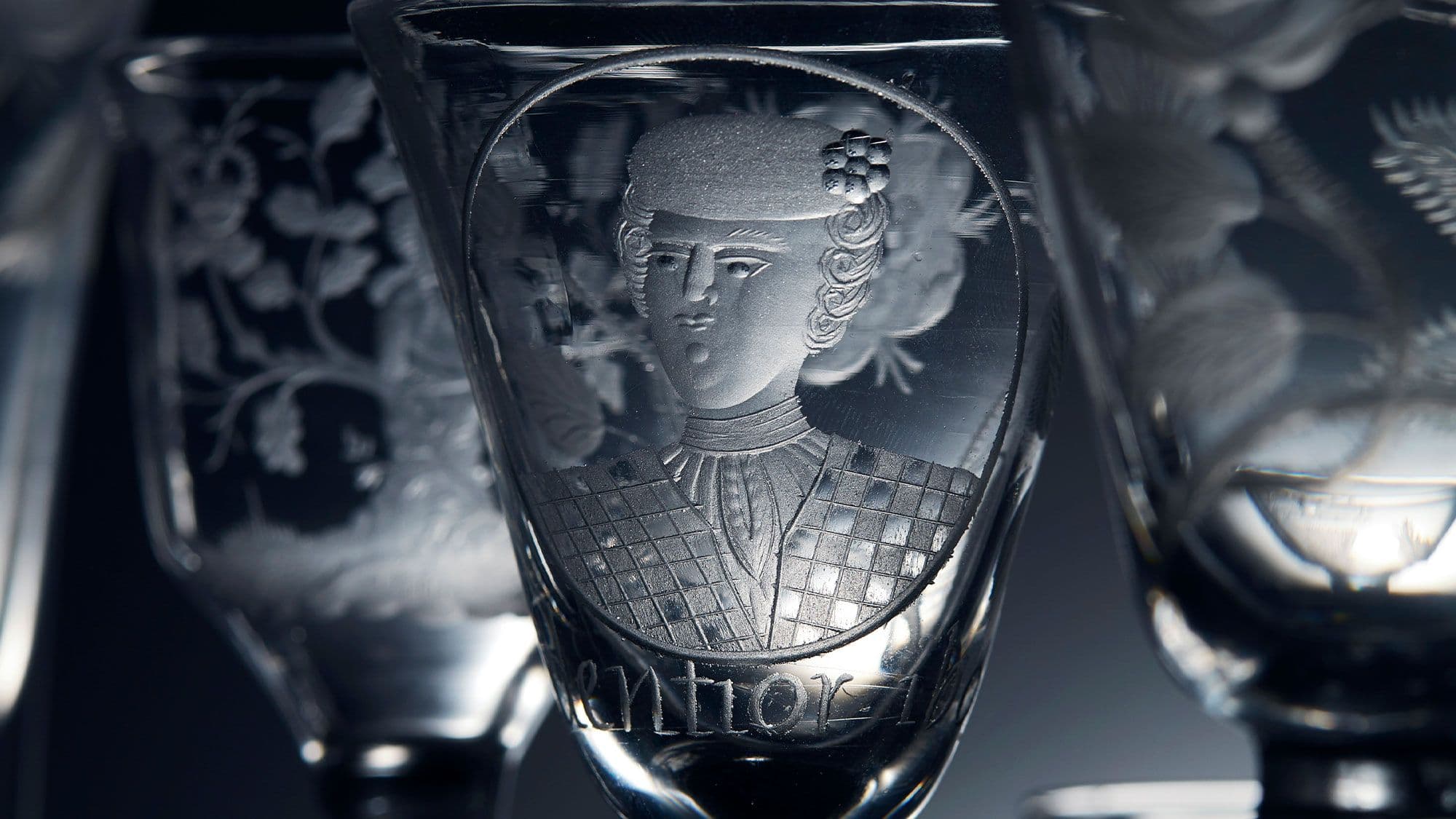
The family's most significant involvement in the Jacobite cause came during the Rising of 1745. David Ogilvy (1725–1803), recognised de jure as the 6th Earl of Airlie, became a prominent supporter of Prince Charles Edward Stuart, better known as Bonnie Prince Charlie.
Ogilvy raised a regiment of approximately 600 men in support of the Jacobite army. The regiment participated in the campaign that culminated in the Battle of Culloden on 16 April 1746, although it experienced significant desertions.
The Battle of Culloden and the Ogilvy Regiment
Culloden marked the decisive defeat of the Jacobite army by government forces under the Duke of Cumberland.
For David Ogilvy, the consequences were profound. Following the defeat, he fled to France and subsequently served in the French army. The family's involvement in the rising contributed to the loss of its titles and estates. These were not formally restored until 1826. The Ogilvy story illustrates the personal and political cost of Jacobitism for Scotland's noble families. Allegiance to the Stuart cause could mean the loss not only of military standing but also of ancestral lands, inherited titles and a family's position within Scottish society.
A Cannonball from Culloden
One of the most remarkable objects associated with the family's Jacobite history is a cannonball recovered from the battlefield of Culloden.
Its significance lies in its connection to David Ogilvy, who had commanded a regiment during the rising and subsequently endured exile and the loss of his family's position. The cannonball was offered by Lyon & Turnbull in 2025 and sold for £18,900. Unlike many battlefield relics, its association with a participant in the conflict provides a particularly direct connection to the events of April 1746.
Lady Margaret Ogilvy and the Jacobite Court
Margaret Ogilvy (1725–1757), wife of David Ogilvy, was also associated with the Jacobite cause. A remarkable surviving object linked to her is an eighteenth-century brocaded robe à la française, or sack-back dress, dating to approximately 1745–1750.
Known as Lady Ogilvy's Dress, the gown is reputed to have been worn by Margaret Ogilvy upon her presentation at court at the Palace of Holyroodhouse in 1745. The dress offers a different perspective on Jacobite history, revealing the social and ceremonial world surrounding the political and military events of the rising.
Its survival is particularly important because clothing associated with named eighteenth-century women and significant historical events is relatively uncommon. The gown sold at Lyon & Turnbull in 2025 for £20,160.
What Happened to the Earls of Airlie After Culloden?
The failure of the 1745 Rising brought a period of considerable uncertainty for Jacobite families. David Ogilvy's exile and the loss of the family's titles and estates reflected the penalties imposed upon supporters of the Stuart cause.
Despite these setbacks, the Ogilvys retained a strong sense of their hereditary identity and continued to use the heraldic traditions associated with their ancestry. The family's titles and estates were formally restored in 1826, marking an important turning point after decades of political exclusion. By the nineteenth century, the Ogilvys had re-established their position within British aristocratic society.
The Earls of Airlie and the British Royal Family
Although the family's eighteenth-century history was defined by loyalty to the exiled Stuarts, later generations developed close relationships with the British Royal Household.
These connections became particularly significant during the twentieth century.
David Ogilvy, 13th Earl of Airlie (1926–2023)
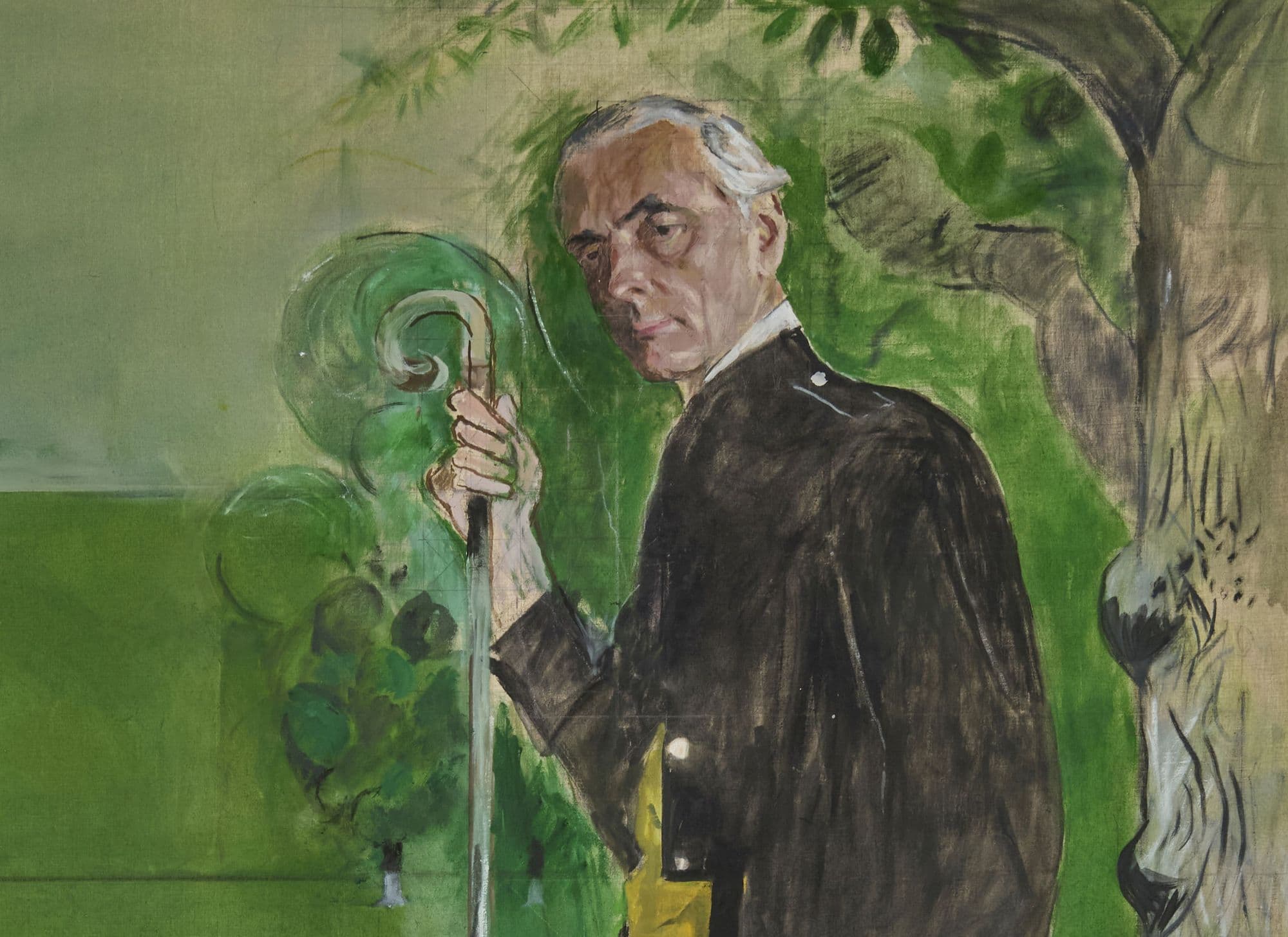
David George Coke Patrick Ogilvy, 13th Earl of Airlie, was one of the family's most prominent modern representatives. A godson of King George V, he was born in 1926, just a month before the future Queen Elizabeth II.
Educated at Eton and Balliol College, Oxford, he pursued a career in banking and became associated with Schroders before undertaking senior responsibilities within the Royal Household. As Lord Chamberlain to Queen Elizabeth II from 1984 to 1997, he oversaw important aspects of the Royal Household's administration and ceremonial responsibilities.
His period of service included significant changes in the monarchy's public role, notably the challenges of 1992, described by the Queen as her annus horribilis. He also contributed to the planning of state occasions and diplomatic engagements during a period of considerable public scrutiny.
Following his retirement as Lord Chamberlain, he became a Permanent Lord-in-Waiting and was appointed Chancellor of the Order of the Thistle in 2007. At the time of his death in 2023, he was remembered for his long association with the monarchy and his attendance at the coronations of 1937, 1953 and 2023.
Virginia Ogilvy, Countess of Airlie
Virginia Ogilvy, Countess of Airlie, also played an important role in royal service. Appointed a Lady of the Bedchamber in 1973, she accompanied Queen Elizabeth II on international visits and received numerous honours and diplomatic gifts.
Objects associated with the Earl and Countess reflect the international nature of royal service, including presentations from countries such as Malawi, Brazil and Brunei. These pieces provide a record of the ceremonial relationships maintained between the British monarchy and other nations during the late twentieth century.
The Ogilvy Family and Princess Alexandra
The family's modern royal connections were further strengthened in 1963 when the Honourable Angus Ogilvy, younger brother of the 13th Earl, married Princess Alexandra of Kent.
Their marriage brought the Ogilvys into the extended Royal Family and continued a relationship with the monarchy that had shaped the family's history for centuries.