What Makes Gandharan Sculpture Distinctive?
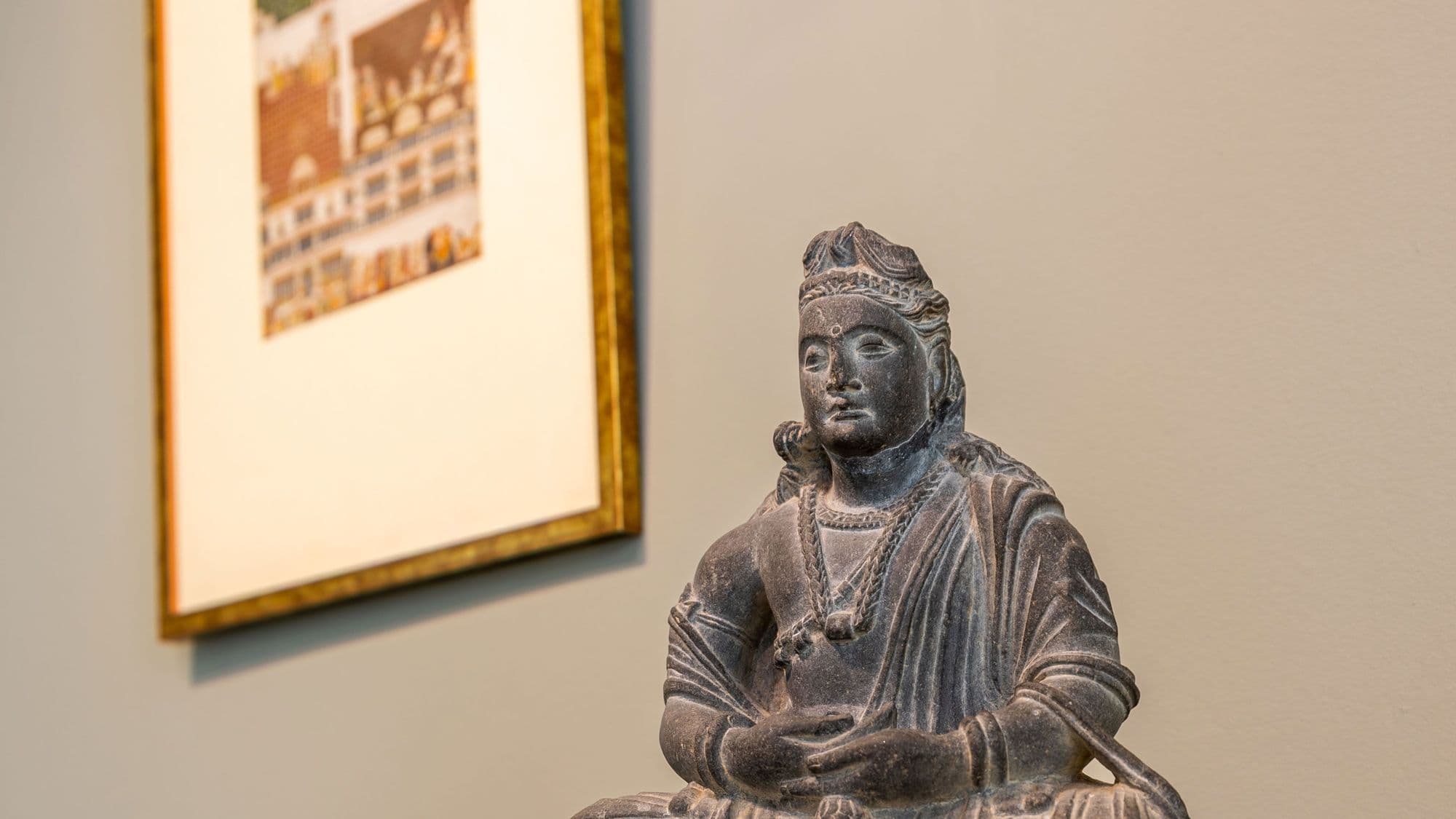
Gandharan sculpture is immediately recognisable for its naturalistic style. Unlike earlier Indian artistic traditions, figures are modelled with convincing anatomy, carefully observed facial features and flowing robes carved with remarkable depth and precision.
One of its defining characteristics is the treatment of drapery. The Buddha and bodhisattvas are shown wearing heavy robes whose deeply carved folds closely resemble those found in classical Greek and Roman sculpture. Their calm expressions, wavy hair and balanced proportions further distinguish Gandharan works from those produced elsewhere in the Indian subcontinent.
These stylistic features reflect the region's unique cultural history, where Eastern religious traditions met Western artistic conventions.
Greco-Buddhist Influences
Gandharan sculpture is often described as Greco-Buddhist art because of its fusion of Buddhist subjects with Hellenistic artistic techniques. Following Alexander the Great's campaigns in the 4th century BC, Greek artistic traditions continued to influence the region through the Indo-Greek kingdoms and later the Kushan Empire. Rather than simply copying classical art, Gandharan sculptors adapted its techniques to express Buddhist beliefs, creating some of the earliest surviving images of the Buddha in human form.
Architectural details including Corinthian capitals, vine scrolls and classical decorative motifs also appear throughout Gandharan sculpture, highlighting the exchange of ideas across ancient trade networks.
Materials and Craftsmanship
Most Gandharan sculptures were carved from fine-grained grey schist, a durable stone that allowed artists to achieve exceptional levels of detail. The material was particularly well suited to rendering delicate facial features, intricate jewellery and the distinctive folds of monastic robes.
Stucco and terracotta were also used, particularly for larger architectural decoration within monasteries, while bronze examples survive in smaller numbers.
The quality of carving remains one of the defining characteristics of Gandharan sculpture and continues to play an important role when specialists assess individual works.
Common Subjects
The Buddha is the most familiar subject in Gandharan sculpture, although bodhisattvas, attendants and narrative reliefs illustrating episodes from the Buddha's life are also frequently encountered.
Bodhisattvas are often distinguished by their elaborate jewellery and princely dress, while the Buddha is typically shown in simpler monastic robes with an expression of calm contemplation. Relief panels depicting important moments such as the Buddha's birth, enlightenment and first sermon were created to decorate religious monuments and communicate Buddhist teachings to worshippers.
How Specialists Identify Gandharan Sculpture
Dating and identifying Gandharan sculpture requires careful examination of several factors rather than relying on a single characteristic.
We consider the style of carving, treatment of drapery, facial features, iconography, material and overall craftsmanship alongside provenance and condition. Archaeological context and documented ownership history can also provide valuable evidence when assessing authenticity. As with many categories of ancient art, attribution is based on the combination of multiple characteristics rather than any one feature in isolation.
Collecting Gandharan Sculpture
Gandharan sculpture remains highly regarded among collectors of ancient art for its historical importance, exceptional craftsmanship and distinctive style. Museum collections around the world continue to demonstrate the significance of these works, while examples with strong provenance and well-preserved carving remain particularly sought after.
Collectors should always consider authenticity, provenance, condition and legal ownership when acquiring ancient sculpture, making specialist expertise an important part of the collecting process.
More than two thousand years after they were created, Gandharan sculptures continue to offer a remarkable insight into one of history's greatest periods of cultural exchange. Blending Buddhist philosophy with classical artistic traditions, these sculptures represent far more than religious imagery. They reflect the movement of people, ideas and artistic influences across continents, preserving the story of a region that connected civilisations through trade, faith and creativity.