Why Is the Cartier Box Red?
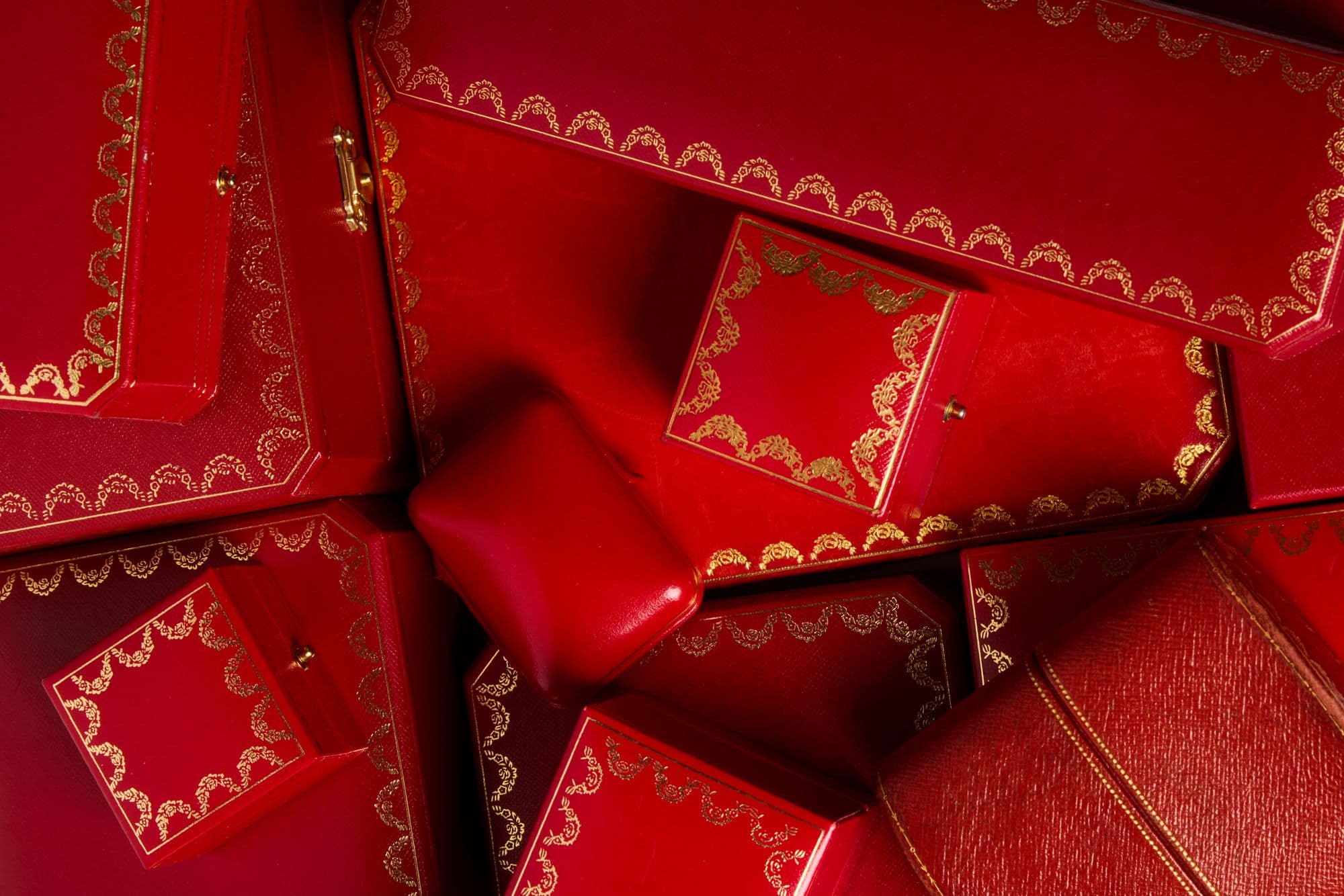
The Cartier red box is possibly the most recognised jewellery box in the world. The colour conjures up ideas of love, passion, danger, courage and splendour and, of course, the highly valued gemstone ruby, so all at once it sends a message of opulence before it has even been opened.
By the 1930s, red had become Cartier’s official colour. Prior to that, jewels could be presented in green, rose and black leather cases as well. Proof that no detail wasn’t considered in presenting their designs, the story goes that it was felt that rubies didn’t stand out as effectively in red cases. So, on rare occasions, Cartier had tooled green leather boxes created specially to present ruby-set jewels.
How Cartier’s Garland Style Shaped the Red Box
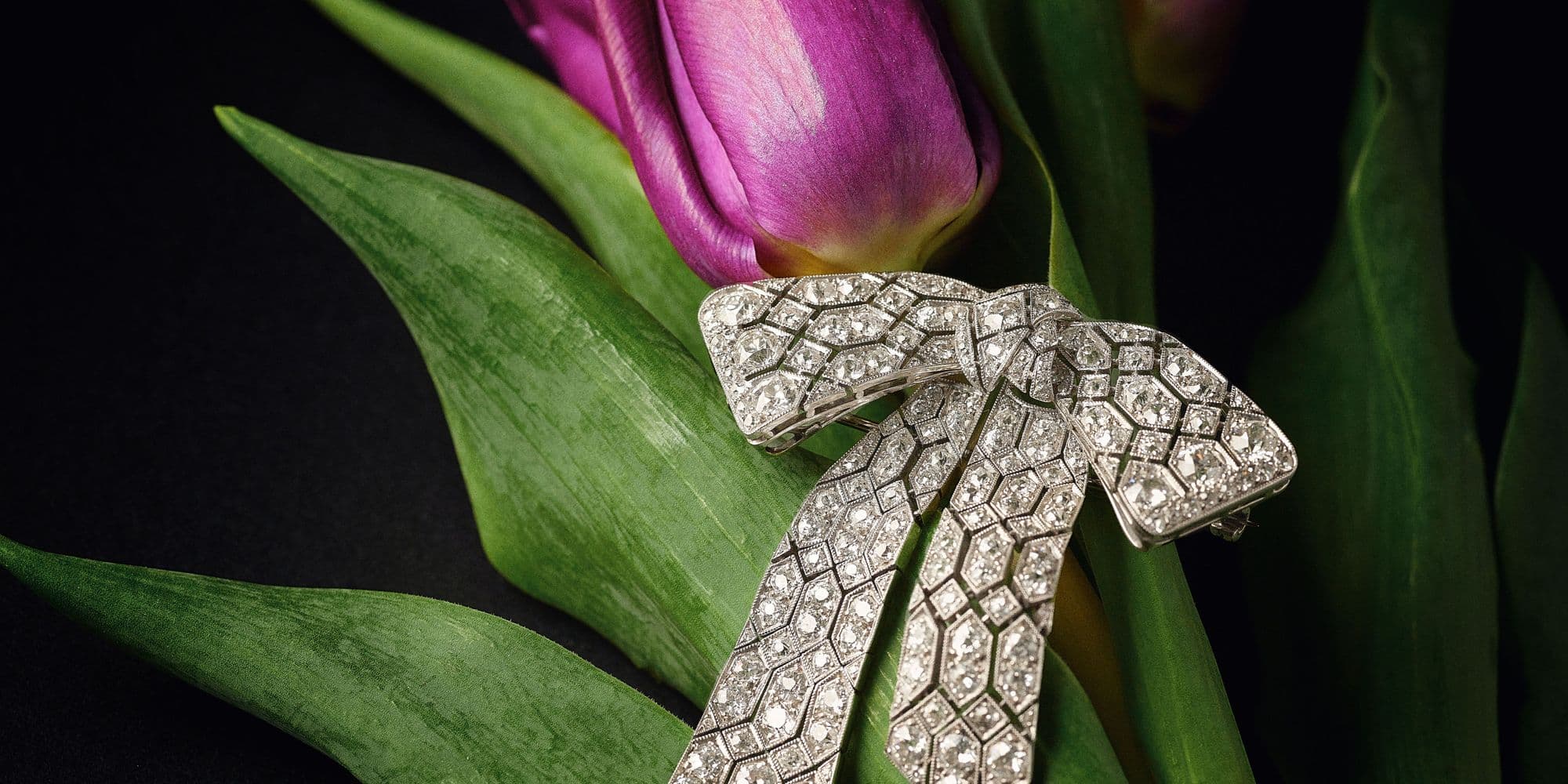
In the early 1900s, advances in the use of platinum in jewellery allowed designers, such as Louis Cartier, to develop settings with previously impossible-to-achieve fine details. Thus the famous Cartier Garland Style was born.
These garland designs were then transferred onto the decoration of the red box. It is this finishing touch, the richness of the red with the gold garland, which makes the Cartier jewellery case one of a kind. The design became so recognisable that the box itself could immediately evoke the Cartier name.
The shape of the red boxes, with their velvet and silk linings, was designed to mirror a gemstone, with cut-cornered or octagonal forms reflecting the work of the artisan jewellers and the precious pieces contained within.
What Do the Addresses Inside Vintage Cartier Boxes Mean?
The three original Cartier boutiques were listed on the inside lid of the box, printed in gold on the silk lining.
The addresses were London, 175 New Bond Street; Paris, 13 Rue de la Paix; and New York, 712 Fifth Avenue. The order was rotated, with the store where the purchase was made appearing at the top.
Today, a simple ‘Cartier’ loops across the inside lid of the case. There are now countless Cartier stores across the world, far too many to fit inside the lid of a beautiful box.
These details can make vintage Cartier boxes particularly interesting today, providing clues to the period and place in which they were used.
How Has the Cartier Red Box Changed?
While the details of Cartier packaging have evolved, the red box has become part of the wider visual identity of the house.
The red awnings over Cartier’s windows and the large red bows that adorn its buildings at Christmas are larger-than-life nods to the Cartier corporate identity and packaging.
In 2019, it was the golden garland that scallops around the edge of the box that provided the inspiration for the Guirlande de Cartier range of handbags. With eight facets, golden borders and a shape mirroring the little red box itself, the bags were a visual and practical embodiment of the House of Cartier.
The Cartier box has even found its way onto the big screen. In the 1966 film How to Steal a Million, a Cartier box made a cameo appearance when it was thrown at Audrey Hepburn during the film’s well-known proposal scene.
Are Vintage Cartier Boxes Collectable?
The Cartier red box has become collectable in its own right. Earlier examples can be particularly interesting because their materials, shape, interior decoration and boutique addresses reflect different periods in the history of the house.
For collectors, details such as the condition of the leather, silk and velvet interior, gold decoration and markings inside the lid may all be of interest.
When Cartier jewellery or watches come to auction, an original box can also form part of the history and presentation of a piece. However, the presence of a Cartier box alone does not prove that the jewellery or watch inside is authentic, or that the box originally belonged to that particular piece.
If an original box, paperwork, receipts or other documentation have remained with a Cartier piece, it is worth keeping them together when seeking an auction valuation.