The Abernethy Pearl is the largest Scottish freshwater pearl discovered in living history and one of the most celebrated natural pearls ever found in Britain. Discovered in 1967 by Scotland's last professional pearl fisherman, William (Bill) Abernethy, it has become a symbol of Scotland's natural heritage, pearl fishing traditions and the extraordinary rarity of freshwater pearls.

Jewellery
The Abernethy Pearl: Scotland's Most Famous Freshwater Pearl
1 August 2024
Ruth Davis
The Famous Abernethy Pearl
Ruth Davis, Head of Jewellery, Scotland, discusses the famous Abernethy Pearl - its discovery and its legacy.
Scottish River Pearls Through History
There has always been an allure which has drawn mankind to natural pearls, be they saltwater or freshwater, and since antiquity, civilisations have valued them for their physical, and often mystical properties. The Ancient Greeks believed they would ensure marital bliss when worn by a bride on her wedding day, while the Romans believed they could provide a long and healthy life.
Our frenzy for these natural treasures reached a true crescendo in the early 20th century, when they became the ultimate signifier of wealth and status. Such was the case in the US when, in 1917, keen to acquire the natural pearl necklace his wife had seen at Cartier, the New York financier Morton Plant exchanged the jewel for his 5th Avenue townhouse. The prestigious central Manhattan location remains Cartier’s flagship American Maison to this day.
Why Are Scottish Pearls So Rare?
In Scotland, the pearl has had an illustrious history, and if natural saltwater pearls are a rarity, the natural Scottish river pearl is something else indeed. It is believed that only one in every five thousand mussels found in Scottish rivers contains a pearl, and generally they are smaller than their saltwater cousins. Today the mussels (Margaritifera margaritifera) in which Scottish pearls grow are dangerously close to extinction and are rightly a protected species.
Historians have postulated that the desire for Scottish pearls was one of Julius Caesar’s incentives for his invasion of Britain in 55BC; he was known as an avid pearl collector. Indeed, the popularity of these rare specimens continued into the Victorian era, fuelled by Queen Victoria’s passion for all things Scottish. The largest Scottish river pearl ever found, the famous Kellie Pearl, is set on the Crown of Scotland which dates to the 1540s. It remains housed and on view to visitors at Edinburgh Castle today.
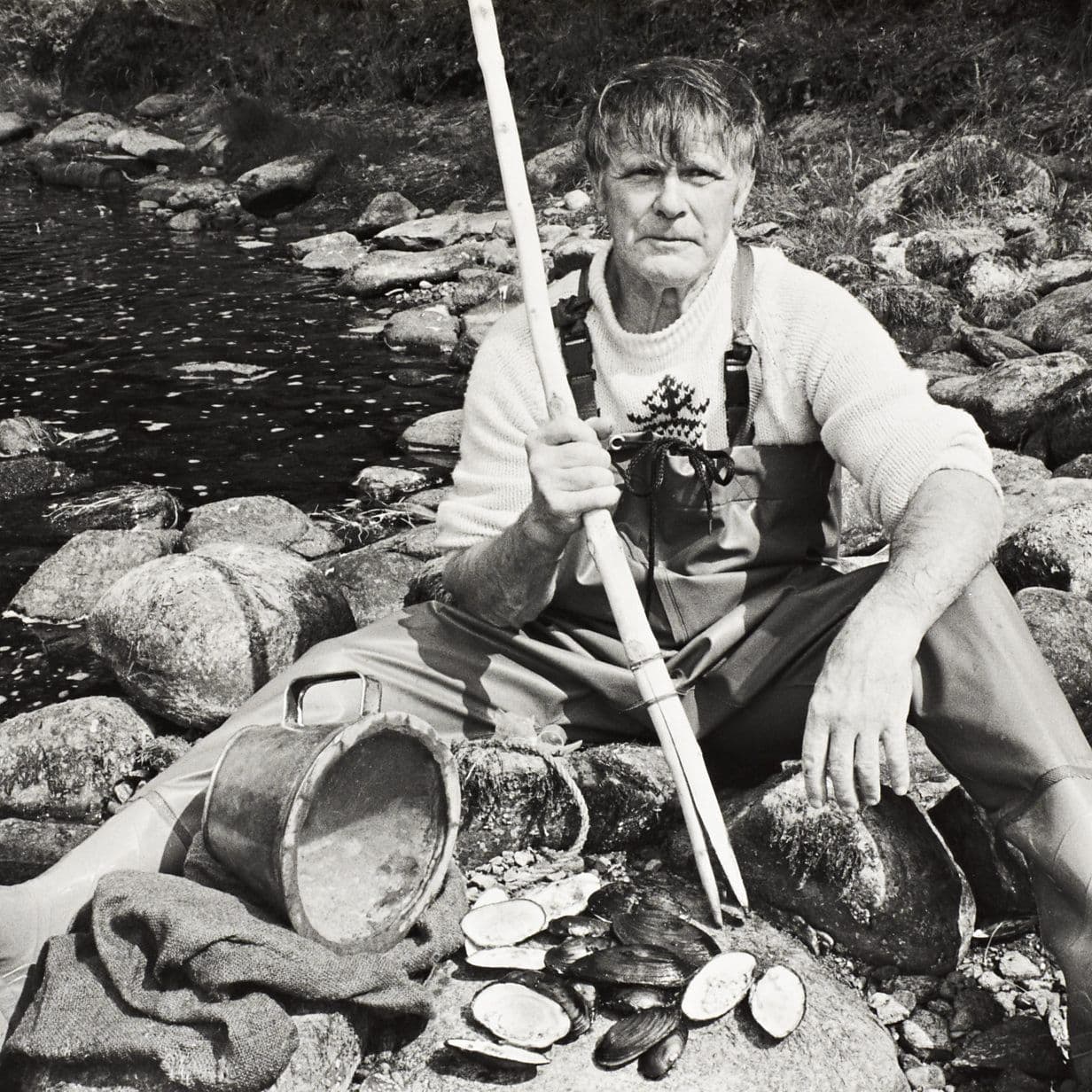
William (Bill) Abernethy
William (Bill) Abernethy, famously known as Scotland’s last pearl fisherman, seems to have understood the danger of the demand for these rare specimens intuitively. In 1967 he found the now famous Abernethy Pearl, second only in fame to the aforementioned Kellie Pearl, and though he never disclosed where exactly he found it (likely to discourage fortune hunters trying their own luck), it was purportedly wrapped in a dock leaf to keep it from scratching, before he took it to jewellers Cairncross of Perth, where it remained until recently.
What Is the Abernethy Pearl?
As the largest Scottish river pearl found in living history, weighing 43.6 grains, the Abernethy Pearl is a remarkably perfect example. Bill had been trained how to fish for pearls by his father, and had a rare understanding of the mussels and the rivers in which they could be found. During the 1970s, wildlife cameraman Doug Allen worked with Bill as a pearl diver, and in Bill’s 2021 obituary he noted how he was able to discern from the size and shape of the mussel as to the likelihood of it containing a pearl; enabling him to pick carefully and leave undisturbed many of the other mussels, better maintaining their numbers and health.
It is believed the Abernethy Pearl (affectionately known as ‘Little Willie) could have been quietly growing in its mussel for over 80 years before it had been found by Bill. It is interesting to think that 80 years prior to Bill plucking it from the water, was the Golden Jubilee year of 1887, evoking images of Queen Victoria tramping the heather with her pony Fyvie and servant John Brown while the pearl was quietly growing.
Who Was Bill Abernethy?
William "Bill" Abernethy (1939-2021) was Scotland's last professional pearl fisherman and one of the country's foremost authorities on freshwater pearl mussels. Born into a family of pearl fishers, he learnt the traditional craft from his father, developing an intimate knowledge of Scotland's rivers and the rare mussels that inhabit them. Throughout his life, Abernethy became synonymous with Scottish freshwater pearls, balancing centuries-old traditions with a growing commitment to conservation.
Abernethy's greatest discovery came in 1967 when he found what would become known as the Abernethy Pearl, the largest Scottish freshwater pearl discovered in living history. Weighing 43.6 grains, its remarkable size, near-perfect form and exceptional lustre secured its place as one of Scotland's most celebrated natural treasures. Although he never revealed the precise location where it was found, believing secrecy would help protect vulnerable pearl mussel populations, the pearl remained in the care of Perth jewellers Cairncross for decades before achieving a world record auction price with Lyon & Turnbull in 2024.
Unlike many who sought pearls simply for their value, Abernethy possessed a deep understanding of the freshwater pearl mussel (Margaritifera margaritifera) and the fragile ecosystems on which it depends. He became renowned for his ability to judge, from the size and shape of a mussel alone, whether it was likely to contain a pearl. This knowledge allowed him to minimise disturbance, returning the vast majority of mussels to the riverbed unharmed. At a time when indiscriminate pearl fishing threatened wild populations, Abernethy's careful approach stood apart.
As awareness of the mussel's decline grew, Abernethy became an advocate for conservation. He supported stronger protections for Scotland's rivers and welcomed legislation that made freshwater pearl mussels a protected species. His expertise was frequently sought by scientists, conservationists and documentary makers seeking to understand one of Britain's rarest freshwater animals.
When Bill Abernethy died in 2021, Scotland lost not only its last professional pearl fisherman but also a custodian of a centuries-old tradition. His legacy lives on through the famous Abernethy Pearl, his contribution to the conservation of Scotland's freshwater pearl mussels, and the invaluable knowledge he passed on about one of the country's most remarkable natural resources. Bill Abernethy, an individual with invaluable knowledge and passion, passed away in 2021 and Cairncross of Perth, the jewellers who championed Scottish river pearls closed its doors for the final time in the summer of 2023.
We were honoured to present this important piece of Scotland's natural and social history at auction on 21 August 2024 as part of The Cairncross Collection. The Pearl led the sale when it achieved £93,951, a new world record price for a Scottish freshwater pearl.

The Abernethy Pearl | Sold for £93,951 | World Record Result
Today the Abernethy Pearl represents a unique part of Scotland’s natural and social history, but is also a symbol of the challenges ahead in terms of protecting its natural landscape and environmental heritage. There will not be another specimen of its like in our lifetime, and while its unique quality and rarity form a large part of its value; those qualities should also stand as a clarion call to protect and nurture the species and our natural heritage.
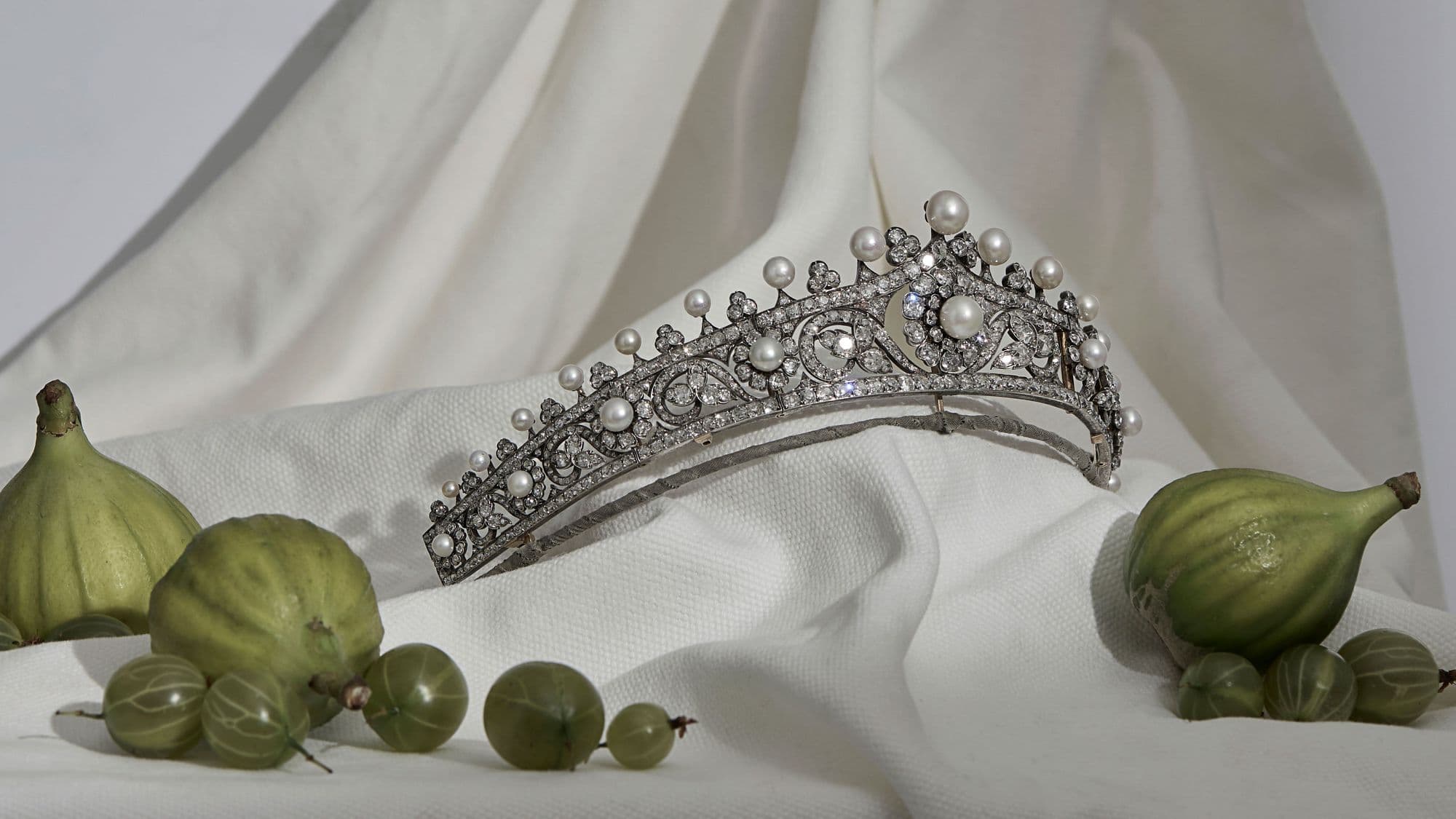
Abernethy Pearl FAQs
The Abernethy Pearl is the largest Scottish freshwater pearl discovered in living history. Found in 1967 by Scottish pearl fisherman William "Bill" Abernethy, it weighs 43.6 grains and is celebrated for its exceptional size, shape and lustre. In 2024 it achieved a world record auction price of £93,951 at Lyon & Turnbull, making it the most valuable Scottish freshwater pearl ever sold at auction.
The Abernethy Pearl was discovered in 1967 by William (Bill) Abernethy, widely regarded as Scotland's last professional pearl fisherman. Trained by his father, Abernethy spent decades searching Scotland's rivers for freshwater pearls while developing an exceptional understanding of freshwater pearl mussels. He remained a passionate advocate for protecting Scotland's rivers and their fragile ecosystems throughout his life.
The Abernethy Pearl is valued for its extraordinary rarity, remarkable size, exceptional quality and historical significance. Scottish freshwater pearls are among the rarest natural pearls in the world, and specimens of this calibre are exceptionally uncommon. Its association with Bill Abernethy, together with its place in Scotland's pearl fishing history, further adds to its importance and desirability among collectors.
Yes, Scottish freshwater pearls can still occur naturally in Scotland's rivers, but they are extremely rare. It is estimated that only around one in every 5,000 freshwater pearl mussels contains a pearl, and only a small proportion of these are of gem quality. The freshwater pearl mussel (Margaritifera margaritifera) is now a protected species, making new discoveries exceptionally uncommon.
No. Wild freshwater pearl fishing is now illegal in Scotland. The freshwater pearl mussel is a protected species under UK conservation legislation, and it is an offence to disturb, collect or damage the mussels or their habitat. These protections help safeguard one of Scotland's most endangered freshwater species and ensure the preservation of its natural heritage.