The Pure Radiance of Dharma and Dao
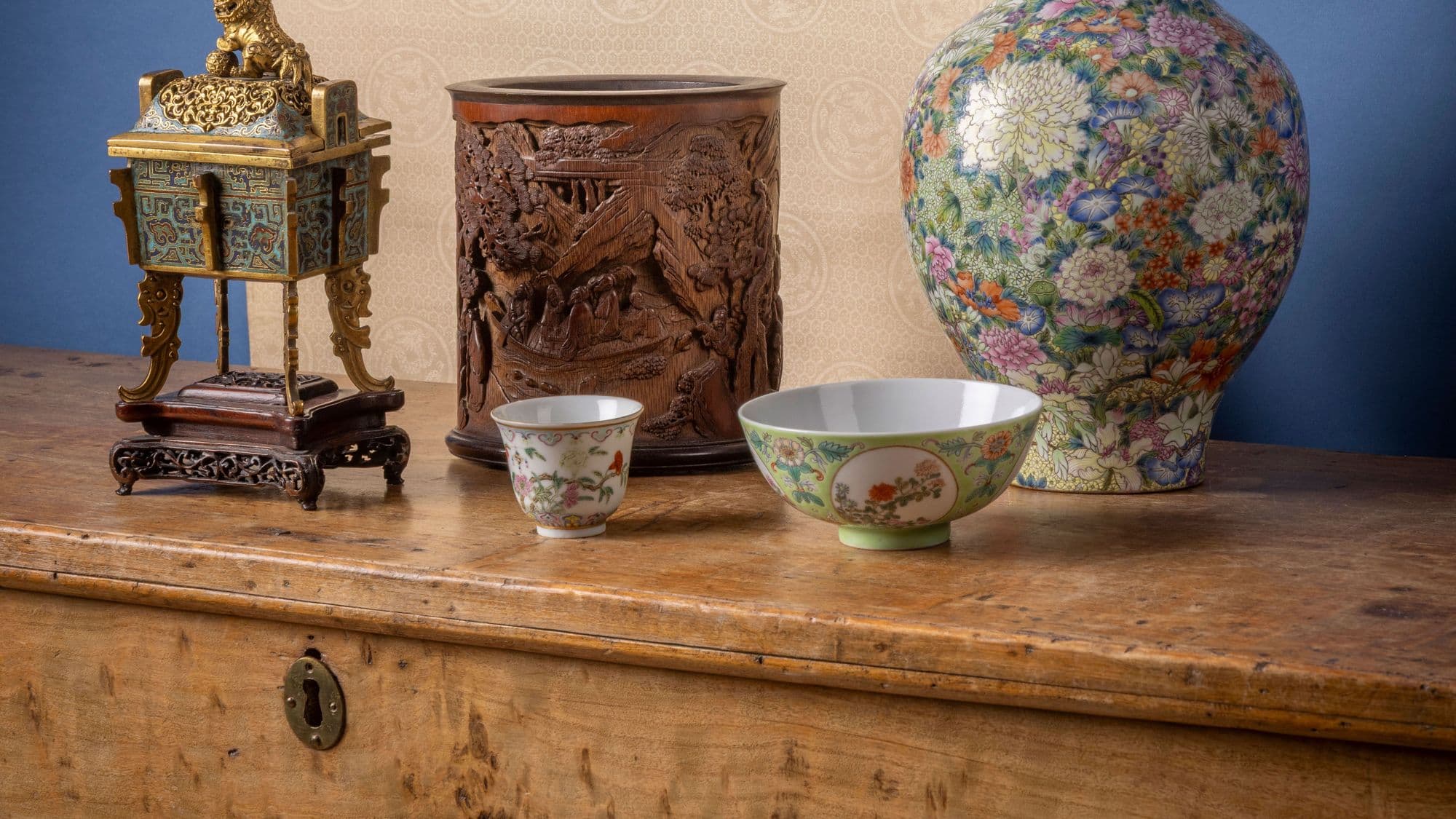
Chinese and Tibetan Buddhist and Daoist religious art, developed across centuries, embodies a dynamic continuum of spiritual practice, artistic inheritance, and intercultural exchange. Through sacred imagery and masterful craftsmanship of ritual wares, they materialise systems of belief, ritual, and cosmology through carefully codified forms and symbols.
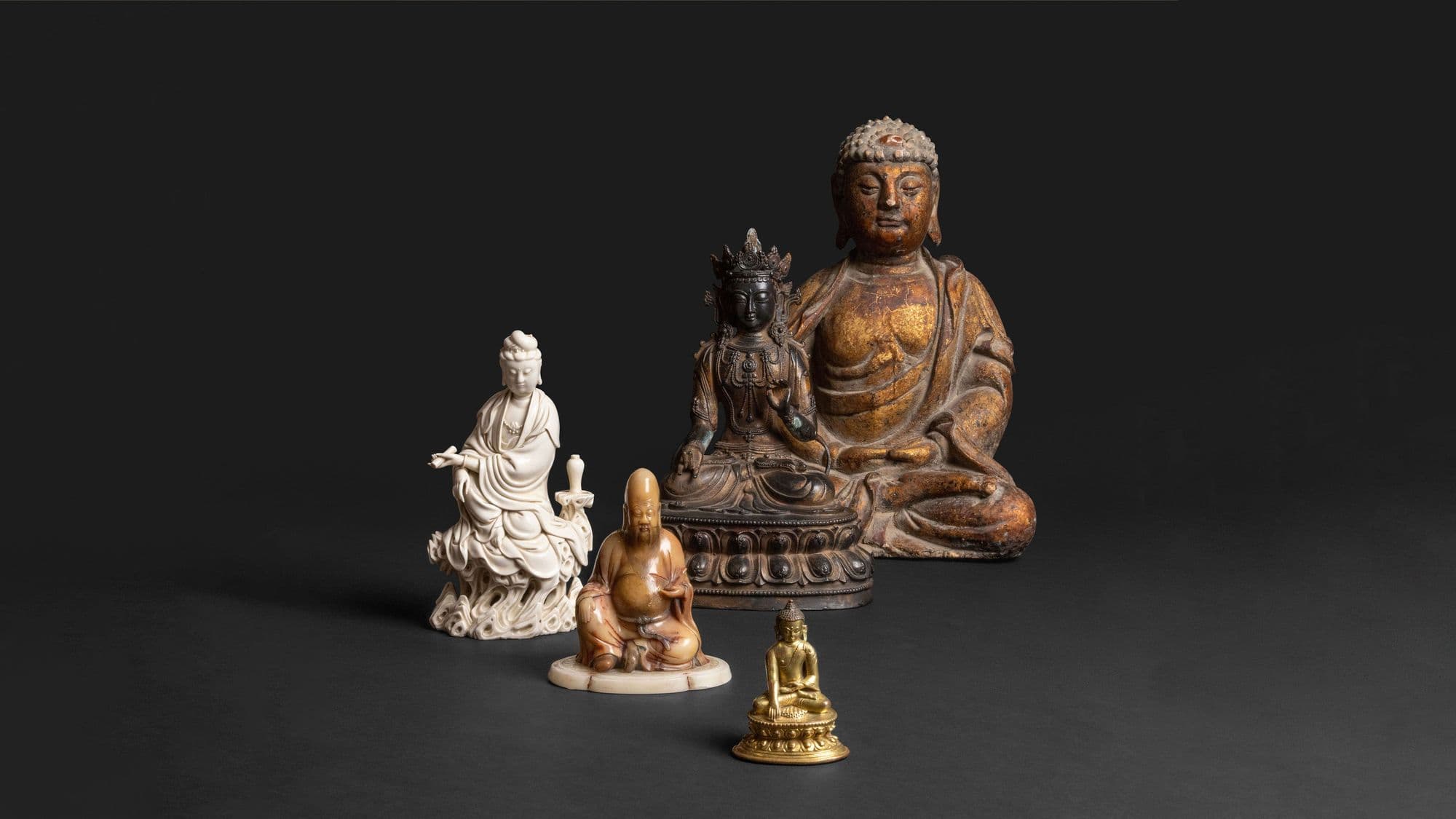
Their craftsmanship, whether realised through carving, casting, modelling, painting, or embroidering, across materials such as wood, bronze, porcelain, bamboo, stone, paper, or textile, gives tangible form to sacred imagery drawn from Buddhist and Daoist visual cultures. Finely modelled Dehua figures of Guanyin, for instance, embody Avalokiteshvara’s purity in luminous white porcelain, often softened by a gentle ivory-toned warmth. In contrast, bronze representations of Guanyin and other bodhisattvas convey a sense of solemn, enduring authority, their presence shaped through the transformative processes of fire and alloy.