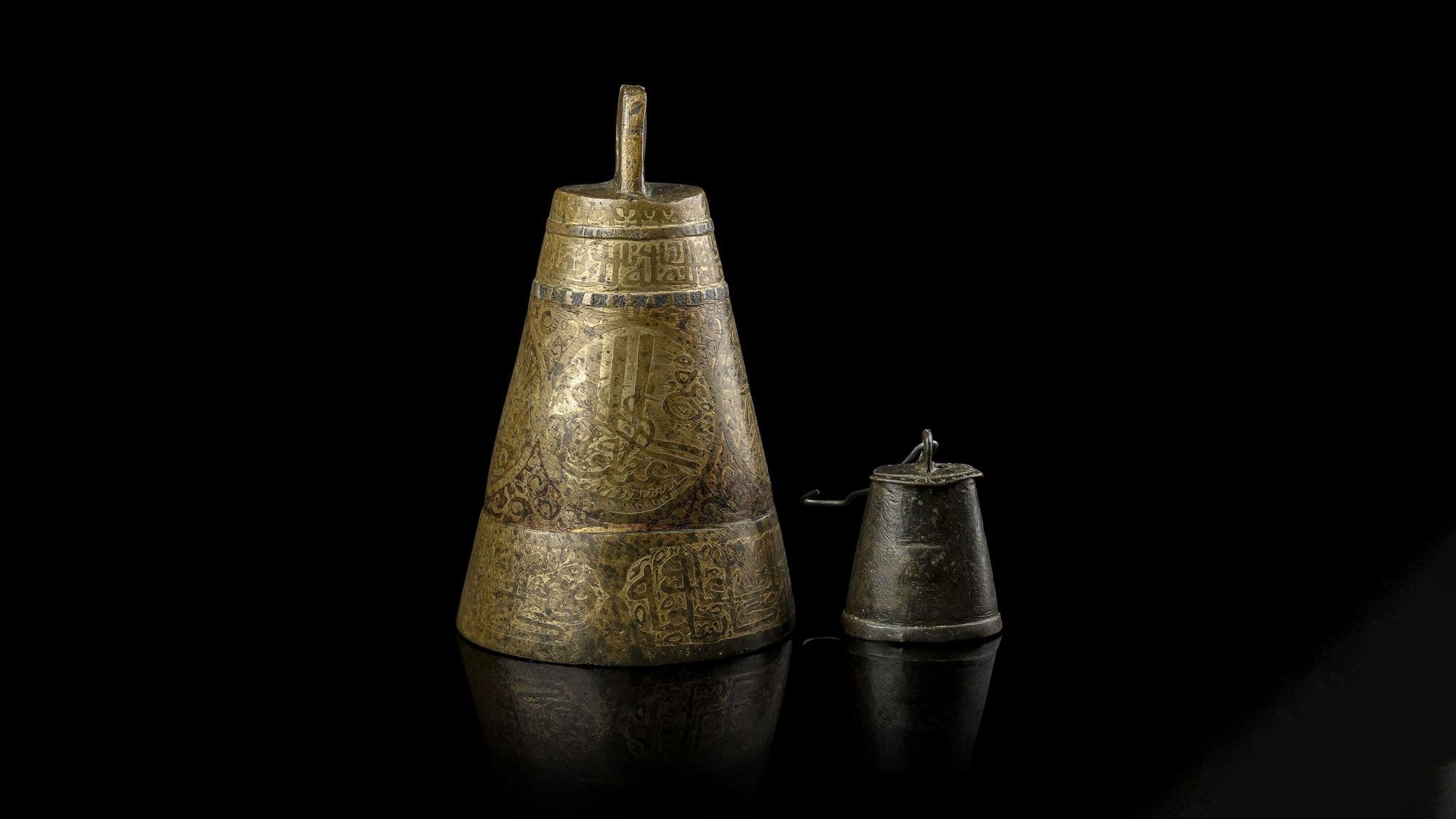
At the heart of this magnificent procession travelled the Mahmal, the sultan’s personal offering carried upon a richly adorned camel. The lead camels, particularly those bearing the Mahmal, were lavishly decorated with embroidered textiles, ceremonial harnesses, and specialised camel bells. The rhythmic chiming of these bells helped maintain order and discipline within the caravan, signalling movement to pilgrims while also announcing the regiment’s arrival to surrounding settlements and encampments along the Hajj route. Their resonant sound heightened the grandeur and spiritual atmosphere of the pilgrimage, echoing the devotion and collective anticipation surrounding the journey to the Hijaz.
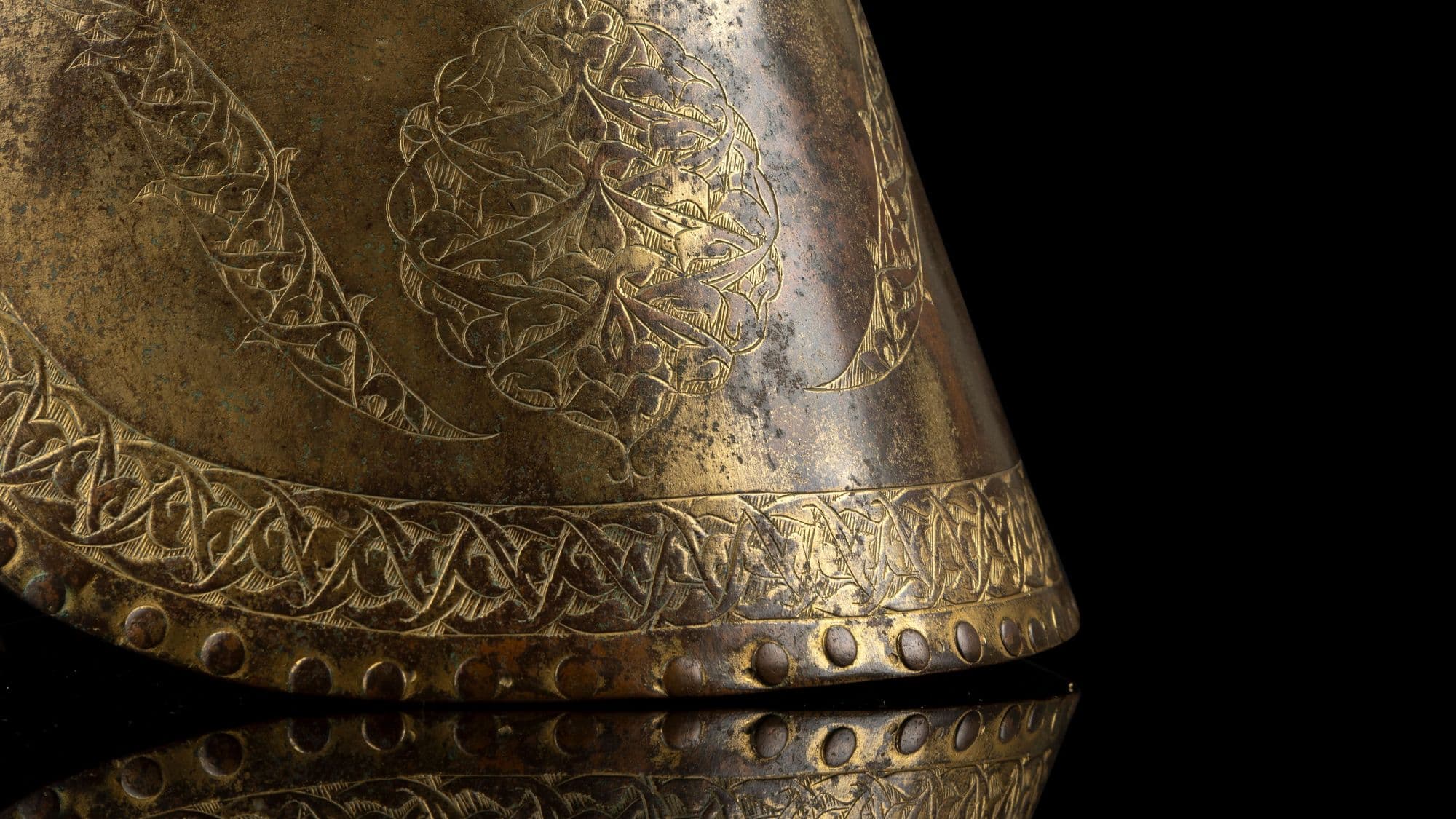
Typically cast in brass or bronze, Ottoman camel bells were often engraved with sacred inscriptions, Ottoman decorative motifs, prayers, or Qur’anic verses. The example shown above bears a tughra resembling that of Sultan Abdülhamid II (r. 1876–1909), suggesting a late 19th century date and linking the object directly to the final decades of Ottoman imperial patronage of the Hajj.
The use of camel bells within pilgrimage caravans is documented across centuries of Islamic art and material culture. They appear, for example, in a late 17th century Gujarat manuscript copy of the Anis al-Hujjaj, now in the Khalili Collection (inv. no. MS 1025), reproduced in Venetia Porter (ed.), Hajj: Journey to the Heart of Islam (The British Museum Press, 2012, p.153, fig.106). Similar ceremonial bells can also be seen in a British print dated 1882 depicting the blessing of the Mahmal, likewise held in the Khalili Collection (inv. no. ARC.pt 101). As such, these bells represent a rare and important surviving example of Ottoman pilgrimage material culture, reflecting both the ceremonial splendour of the Hajj and the religious authority of the Ottoman sultans.
Illustrated below: A Camel Caravan to Mecca. Photo Dept., photographer, Public domain, via Wikimedia Commons