Thomas Cook and a New Era of Travel
In Britain, Thomas Cook, founder of the travel agency Thomas Cook & Son, had been arranging expeditions within the country from around 1845, recognizing opportunities for more affordable travel with the establishment of the railways. In 1851, Cook arranged trips for over 150,000 people to travel to and visit the Great Exhibition in London: a spectacle created by Prince Albert and civil servant Henry Cole, this grand display in Hyde Park presented marvels of industry as well as of arts and design. From there, Cook expanded by planning expeditions into Europe thus helping to usher in a chapter in the evolution of international travel which we can easily recognize in our 21st century world.
Micro-Mosaics: Souvenirs of the Grand Tour
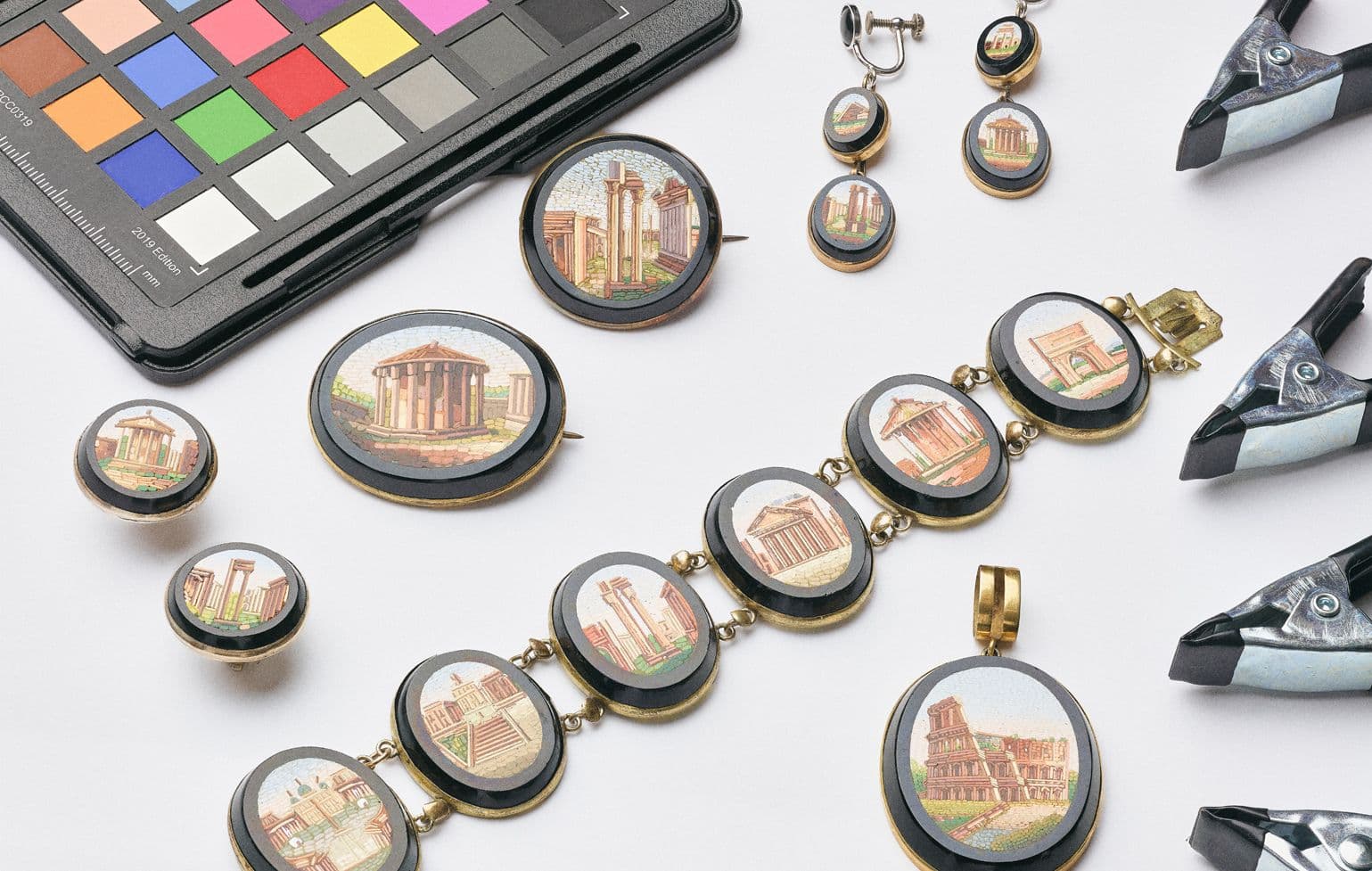
Among a European travel itinerary, Paris, Rome, Venice and Florence were essential stops. As we do today, travellers would look to purchase a token to commemorate a region visited: enter the micro-mosaic. As can be seen in lot 182 being offered in the September 23rd Jewellery auction, bracelets, earrings, brooches and pendants would be meticulously inlaid with scenes of Italian cities and sites; the remains of the Roman Forum, St. Peter’s Square and the Parthenon to name a few. These delicate and impressive pieces of art were easily portable souvenirs and, though certainly a luxury item, the concept is not dissimilar to a modern-day tourist buying a postcard or magnet to display and enjoy. Beyond being a souvenir, wearing a micro-mosaic jewel upon their return home showed the wearer to have a discerning taste rather than displaying more obvious signs of wealth: they were educated, sophisticated and appreciated craftsmanship and culture.
Victorian Micro-Mosaic Mourning Jewellery
Two other examples of this Italian craft can be seen in lots 180 and 181 which display wildlife and a landscape, respectively but the difference lies in their function: these are pieces of mourning jewellery. Within the Victorian Era, symbolism was highly important and the artisans who created the micro-mosaics expanded their visuals to include floral motifs that would hold hidden symbolism of love, fidelity or remembrance. This makes the jewellery a very personal item, carrying with them emotion and importance for the wearer.
The Enduring Appeal of Micro-Mosaic Jewellery
The popularity of these jewels remained high throughout the 19th century but by the early 20th century, they had fallen out of fashion as the Art Nouveau and Art Deco styles were on the rise. However, they remain a fascinating piece of history demonstrating incredible capabilities in craftsmanship.