Rotaflex Lighting: New Materials and Modern Lampshades
Bernard Stern founded Rotaflex Great Britain in July 1953. An artist who also developed a substantial business career, Stern recognised the commercial possibilities of a Danish process for producing lightweight, translucent lampshades. By around 1954–55, the Reids were working as his principal design consultants.
The process gave them considerable freedom of form. Cellulose acetate filament was wound around a wooden former and bonded to create a self-supporting shade, its surface defined by closely spaced ribs. Patented in 1946 by the Danish engineers Bent Højberg-Pedersen and Bent Panker, the technique was subsequently licensed to manufacturers internationally. Cylinders, globes and elongated forms could all be produced using the same underlying method.
For a designer, the appeal extended beyond shape. The material itself became part of the lighting effect, filtering the bulb through successive strands of translucent plastic. The Reids used this quality with restraint. In their pendant, table and floor lamps, the volume of the shade was balanced against a spare supporting structure. Decoration came from the ribs, the proportions and the passage of light.
The Ovoid Lampshade and International Recognition
The Reids’ ‘Ovoid’ shade received a Council of Industrial Design Design of the Year award in 1957. Its rounded profile demonstrated how effectively a relatively simple manufacturing process could produce a distinctive domestic object.
Rotaflex also places the Reids within a wider European history. The manufacturing process crossed national borders, while designs circulated between related businesses. Two Reid lamps entered the Disderot catalogue in France in 1957, including a brass-and-glass pendant whose earlier version had appeared in the British Forrest Modern range.
British lighting was participating in an international exchange of designs, materials and manufacturing expertise.
British Lighting in the 1960s: Aluminium and Adjustable Spotlights
The Reids’ lighting was not confined to translucent plastic. Their adjustable spotlights for Rotaflex received a Design Centre Award in 1961.
Natural anodised aluminium housings, black metal components and white enamel revealed another aspect of their work: precise adjustment and the careful distinction between materials. These fittings connected the domestic experimentation of the 1950s with the more technical architectural lighting of the following decade.
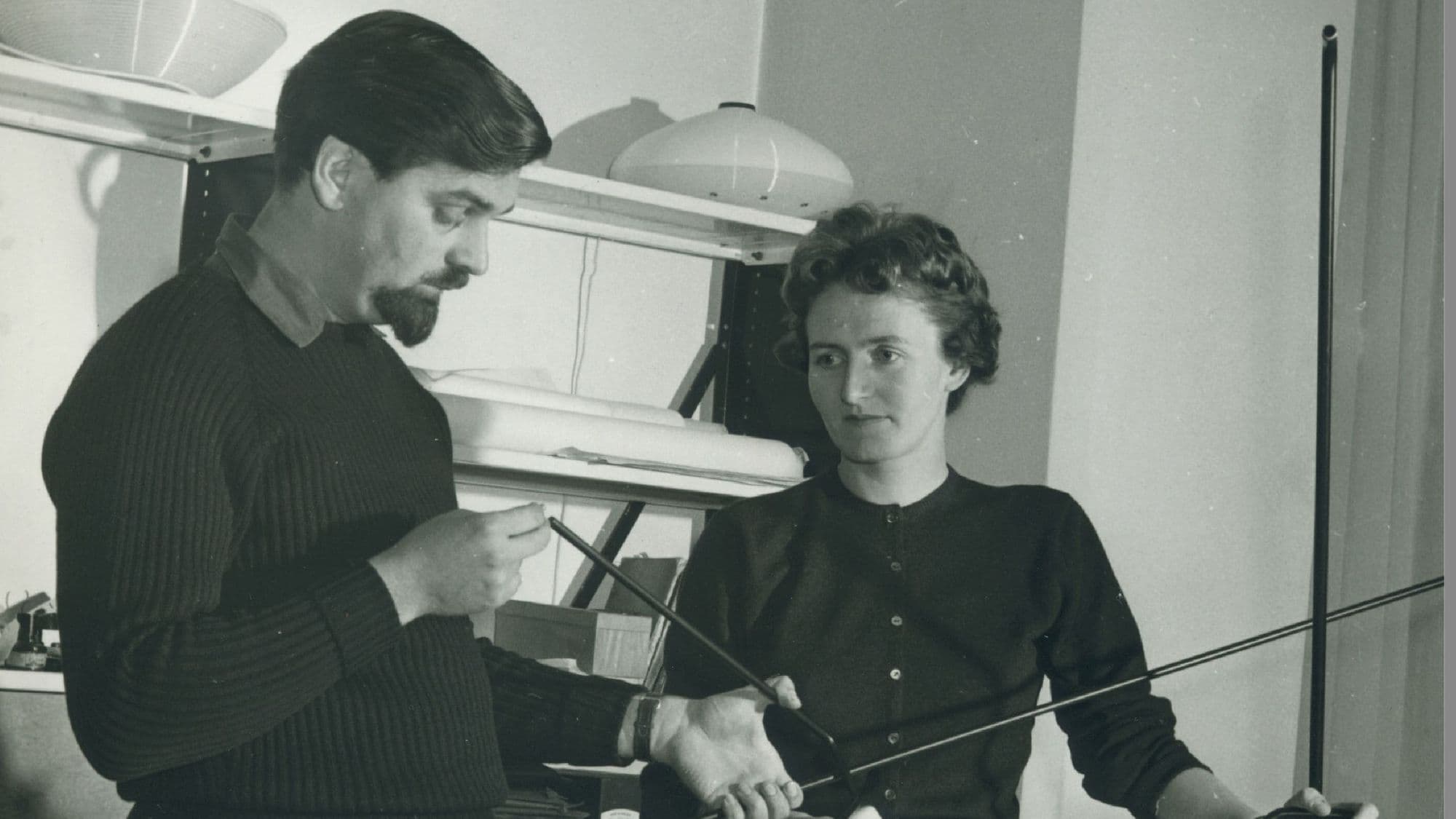
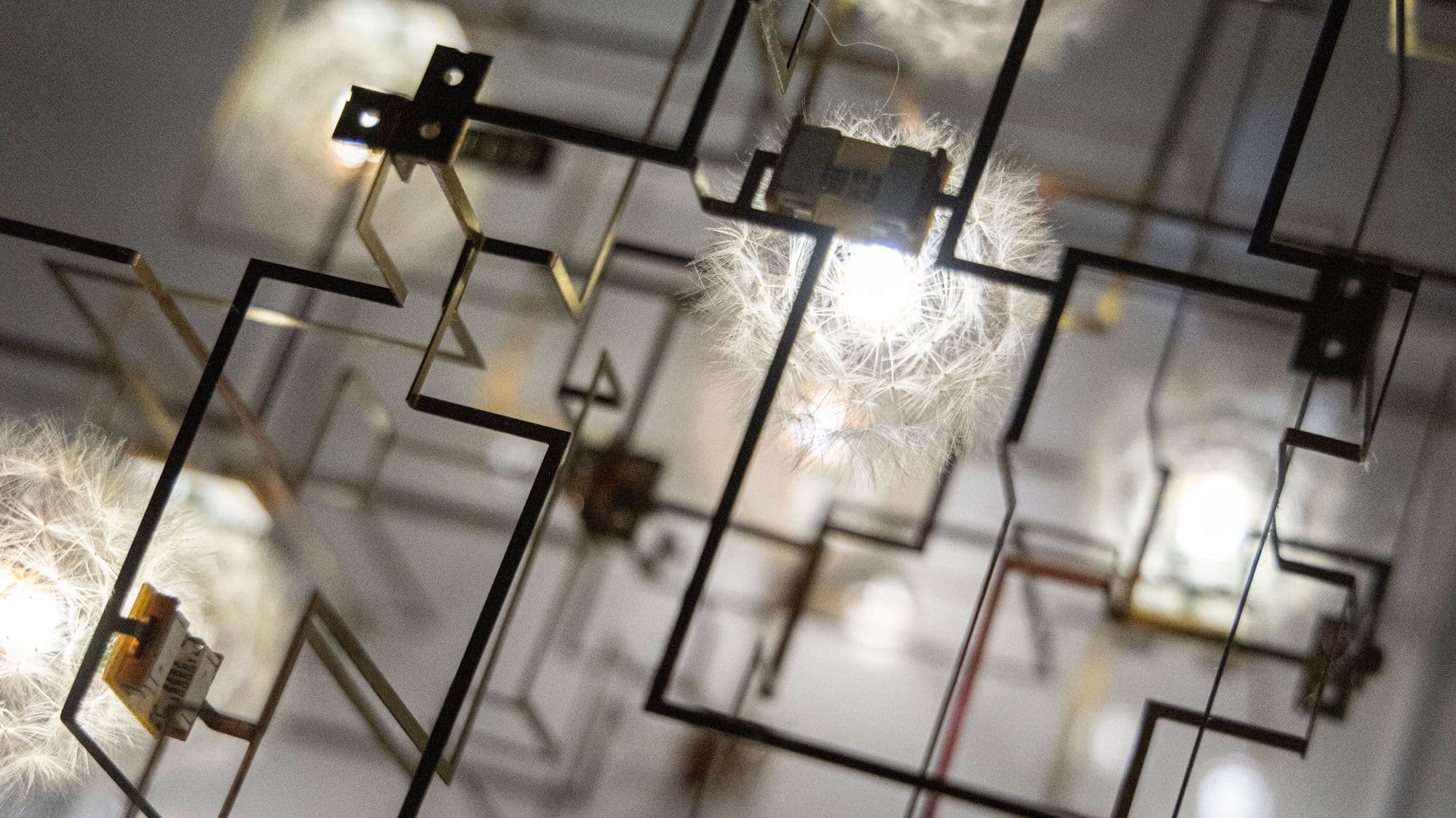
Illustrated above: 1 - John & Sylvia Reid Exhibition photographed by Margaret Howell| 2 - John and Sylvia Reid, circa 1955–56 | 3 - John & Sylvia Reid Exhibition photographed by Margaret Howell | 4 - Forrest Modern Catalogue From 1954 | 5 - Forrest Modern Floor Lamp, circa 1952, shown in the first Forrest Modern catalogue, 1953. | All reproduced with kind permission of John & Sylvia Reid LLP. | John Reid (British 1925–1992) for George Forrest & Son, London Forrest Modern Floor Lamp, c.1952–54, Lyon & Turnbull