Can Sodalite Be Mistaken for Lapis Lazuli?
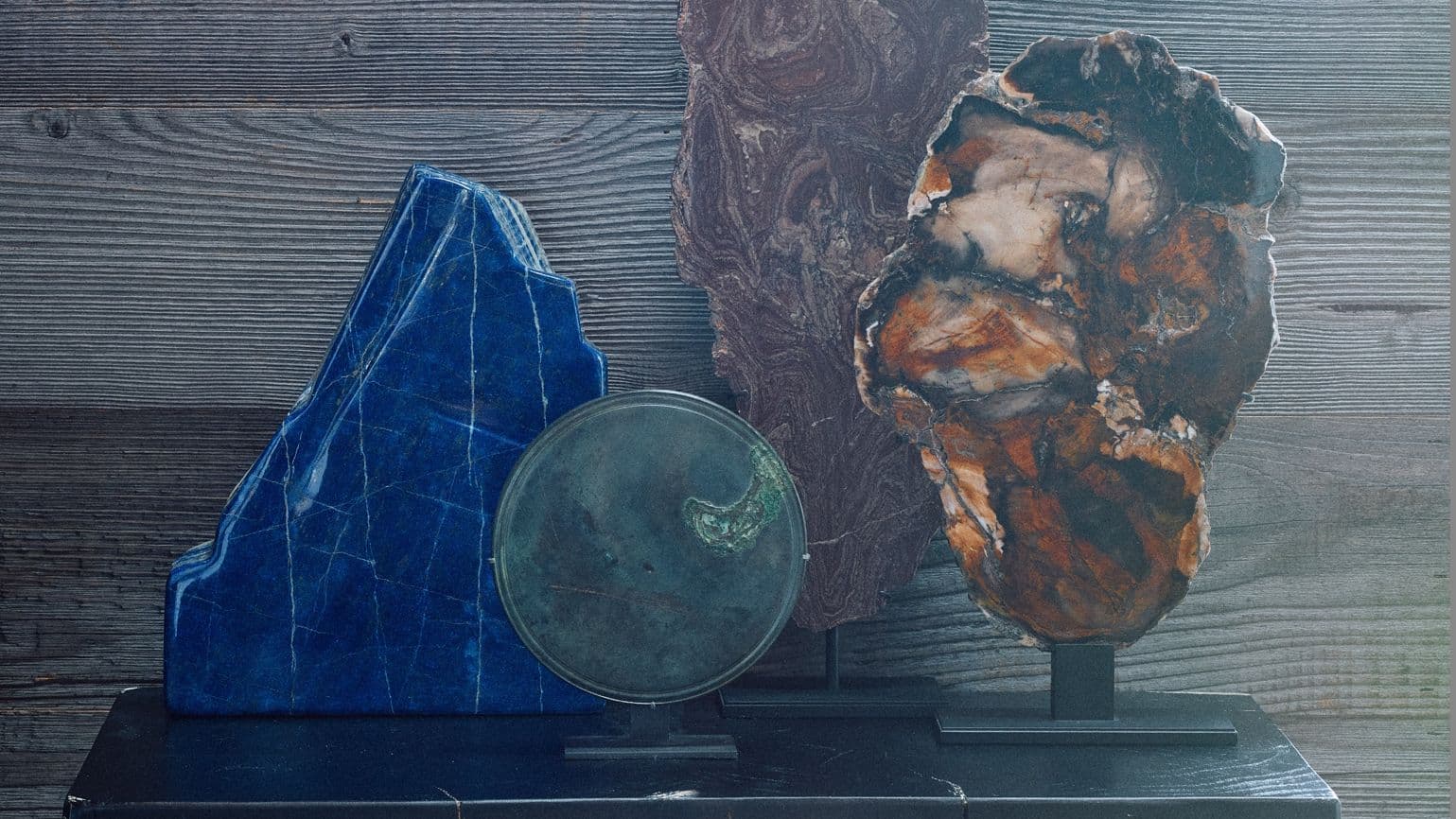
Yes. Sodalite is among the natural materials most frequently confused with lapis lazuli, particularly in polished stones, beads and decorative carvings. The confusion is understandable. Both can be opaque, richly coloured and marked with white mineral inclusions.
It is also worth distinguishing an incorrect identification from a deliberate imitation. A piece of sodalite may have been sold or inherited under the name lapis lazuli without any intention to deceive. Historic descriptions, family recollections and old collection labels are not always accurate.
Conversely, some ornamental objects have been deliberately made from less expensive materials to reproduce the appearance of lapis. For collectors, the important question is not simply whether a stone resembles lapis lazuli, but whether its identification can be supported by its physical and mineralogical characteristics.
Are Lapis Lazuli and Sodalite Related?
They are related in a mineralogical sense, although they are not interchangeable names. Lazurite, the principal blue mineral in lapis lazuli, belongs to the sodalite group of minerals. This helps explain why the two materials can share such similar colours and appearances. However, lazurite and sodalite are distinct mineral species.
Lapis lazuli is a rock in which lazurite is typically an important constituent. Sodalite, by contrast, is the name of a specific mineral, although ornamental material marketed as sodalite may also contain other minerals. This is why describing lapis lazuli simply as a type of sodalite is misleading.
Can You Identify Lapis Lazuli or Sodalite at Home?
Visual examination can provide clues, but it has limitations. A polished stone may conceal some of the characteristics that would be more obvious in a natural specimen. Inclusions may be very fine, and surface treatments can change the appearance of the material.
Online advice sometimes recommends scratch tests, chemical reactions or applying solvents to a stone. These methods are not advisable for potentially valuable objects.
Both materials are relatively soft compared with gemstones such as sapphire or diamond, and unnecessary testing can damage polished surfaces. Historic jewellery and carved objects may also contain fragile settings, adhesives or other materials that are vulnerable to cleaning products. For a potentially significant piece, professional examination is preferable. Depending on the object, identification may involve magnification and appropriate non-destructive gemmological or mineralogical techniques.
Does It Matter Whether a Stone Is Lapis Lazuli or Sodalite?
It can matter considerably, particularly when an object is being described, collected or valued. Lapis lazuli has a long history of use in the ancient world, including jewellery, seals, inlay and carved objects. It was also the source of natural ultramarine, a pigment of considerable importance in European painting.
Sodalite has its own mineralogical and decorative appeal. It has been used in jewellery, polished ornaments and architectural applications, with certain localities producing especially attractive material. For an ordinary polished stone, accurate identification helps establish what is being bought or sold. For a historic object, however, the material may be only one part of its significance. A carved vessel, piece of jewellery or antique ornament might also require consideration of its date, workmanship, maker, condition and provenance. An important object should never be valued solely on the assumption that one blue material is more desirable than another.
What About Blue Stones That Are Neither Lapis Lazuli nor Sodalite?
Not every opaque blue stone belongs to either category. Other natural materials, including azurite, dyed howlite and certain varieties of jasper, may be encountered in jewellery and ornamental objects. Glass, ceramic and manufactured composites can also reproduce the appearance of natural blue stone. This is particularly relevant when examining objects with little accompanying documentation.
A convincing blue colour is not sufficient evidence of identity, and the presence of white veining does not narrow the possibilities to just lapis lazuli and sodalite.