Portrait Rings and the Jacobite Cause
Portrait jewellery had long been associated with royal patronage. Rings, lockets and miniature portraits were commissioned by the Stuart family to commemorate significant events and strengthen ties between supporters. Following the execution of King Charles I and later during the reign of Charles II, portrait jewellery became an established means of expressing loyalty to the Crown.
The Jacobite court adopted the tradition more selectively. As a result, surviving portrait rings depicting James Francis Edward Stuart, the 'Old Pretender', or his son Prince Charles Edward Stuart, are exceptionally rare. Many surviving examples of Jacobite jewellery were produced by later sympathisers rather than the Stuart court itself, making period pieces directly connected to the movement especially significant.
King James III and the Official Stuart Portrait
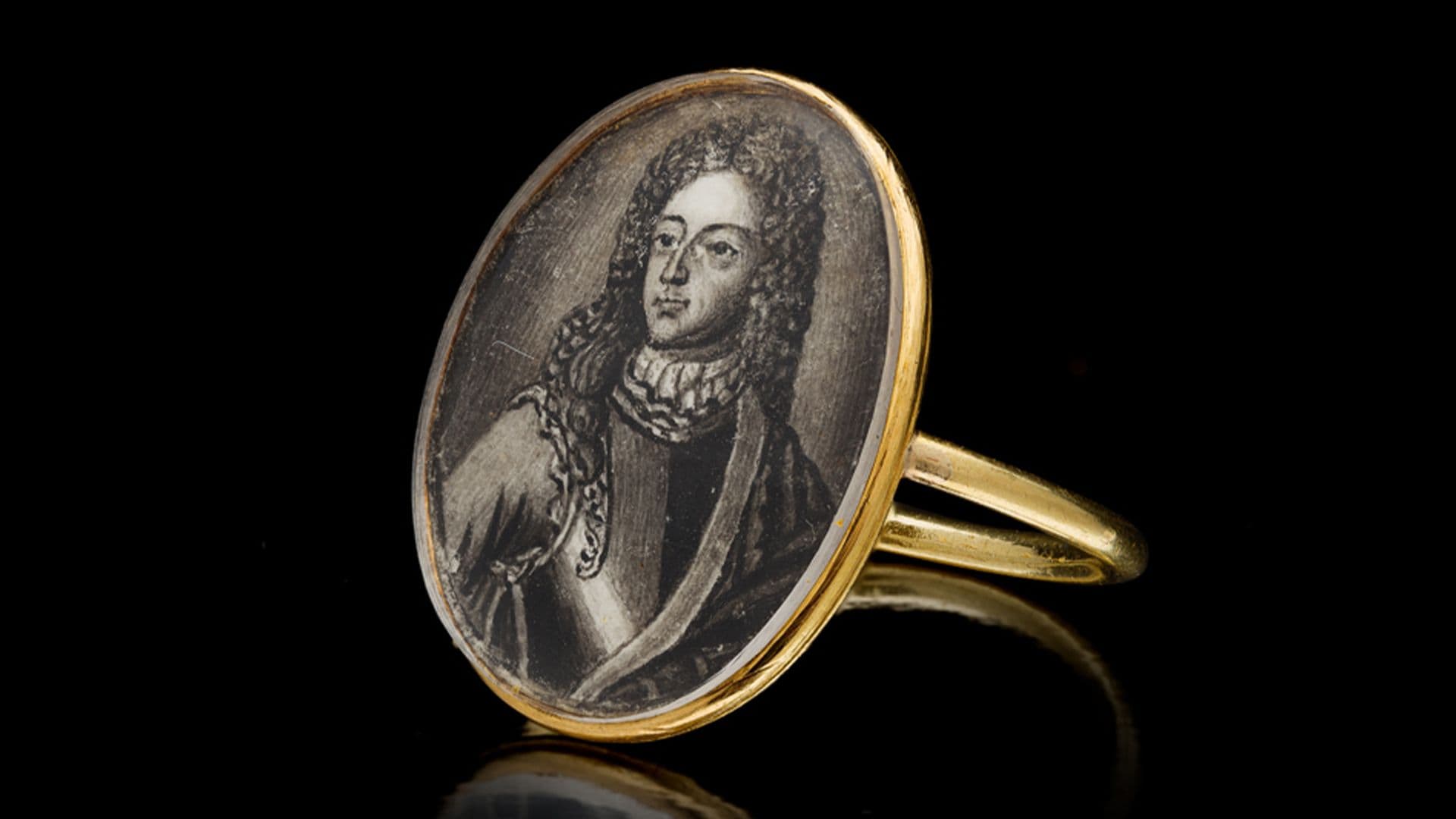
One of the most recognisable images of James Francis Edward Stuart was commissioned by his mother, Mary of Modena, in 1712. Painted by the French artist Alexis-Simon Belle, it quickly became the official likeness of the Jacobite claimant and was reproduced as full-size portraits, engravings and miniature paintings for supporters across Britain and Europe.
The portrait presents James wearing armour and the sash of the Order of the Garter, emphasising both his royal lineage and his claim to the British throne. Notably absent are a crown or explicit royal title, subtle choices that reflected the uncertain political climate while reinforcing the belief that his rightful succession would ultimately be restored.
Commissioned shortly before James left the Stuart court at Saint-Germain, the portrait became one of the defining visual symbols of the Jacobite movement during the years leading up to the 1715 Rising.
A Rare Jacobite Portrait Ring
A remarkable gold-mounted portrait ring handled by Lyon & Turnbull illustrates the importance of these objects. Dating from around 1720, it features a finely painted miniature of James Francis Edward Stuart based on Alexis-Simon Belle's celebrated portrait.
The reverse is engraved with the coat of arms of the Puleston family of North Wales, providing valuable evidence of the geographical reach of Jacobite support. The Pulestons held estates in Denbighshire and Flintshire, regions closely associated with Jacobite activity throughout the eighteenth century.