1. Identify What You Have Inherited
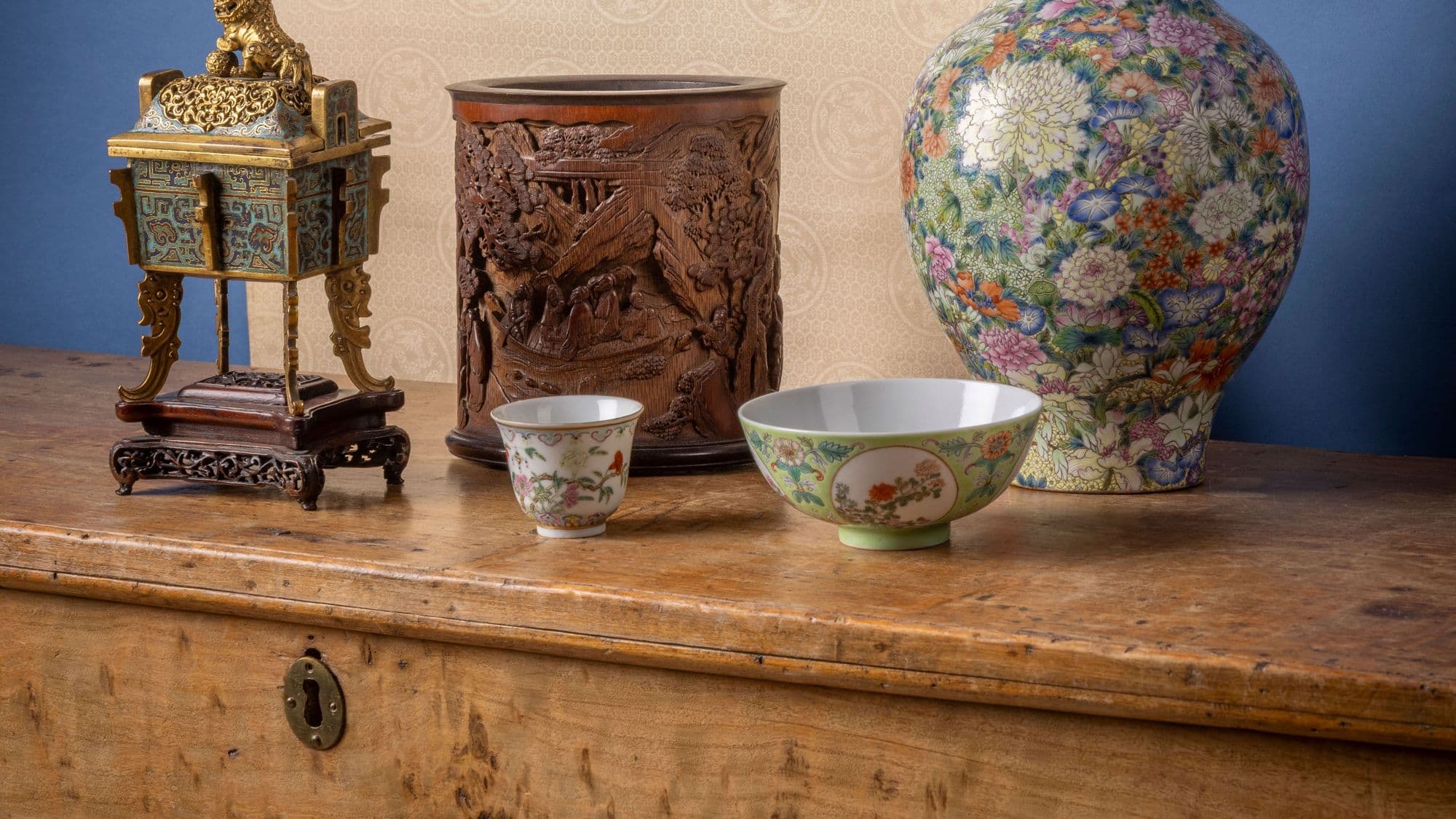
Japanese art encompasses a remarkably wide range of objects. Some were made for domestic use in Japan, while others were produced specifically for international markets.
Among the Japanese works of art commonly found in British homes and private collections are:
- Japanese ceramics and porcelain: Decorated vases, bowls, dishes and figures, including Satsuma, Imari, Arita and Kakiemon wares.
- Netsuke: Small carved objects originally used to secure personal accessories to traditional Japanese dress.
- Okimono: Decorative sculptures made from wood, metal and other materials.
- Japanese bronzes: Vases, incense burners, animal sculptures and decorative metalwork.
- Cloisonné enamel: Intricately decorated vessels, dishes and boxes featuring coloured enamels.
- Japanese lacquerware: Boxes, trays, cabinets and other objects, sometimes decorated with gold or mother-of-pearl.
- Japanese woodblock prints: Landscapes, portraits, theatrical subjects and scenes of everyday life.
- Inro: Small compartmentalised containers traditionally suspended from the waist.
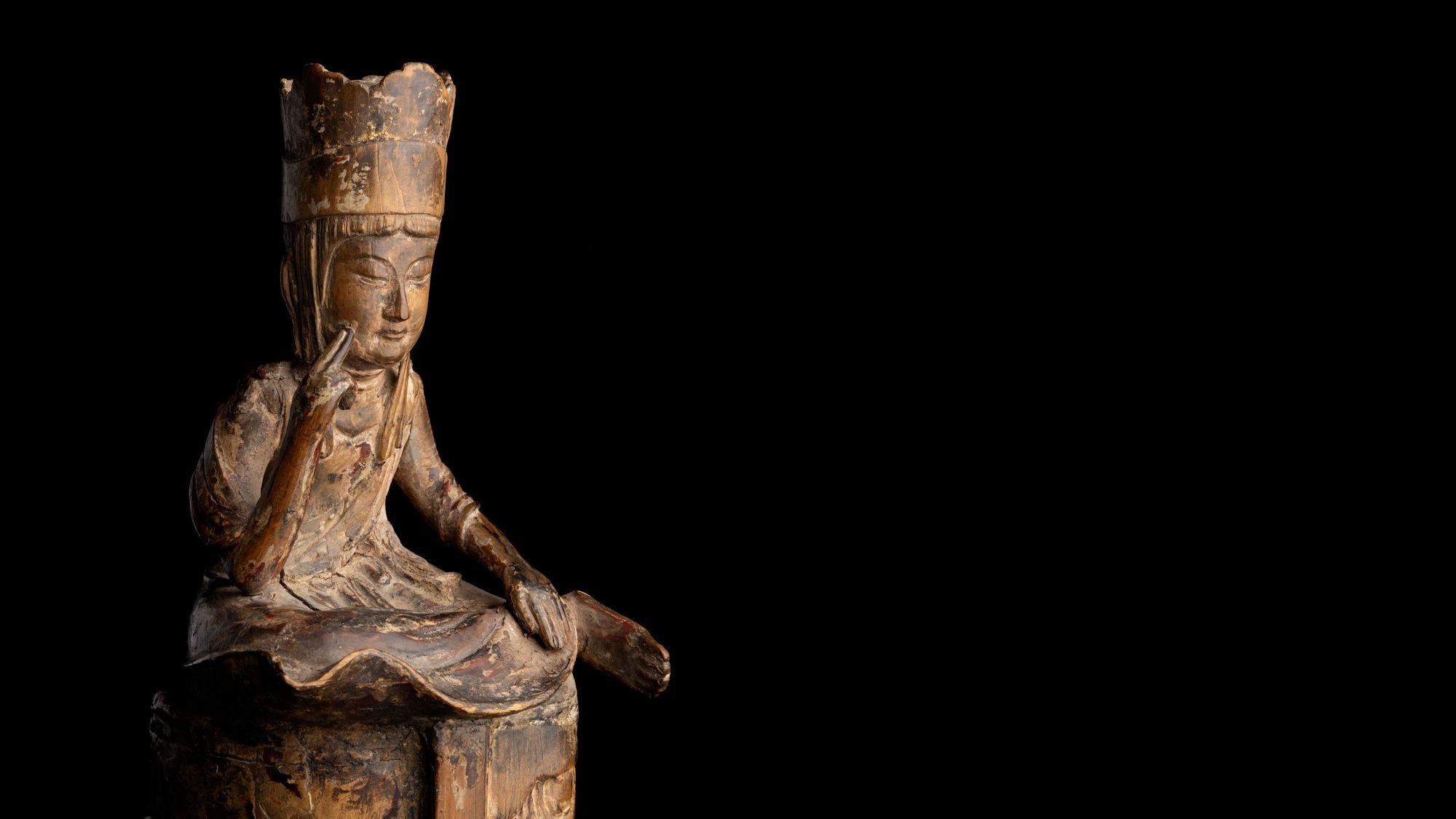
- Buddhist art: Religious sculptures, ritual objects and devotional works.
Objects that have been passed down through families are not always correctly identified. Pieces described as Chinese may be Japanese, while objects believed to be much older may date from the nineteenth or early twentieth century. Establishing an accurate identification is fundamental to understanding their value.
2. Look for Signatures, Marks and Inscriptions
Some of the most useful information about an inherited Japanese object may be found on its underside, reverse or interior. Japanese artists, ceramicists and metalworkers frequently signed their work, although signatures can take many forms and are not always immediately visible.
Look carefully for:
- Painted or impressed marks beneath ceramic vessels
- Incised signatures on bronze sculptures
- Small carved signatures on netsuke and okimono
- Marks on the bases of cloisonné vases
- Artist signatures and publisher seals on woodblock prints
- Inscriptions on the lids of wooden storage boxes
- Historic collection labels or handwritten notes
Photograph anything you find, even if it appears faded or difficult to read. A signature may help a specialist identify an artist, workshop or place of manufacture. However, marks can also be copied, added later or used across different periods of production. They should always be considered alongside the materials, workmanship and overall characteristics of the object.
3. Keep Original Boxes and Family Records
When clearing a family home, it can be tempting to separate objects from old packaging, paperwork and handwritten notes. In Japanese art, these accompanying materials can be particularly important. Traditional Japanese wooden storage boxes, known as tomobako when made or inscribed by the artist, may contain information about the maker, title or origin of a work. Other associated boxes may also provide useful evidence of an object's history.
Family records can help establish provenance, particularly where a relative travelled, worked or lived in Japan.
Useful documents might include:
- Original purchase receipts
- Previous auction catalogues
- Dealer labels
- Old insurance valuations
- Letters and correspondence
- Photographs showing objects in earlier family homes
- Travel diaries and records of overseas employment
Even a brief handwritten note recording where an object was purchased can provide a valuable starting point for further research.
4. Avoid Cleaning or Restoring Japanese Art
One of the most common mistakes when preparing inherited objects for sale is attempting to improve their appearance. Japanese works of art often feature delicate surfaces that can be permanently damaged by inappropriate cleaning.
Polishing a bronze may remove its original patina. Household cleaning products can damage lacquer, while attempting to remove discolouration from a woodblock print can affect the paper and pigments. Similarly, amateur repairs to ceramics or cloisonné enamel may complicate subsequent conservation.
Before seeking a valuation:
- Do not polish bronze or other metal surfaces.
- Avoid cleaning lacquer with household products.
- Do not wash or attempt to flatten Japanese prints.
- Leave damaged ceramics and detached fragments as they are.
- Avoid removing old labels, inscriptions or mounting materials.
Where conservation is necessary, a specialist can advise on whether professional treatment is appropriate.
5. Find Out How Much Your Inherited Japanese Art Is Worth
The value of Japanese art varies considerably. Two objects of similar appearance may have very different auction values depending on their maker, age, rarity, condition and quality of workmanship. A nineteenth-century Japanese vase, for example, might be a relatively common export piece or the work of a highly regarded ceramicist. A small carving may be more significant than a much larger decorative sculpture.
When assessing Japanese art, our specialists consider several factors.
- Artist or maker: Works by recognised artists and workshops can attract considerable collector interest.
- Quality of craftsmanship: Fine carving, intricate enamel work, accomplished painting and sophisticated decorative techniques can distinguish exceptional pieces.
- Age and period: The historical context of an object is important, although age alone does not determine value.
- Condition: Damage, restoration, missing elements and alterations may influence auction estimates.
- Rarity: Unusual subjects, forms, techniques and documented commissions may be particularly desirable.
- Provenance: An established ownership history can contribute to an object's significance.
- Current market demand: Collector preferences and recent comparable auction results help inform contemporary valuations.
An old insurance valuation or original purchase price may not reflect what an object could achieve at auction today.