Incense in the Chinese Scholar's Studio
Beyond religious observance, incense became an essential element of cultivated life and permeated every level of society, from imperial courts to the scholar's studio.
During the Ming and Qing dynasties, the preparation and appreciation of fragrance formed part of the refined pursuits of the studio, alongside calligraphy, painting, antiquarian collecting and the appreciation of fine objects.
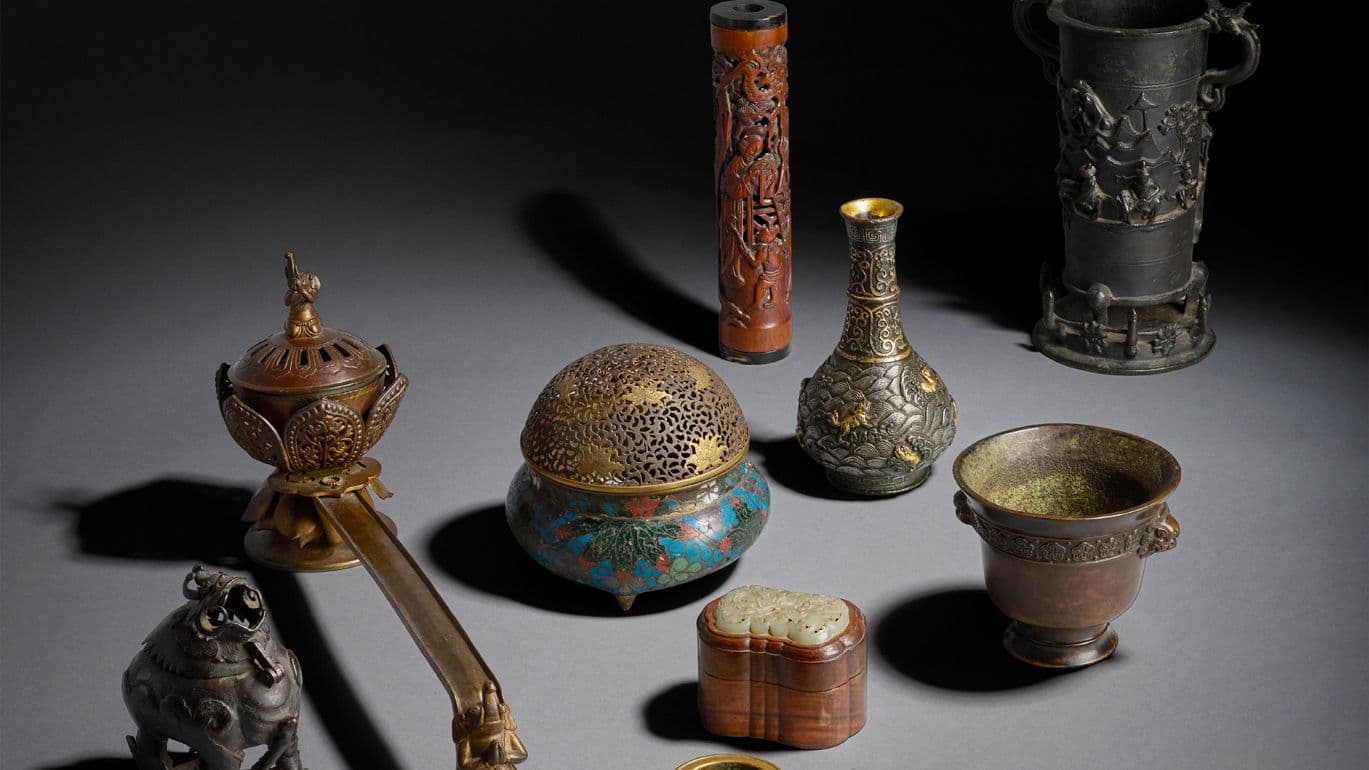
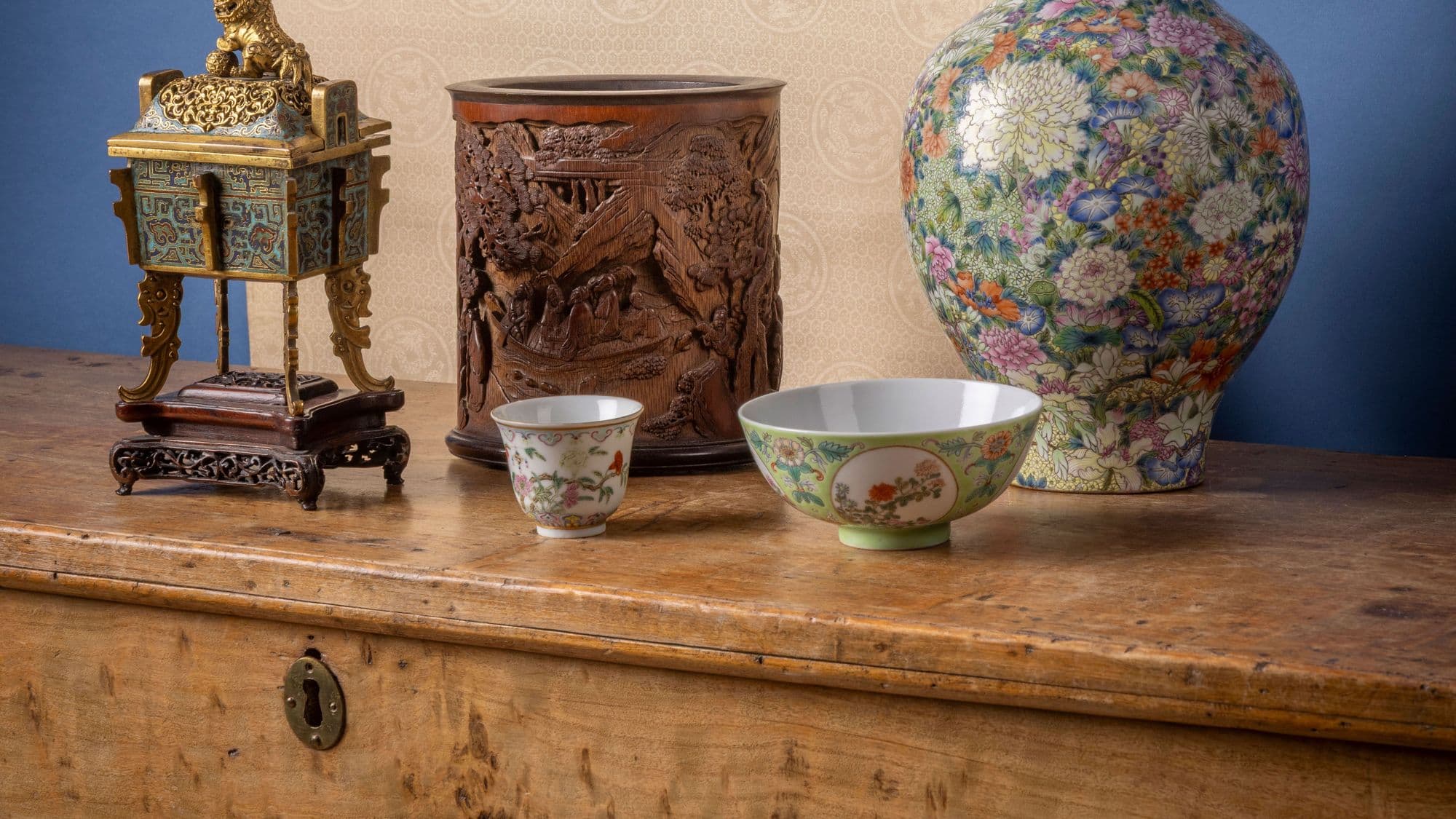
Incense vessels and associated implements were consequently fashioned in a remarkable variety of materials, including bronze, cloisonné enamel, jade, bamboo and fine hardwoods. Their forms and decoration reveal both technical virtuosity and a sophisticated engagement with auspicious symbolism, archaistic designs and the natural world.
Luduan Incense Burners
The luduan, featuring the mythical beast associated with wisdom and discernment, became a favoured form for incense burners, its hollow body serving as the censer and smoke issuing from its mouth.
Chinese Incense Vases and Boxes: The Three Incense Utensils
By the mid-to-late Ming dynasty, the practice of incense appreciation had become increasingly refined, and the 'Three Incense Utensils' (luping sanshi) became a standard arrangement in the scholar's studio.
The set comprised an incense burner, an incense-tool vase and an incense box, displayed together as a harmonious ensemble.
Chinese Incense Boxes
Incense boxes such as Lot 8: Small Cloisonné Enamel 'Lotus' Incense Box with Cover were used to store incense pellets, cakes or powders. Made from a variety of materials, they were designed with closely fitting lids to preserve the fragrance.
Chinese Incense-Tool Vases
The incense-tool vase, or xiang ping, was designed to hold the implements of the incense ceremony: the tongs, the shovel and the incense sticks themselves. Lot 3: Bronze 'Zhong' Incense-Tool Vase and Lot 6: Finely Cast Silver-Inlaid and Gilt-Bronze 'Sea Beast' Incense-Tool Vase are both masterpieces of this genre.
The latter piece bears an attribution to Hu Wenming, a late Ming dynasty master from Yunjian (modern Songjiang, Shanghai), renowned for his parcel-gilt and silver-inlaid wares. The body is chased with gilt mythical sea creatures leaping above crashing waves rendered in silver inlay, a tour de force of the metalworker's art.
Chinese Bamboo Incense Tubes
The incense tube, such as Lot 12: Carved Bamboo 'Figural' Parfumier, is a specialised incense implement that emerged during the mid-to-late Ming dynasty and was primarily used for burning stick incense.
Typically cylindrical in form, the body was intricately carved with openwork designs. As incense smoke drifted through the pierced openings, the tube served not only a practical purpose but also offered considerable decorative appeal.
Collecting Chinese Incense Burners and Utensils
Chinese incense-related objects encompass a remarkable range of materials, periods and techniques. Collectors may encounter early bronze censers, Ming dynasty metalwork, Qing dynasty cloisonné enamel, Longquan celadon vessels and intricately carved bamboo incense tubes.
When examining these objects, specialists consider their age, materials, craftsmanship, condition, provenance and the relationship between form and intended use.
The quality of casting and surface decoration is particularly important for bronze censers, while cloisonné enamel, carved bamboo and ceramic examples present their own technical and historical considerations.
Understanding the religious, ceremonial or scholarly context of an object can also help explain its form, decoration and significance.
Chinese Art at Lyon & Turnbull
Lyon & Turnbull's Asian Art department specialises in Chinese ceramics, bronzes, jade, metalwork and works of art, including objects associated with religious practices and the scholar's studio.
Our specialists provide complimentary and confidential auction valuations for individual works and private collections.
Request an Auction Estimate