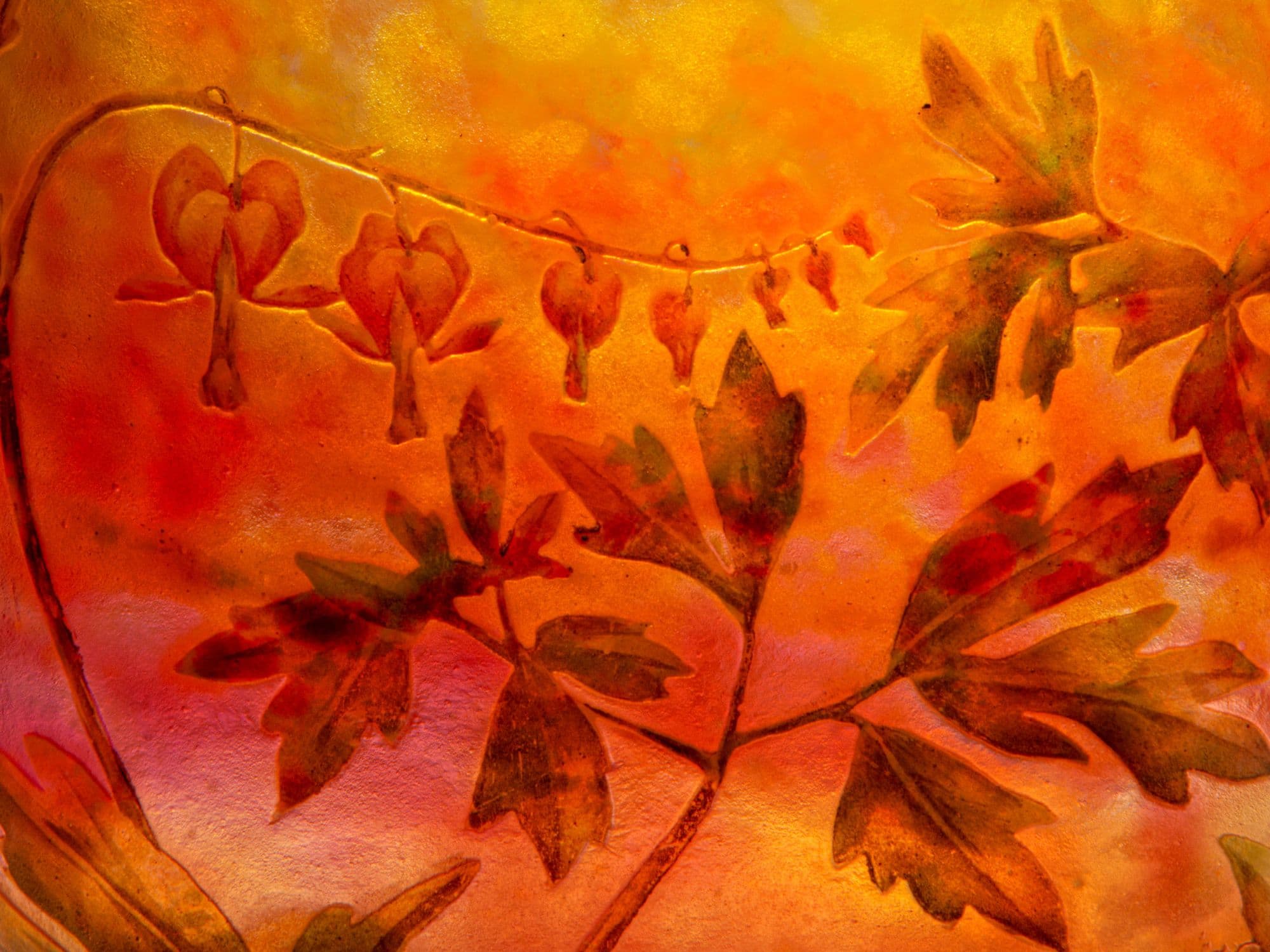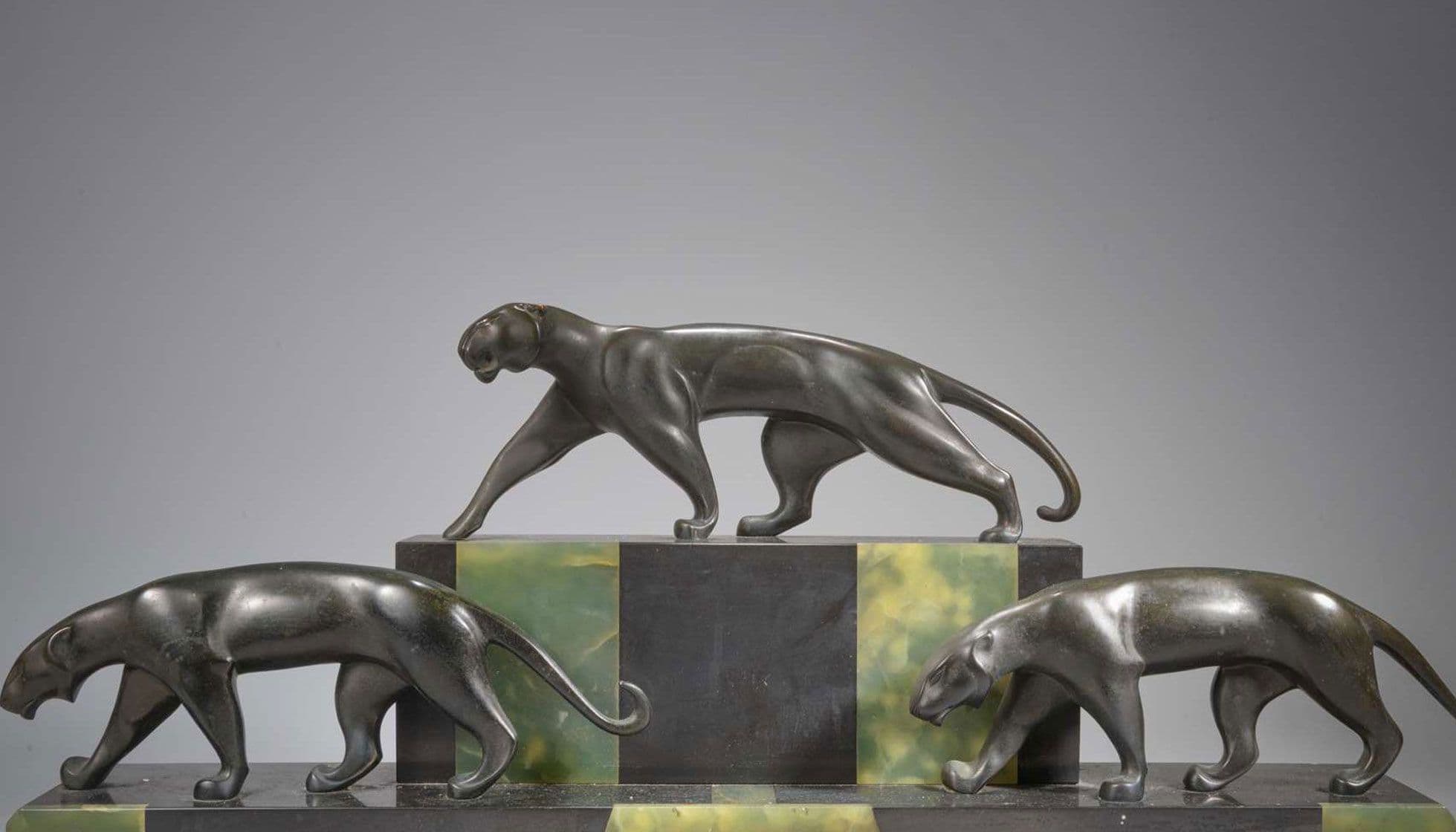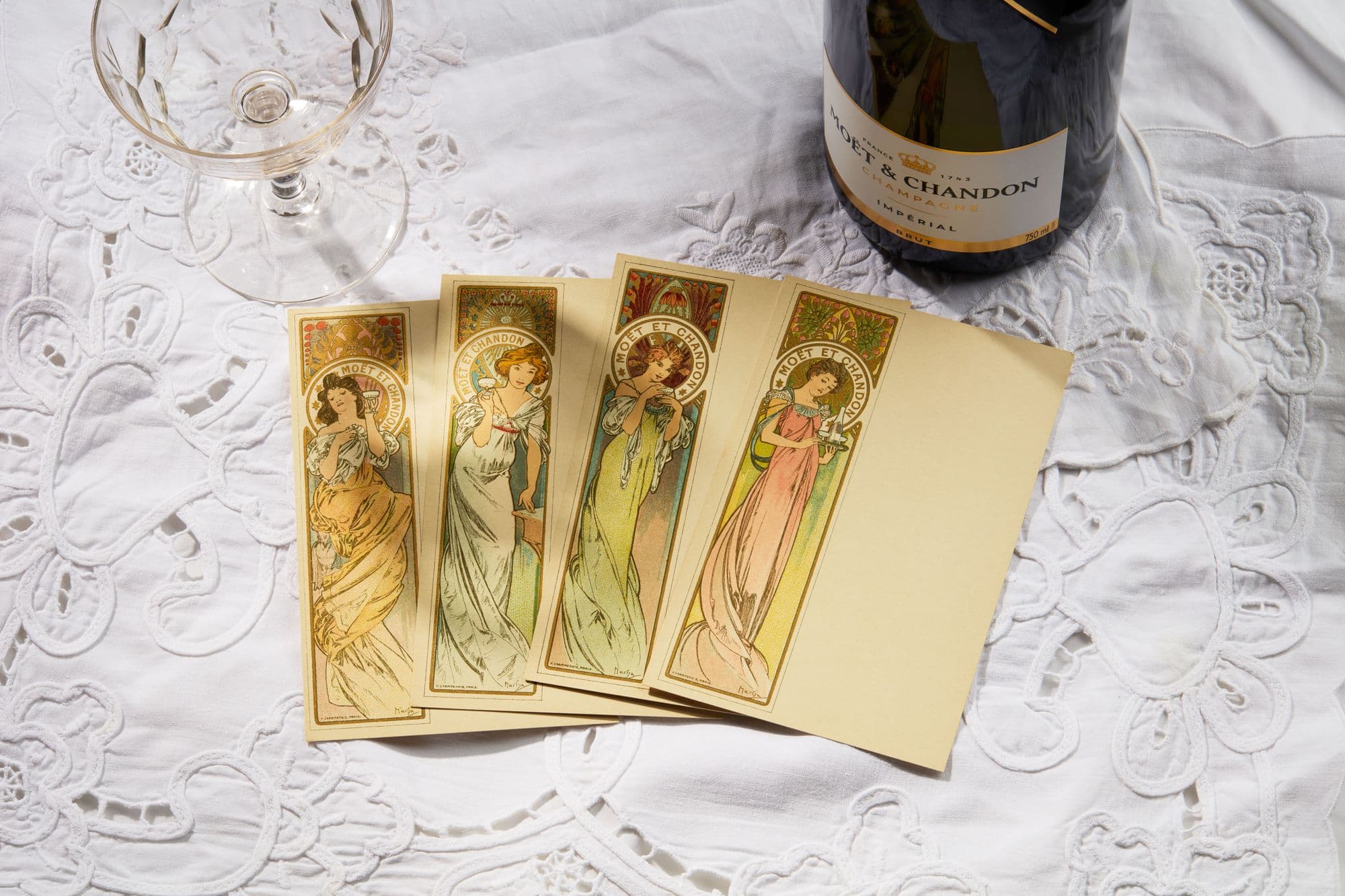
Art Nouveau and Art Deco are two of the most influential design movements of the late 19th and early 20th centuries. Their impact can still be seen today across architecture, furniture, lighting, jewellery, glass, ceramics and decorative arts. While Art Nouveau emerged in the late 19th century and flourished until the early 1900s, Art Deco followed in the 1920s and continued until the outbreak of the Second World War. Arguably they have much in common and simultaneously nothing.
Confusion arises because neither style is easy to define, and each has generated much debate. This is perhaps because they did not develop out of a group, have a central leader, or a set of philosophical premises but rather each reflected the spirit of the age.
Both styles came to public attention in Paris – Art Nouveau at the 1900 Exposition Universelle and Art Deco at the Exposition Internationale des Arts Décoratifs et Industriels Modernes in 1925. They were international styles finding geographically relevant and diverse expressions. It is perhaps these regional manifestations that further make the styles challenging to precisely delineate.
Art Nouveau and Art Deco were diverse in their creative vocabularies and spread across a breadth of disciplines and media, including architecture, furniture, lighting, sculpture, metalwork, glass, ceramics, textiles, carpets, posters, fashion and jewellery.