Lot 149
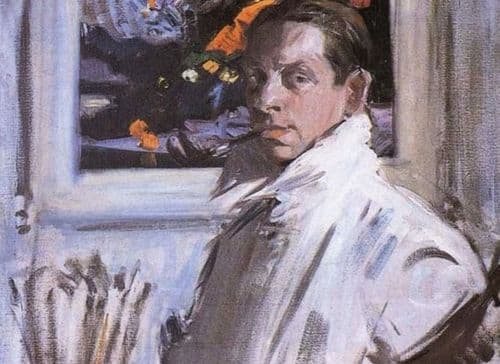
FRANCIS CAMPBELL BOILEAU CADELL R.S.A., R.S.W. (SCOTTISH 1883-1937)
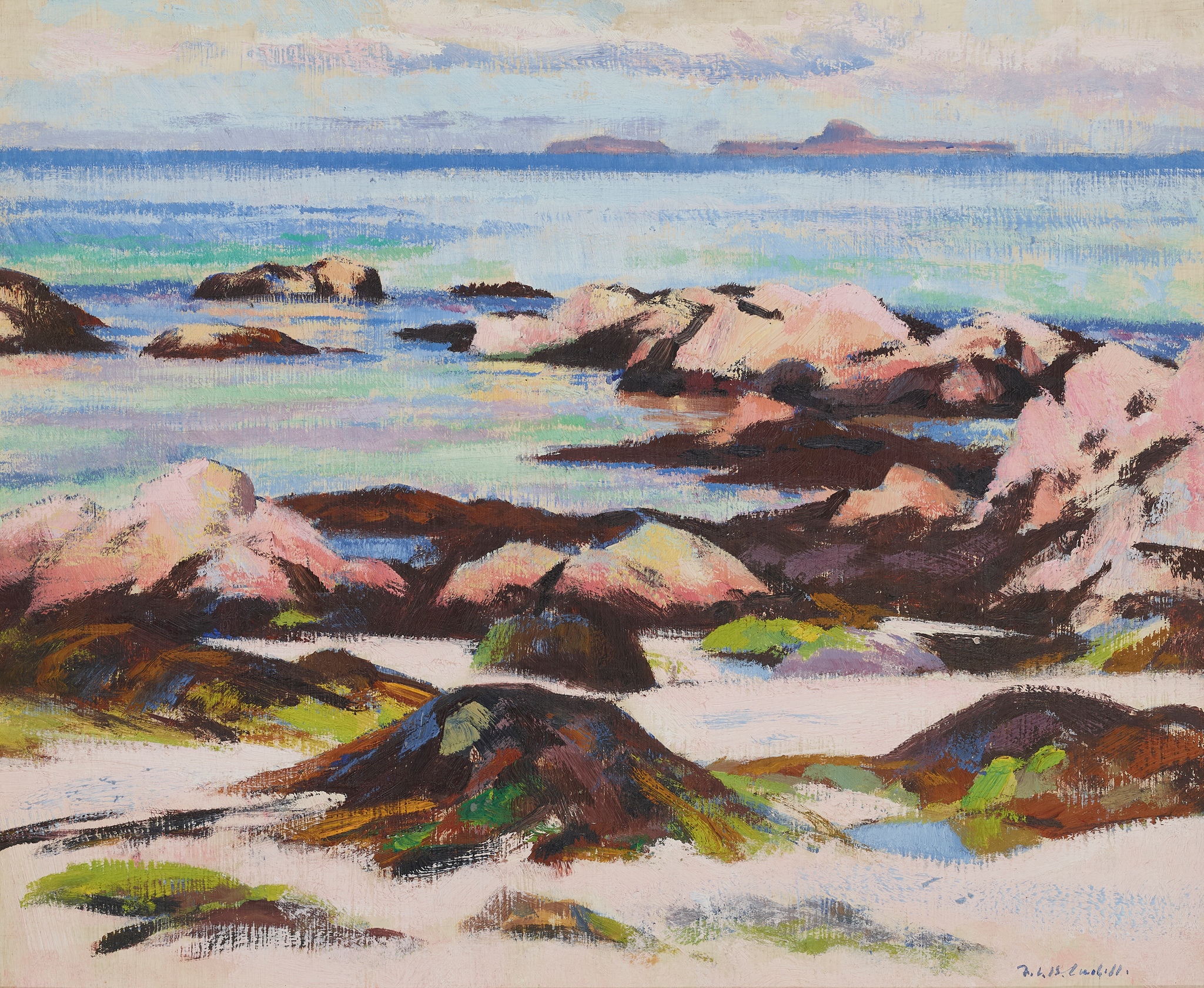
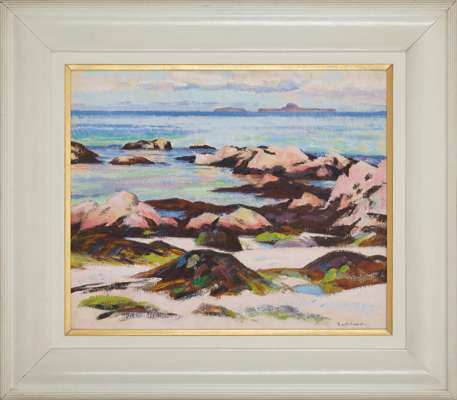
DUTCHMAN'S CAP FROM THE NORTH SHORE OF IONA
Scottish Paintings & Sculpture
Auction: Evening Sale ft. A Century of Scottish Colourists Part II | Lots 90 to 169 | Thursday 03 December 2026 from 6pm
Description
Signed, oil on board
Dimensions
37cm x 45.5cm (14.5in x 18in)
Provenance
Wellington Fine Art, Glasgow
Footnote
The Scottish Colourist F. C. B. Cadell’s two great loves were Edinburgh and the Hebridean island of Iona. The latter provided subject matter for his pencil and brush for over twenty years in paintings, watercolours and drawings which form much of the basis for his reputation as one of Scotland’s most important artists of the twentieth century.
As Alice Strang has explained:
In 1912, Cadell visited the Hebridean island of Iona for the first time and he returned regularly thereafter … the ever-changing light conditions on Iona, the effect of sunshine on the shallow water along the beaches of dazzling white sand, the intensity and range of colour of the surrounding sea, sky and land, the complexity of its rock formations and wide range of views within and beyond the island, inspired Cadell time after time and he returned to Iona most summers until about 1933. (Alice Strang, F. C. B. Cadell, Edinburgh, 2011, p.19)
In 1920, Cadell introduced his friend and fellow Colourist, S. J. Peploe, to Iona and he too, returned to the island virtually every summer until 1935. The island and images of it thus play an important role in the legacy of the Scottish Colourists as a whole.
Iona’s heyday as an artists’ colony was between the wars and it was during this period that Cadell painted Dutchman’s Cap from the North Shore of Iona. This part of the island, from Mermaids to Chalbha, is particularly celebrated for its picturesque beauty, which attracted Cadell year after year. As can be seen in the present painting, the unusual colouration of its exceptional geology, combined with the brilliant green of seaweed and range of blues - from shimmering emerald to rich turquoise of the sea and sky - caught his artist’s eye.
As Philip MacLeod Coupe has explained:
As we turn from the east shore to the north shore, we also cross a geological boundary … The rocks on the north shore are Lewisian Gneiss and are richly coloured with bands of pink, grey and green with fine green-yellow veining. These beautiful rocks are the most ancient in Britain having been formed about 2.700 million years ago. (Philip MacLeod Coupe, Paintings of Iona: Cadell and Peploe, Malvern, 2014, p.157)
The viewer’s eye is drawn from the inviting sandy foreground to the distinctive Dutchman’s Cap, seen in the distance crowning a high horizon; it is one of the Treshnish Islands off the west coast of neighbouring Mull.
Strang continues: ‘In contrast to the urbanity of the work Cadell made in Edinburgh, the over-riding subject matter of his Iona paintings is that of nature. Cadell painted outdoors, frequently on small boards which he usually completed in one session.’ (Strang, op.cit, p. 79). Such was the popularity of Cadell’s Iona works that sales of them provided the core of his income for decades. Such is their importance that a room was dedicated to them in the National Galleries of Scotland’s retrospective exhibition of 2011. Iona paintings by Cadell are in numerous UK public collections including those of The Fleming Collection, The Hunterian, University of Glasgow, Kelvingrove Art Gallery and Museum, Glasgow, Dundee Art Galleries and Edinburgh Museums and Galleries.