

Lot 131
STANLEY CURSITER C.B.E., R.S.A., R.S.W. (SCOTTISH 1887-1976) ‡§
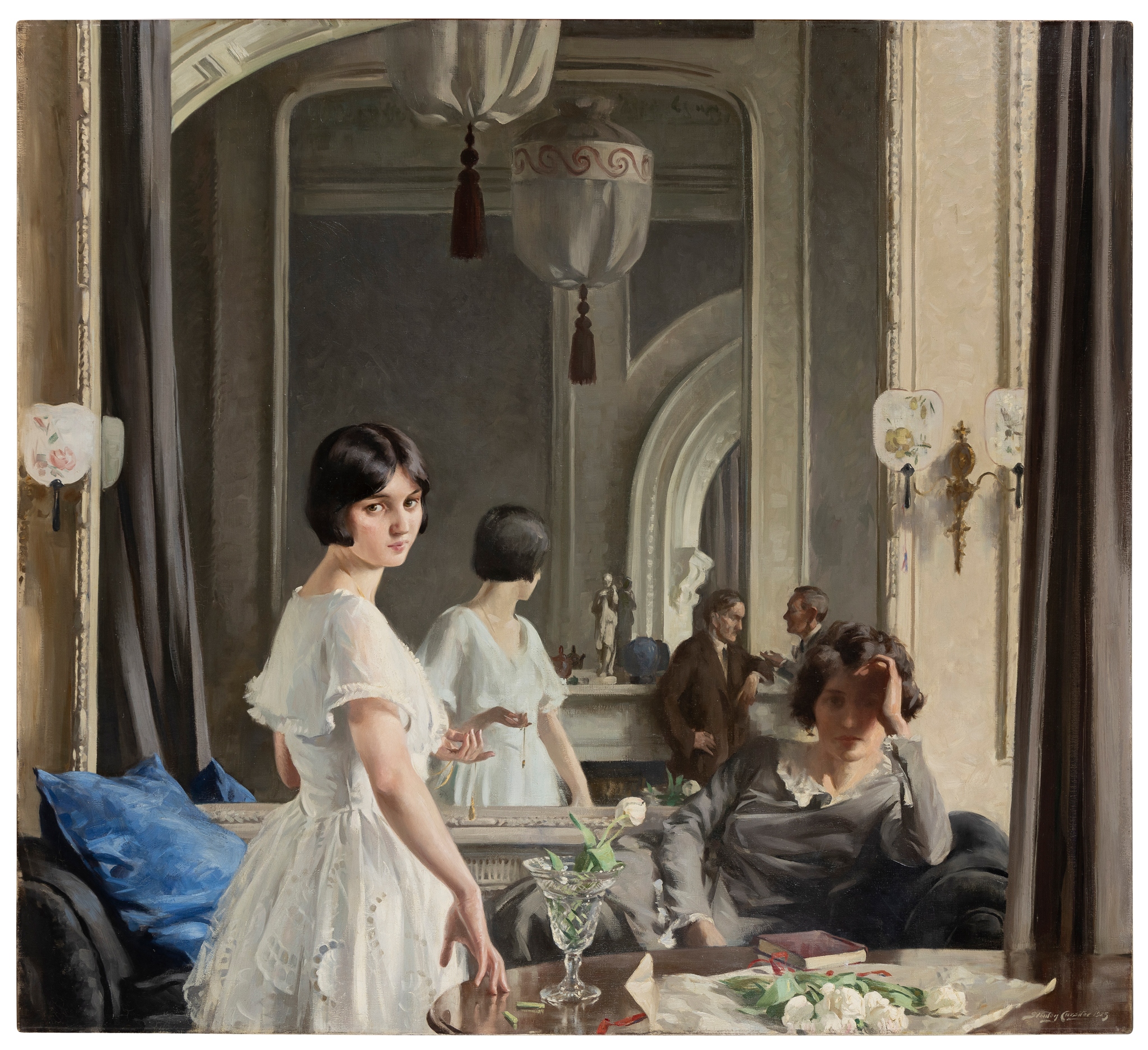
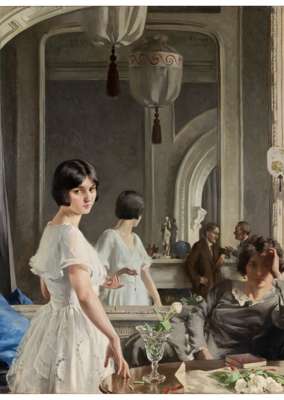
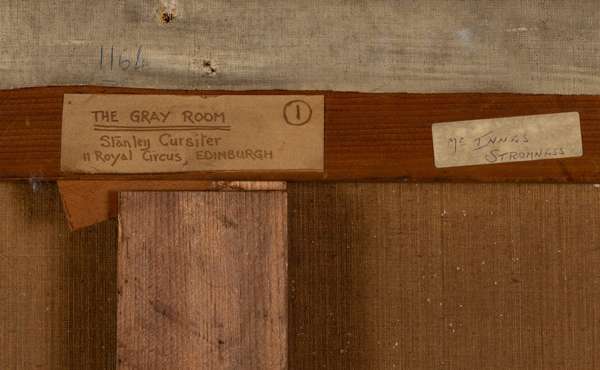
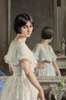
THE GRAY ROOM

Scottish Paintings & Sculpture
Auction: Evening Sale ft. A Century of Scottish Colourists Part II | Lots 90 to 169 | Thursday 03 December 2026 from 6pm
Description
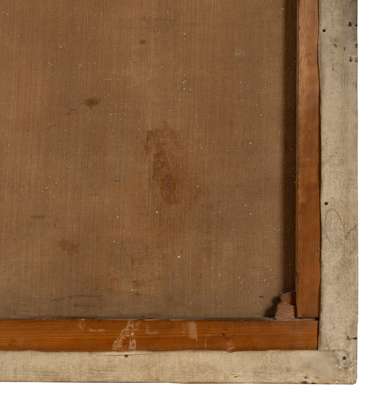
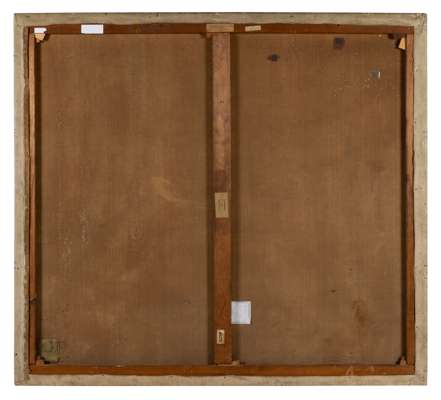
Signed and dated 1925, oil on canvas, unframed
Dimensions
153cm x 167.5cm (60.25in x 66in)
Provenance
The Artist and thence by descent to the present owner
Footnote
Stanley Cursiter (1887–1976) was one of the most influential figures in twentieth-century Scottish art. A painter, printmaker, administrator and champion of modern art, he is remembered both for his own paintings and for his leadership of Scotland's national art institutions. He was the Director of the National Galleries of Scotland for eighteen years between 1930 and1948 and the Secretary of the Royal Scottish Academy between 1953 and1955. Above all, however, Cursiter was a painter of exceptional distinction.
Born in Kirkwall, Orkney, Cursiter moved to central Edinburgh in 1904. Living first on Queen Street and later at Royal Circus, he developed a close association with the city that would remain central to his life and work. After arriving in Edinburgh, he began an apprenticeship as a lithographer with McLagan & Cumming. Although he continued to work in lithography throughout his career, it was oil and watercolour painting that became his greatest passion.
Cursiter arrived in Edinburgh at a particularly exciting moment in the city's artistic development. The purpose-built Edinburgh College of Art was soon to open on Lauriston Place, where it remains today, and Cursiter enrolled as one of its first students. This three-year training between 1907 and 1910 cemented his desire to become a professional artist.
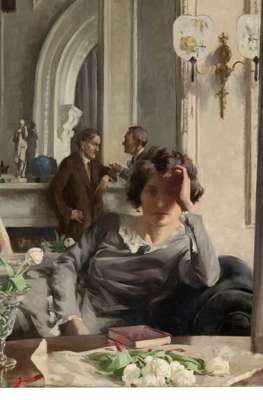
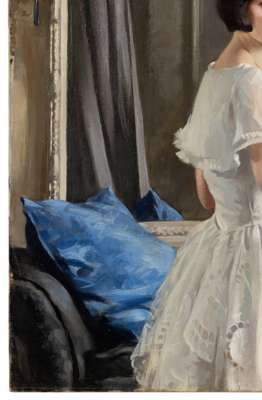
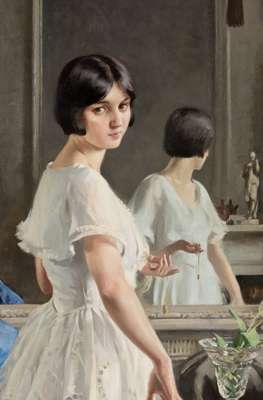
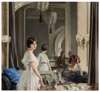
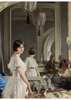
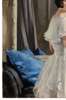
Cursiter painted many views of his beloved Orkney, the landscape and seas surrounding it, however he also chose to paint quieter, interior scenes too, giving his audience a snapshot into his home life and the people in it. The Gray Room is a quintessential example of these interior scenes. Set in his New Town studio on Queen Street, with its high ceilings and ornate cornicing, this work invites the viewer into the grand room itself. Poppy Low, one of his favourite models, gazes out at the viewer with her distinctive, stylish black bob whilst holding a small, delicate gold locket. Cursiter often portrayed her wearing this particular white dress, with its floaty sleeves and elegant lace.
These conversational interior portraits allowed Cursiter the freedom to experiment with light and shadow, as well as different textures, from soft furnishings to finely rendered fabrics. Next to Poppy is Cursiter's wife, Phyllis, a fellow Orcadian whom he married in 1914. Again, Phyllis appears in many of his portraits over the years. She is seated beside a crystal vase, containing a white rose.
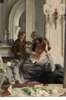
Whilst at first glance it appears that Poppy and Phyllis are looking at the viewer, they are in fact looking beyond us and into the large drawing room, where two men are engaged in conversation. Cursiter is one of these gentlemen. He cleverly achieves this perspective through a mirror behind the two women, and a further mirror positioned above the mantelpiece where the men are standing, which reflects back into the room.
Cursiter's talent for these conversation pieces was recognised by the Edinburgh dealers Aitken Dott & Son in the early 1920s, when they commissioned him to produce twenty portraits of ‘pretty girls in pretty frocks, arranging flowers, leaning against a piano or gracing some similar pictorial theme’. The commission reflected both the popularity of these elegant interiors and Cursiter's exceptional ability to combine portraiture with richly observed domestic settings. The present painting, we know, was particularly special to Cursiter, as he hung it in his home in Orkney, as can be seen in the accompanying photograph.
In a letter written to William Hardie in 1974, Cursiter wrote ‘I became a portrait painter more or less by accident’. Looking at this striking interior, with its carefully orchestrated perspective and remarkable level of detail, it is difficult to believe that this could ever have been an accident. Cursiter clearly had the ability to capture intimate moments in time, allowing the viewer to immerse themselves fully in the fashionable interiors and the lives of those living in 20th-century Edinburgh.
Throughout his lifetime, Cursiter was celebrated for his skills as an artist, he served as King’s – and later Queen’s - Limner in Scotland from 1948 until his death. He was also very well regarded amongst his peers. James McIntosh Patrick summed up Cursiter in his obituary as ‘handsome, genial, a good conversationalist and too infrequent broadcaster - a gifted painter who brought distinction to all he touched.’
