

Lot 130
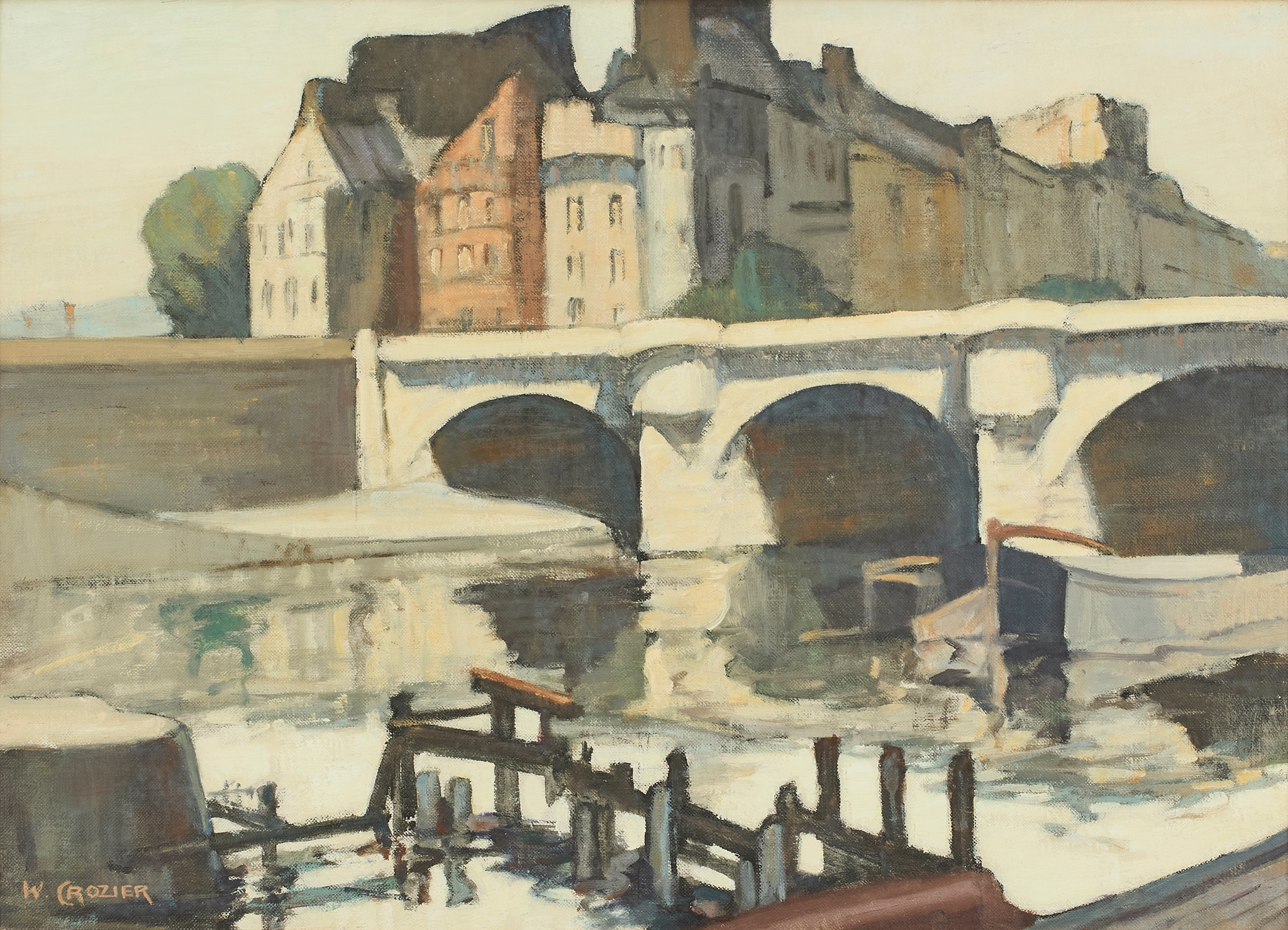
WILLIAM CROZIER A.R.S.A. (SCOTTISH 1897-1930)
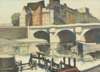
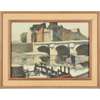
LE PONT NEUF, PARIS
Scottish Paintings & Sculpture
Auction: Evening Sale ft. A Century of Scottish Colourists Part II | Lots 90 to 169 | Thursday 03 December 2026 from 6pm
Description
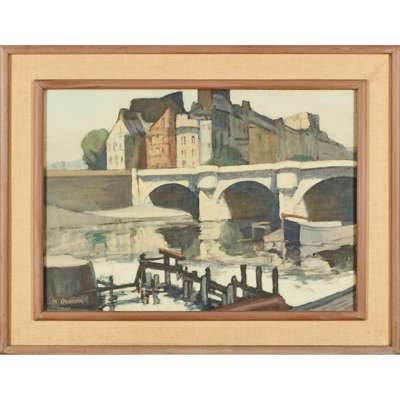
Signed, oil on canvas
Dimensions
46cm x 66cm (18in x 26in)
Provenance
Mrs George Proudfoot, Edinburgh
Aitken Dott & Son, Edinburgh
Private Collection and by descent to the present owner
Exhibited:
The New Gallery, Edinburgh, 1922 Group Sixth Annual Exhibition, 8 - 22 December 1928
Footnote
William Crozier (1893-1930) was one of the most promising Scottish painters of his generation. His work combined the influence of Cubism with a distinctive approach to composition and colour. Although his career was cut short at the age of thirty-seven, he became an important figure in Edinburgh's artistic community.
Born in Edinburgh on 20 June 1893, Crozier attended George Heriot's School before briefly working for the North British Rubber Company. Poor health, however, made a business career impractical, and he subsequently enrolled at Edinburgh College of Art, where he studied between 1915 and 1918. There he became friends with fellow students Anne Redpath, William Gillies and William MacTaggart, with whom he remained closely associated throughout his life.
In 1922, Crozier became a founding member of the 1922 Group, alongside Gillies, MacTaggart and other young Edinburgh artists. The group provided an opportunity to exhibit independently of the established Royal Scottish Academy (RSA) and Society of Scottish Artists, although Crozier continued to exhibit with the RSA, having first shown there in 1920.
The following year, Crozier and MacTaggart established a shared studio at 45 Frederick Street, which remained the former’s working address until his death. Later that year, he travelled to Paris on a Carnegie Travelling Scholarship, studying under the Cubist painter André Lhote, whose teaching influenced his approach to composition. He also travelled throughout France and Italy, where the architecture and landscape provided inspiration for his paintings.
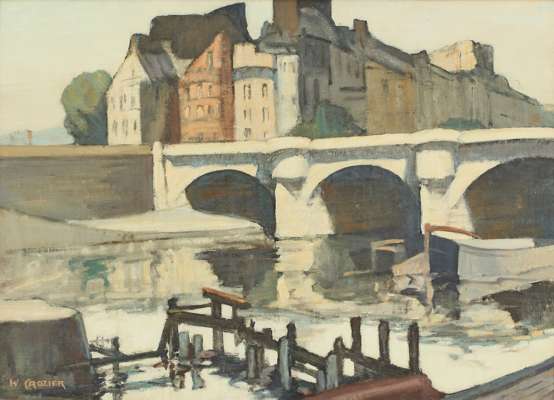
Le Pont Neuf is one such artwork, depicting one of Paris's most recognisable landmarks, the oldest surviving bridge across the Seine. Crozier places the bridge across the centre of the composition, with the buildings rising behind it and their reflections across the water below. The muted palette of greys, ochres and greens, together with his simplified forms and loose brushwork, capture the architecture and activity of the riverside. Crozier produced an etching of the same view, identical except for the addition of two fishermen on the banks of the river. The present painting was shown in the 1922 Group exhibition of 1928 alongside another Parisian subject, Rue St Médard, which he also reproduced as an etching.
Crozier's growing reputation was recognised in 1930 when he was elected an Associate of the RSA. Having lived with haemophilia and poor health throughout his life, on 19 December that year, he suffered a fatal fall in his studio. His death was widely mourned, with The Scotsman describing him as 'one of the best and most interesting of the younger Scottish painters'.