

Lot 432
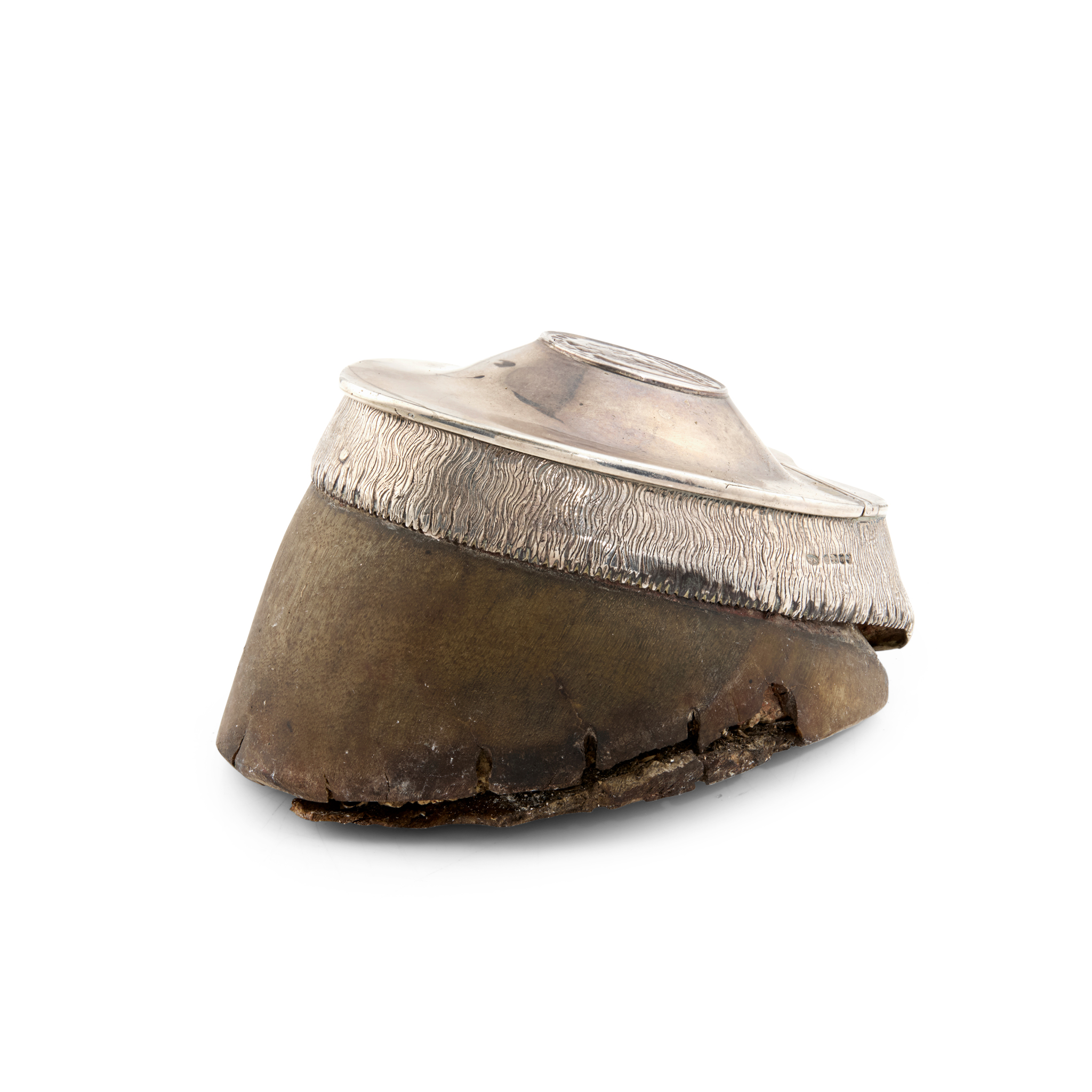
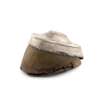
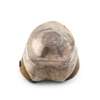
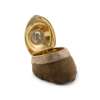
WATERLOO - A VICTORIAN SILVER MOUNTED INKWELL
WILLIAM NEALE, LONDON 1838
Auction: Day Two | Thursday 20 August from 10am | Lots 199 - 555
Description
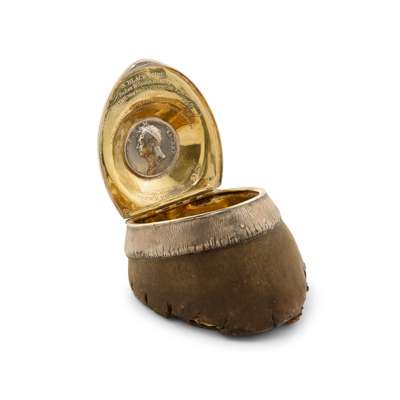
the horse's hoof with naturalistic engraved hair to rim and hinged cover, the cover set with Waterloo medal, the gilded interior engraved to cover above the medal A BLACK MARE TAKEN TO SPAIN IN 1813 BY CAPT. JAMES DRUMMOND ELPHINSTONE, 7TH HUSSARS, RIDDEN AT QUATRE BRAS & WATERLOO BY LT COL WILLIAM KEITH ELPHINSTONE 33RD REGT, WHERE SHE WAS WOUNDED LOST, RECOVERED IN BRUSSELS FIVE WEEKS AFTER further engraved below the medal DIED AT EAST LODGE MARCH 1839 IN POSSESSION OF MJ GENL W K ELPHINSTONE
Dimensions
Approx 13cm long
Provenance
Major-General William George Keith Elphinstone
By direct descent
The Elphinstone Family Collection
Footnote
Major-General William George Keith Elphinstone, while a Lieutenant Colonel, purchased his commission in the 33rd (Duke of Wellingtons) Regiment of foot in 1813. Having joined the army and risen the ranks since 1804, this commission would see him command the regiment at Waterloo in 1815.
The 33rd formed part of the Infantry Division under General Sir Colin Halkett G.C.B, G.C.H, K.T.S and were heavily engaged in the action at Quatre Bras and Waterloo. At Quatre Bras the 33rd had marched some 20 miles to relieve the defenders who had been caught off guard by the unexpected arrival of the Napoleonic troops. Arriving at 5.30pm they engaged the French troops and saw off an initial attack. As described by Lieutenant William Thain, the Regimental Adjutant, “We gave them a most beautiful volley and charged, but they ran faster than our troops (already fatigued) could do, and we consequently did not touch them with the bayonet.”
Later, they and the 69th came under heavy attack from French Cuirassiers having cannon shot, cavalry charge and shells rained down upon them. Even with the full attack and holding their ground they only lost 16 men, 71 injured and 9 missing. Waterloo would prove another important battle for the regiment and they would fight hard, taking sustained heavy fire and lost almost half its ranks, some 277 of 561 were recorded as casualties. They were stationed on the right centre of battle and behind the Hougoumont Chateau and the farm of La Haye Sainte. These outposts were fiercely fought as the defensive line could prove key to victory or defeat for either side. They stood their ground through many sustained charges and attack. The length and ferocity of the battle took its toll and the men were undoubtedly tired and worn. Halkett’s, whose command they were under, had asked for relief for the men but was denied by Wellington. When in the darkest hours loss of their position looked possible Halkett took the 33rd’s regimental colours from the dying hands of Lieutenant Cameron and led them onwards. Halkett was wounded and command of the whole brigade was the responsibility of William Elphinstone. In sight of the French he would again advance further towards their position. William's command and actions saw him awarded a Companion of the Bath, a Knight of the Military Order of William from the Dutch Royal and Order of Saint Anna 2nd Class from the Russians.
His military career however ended in failure compared to his earlier career when in charge of the garrison of Kabul in 1841. His age and reported poor health perhaps lead to poor command choices. This would ultimately lead to his retreat after continued pressure from the Afghan forces in 1842. Taking his entire command from the garrison they were annihilated on the retreat and he himself was wounded and taken prisoner. His captivity would result in his death, dying from dysentery only a few months later.