

Lot 396
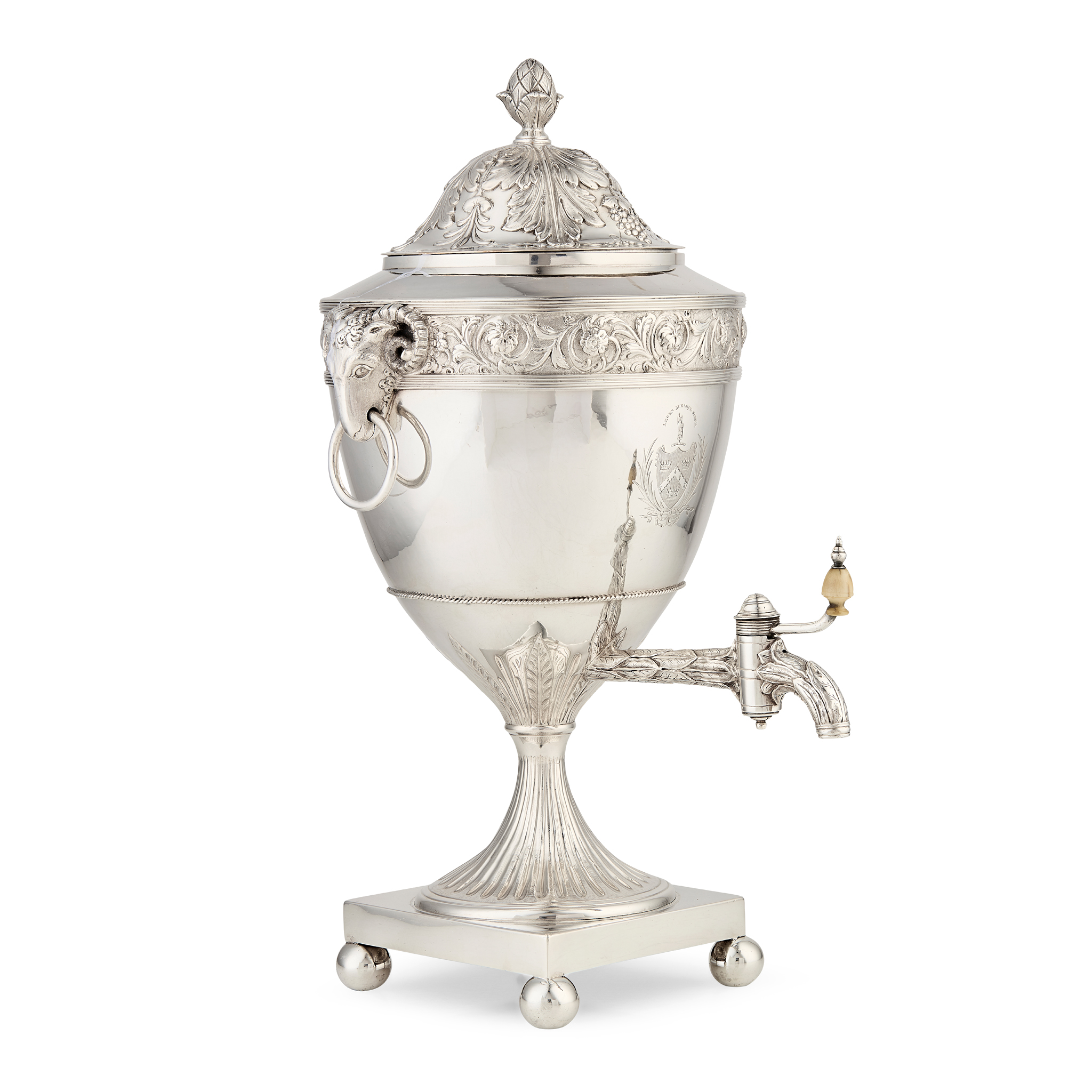
A GEORGE III HOT WATER URN Y
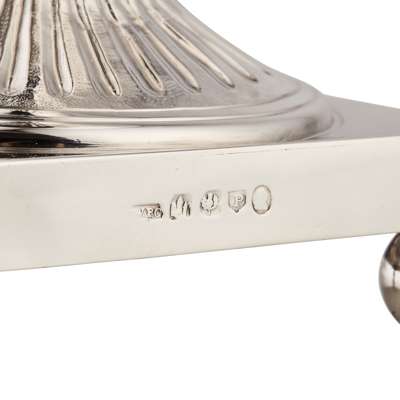
WILLIAM AND PATRICK CUNNINGHAM, EDINBURGH 1795
Auction: Day Two | Thursday 20 August from 10am | Lots 199 - 555
Description
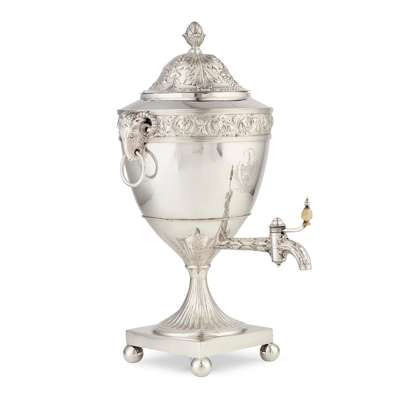
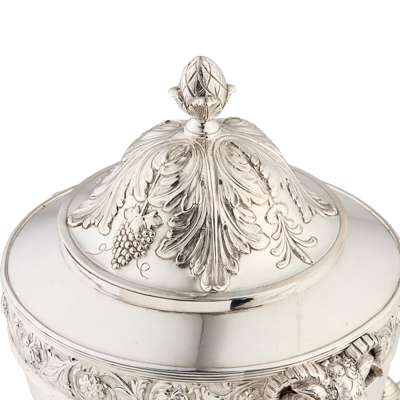
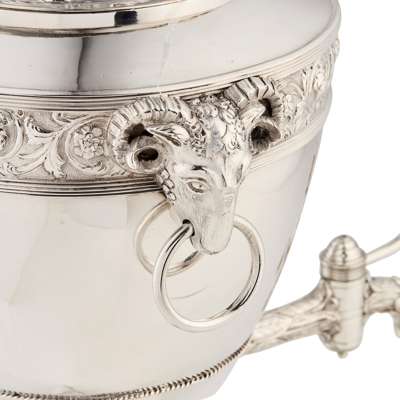
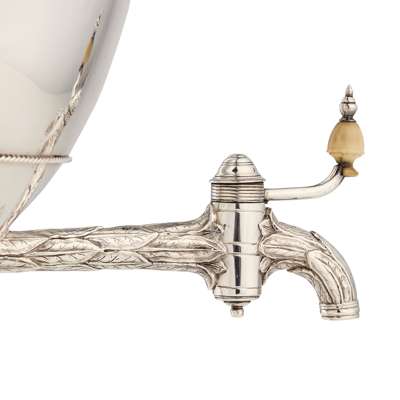
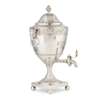
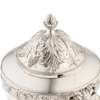
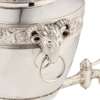
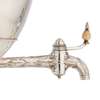
Of tapered urn form, chased floral and foliate scroll borders, engraved coat of arms to body, ram's head loop handles, to a slender spreading stem raised on a square base with four ball feet, the spout with ivory finial, the pull-off lid with chased foliate detail and budding finial
Dimensions
36cm high, 51oz
Footnote
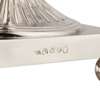
The engraved armorials identify the original owners as Francis Grant of Glenlochy and Kilgraston House, Perthshire (1746–1818), and his wife Anne Oliphant of Rossie, whom he married in February 1796. As the urn bears Edinburgh hallmarks for the hallmarking year 1795–96, it was almost certainly commissioned to commemorate their marriage or formed part of the furnishings acquired for the establishment of their new household.
The timing of the commission coincided with an important moment in the family's history. Francis had inherited the Kilgraston estate following the death of his elder brother, John Grant, former Chief Justice of Jamaica, in 1793. John had acquired the estates of Kilgraston and neighbouring Pitkeathly in the 1780s, but died without issue, leaving Francis to establish the family's seat in Perthshire. Shortly afterwards, Francis designed and built the present Kilgraston House, a distinguished Adam-style country house dating from the mid-1790s.
The marriage united two prominent Scottish families. Anne was the eldest daughter of Robert Oliphant of Rossie, who served as Postmaster General for Scotland, strengthening the Grants' position within the Perthshire landed gentry. Their descendants would become one of Scotland's most distinguished nineteenth-century families. Their fourth son, Sir Francis Grant PRA (1803–1878), born at Kilgraston House, became one of Britain's leading portrait painters and served as President of the Royal Academy, while their youngest son, General Sir James Hope Grant, enjoyed a celebrated military career in India and China.
Made by the distinguished Edinburgh partnership of William & Patrick Cunningham, the urn is an exceptional example of late eighteenth-century Scottish Neoclassical silver. The elegant urn-shaped body stands upon a finely fluted pedestal and square plinth with ball feet, while richly chased acanthus ornament decorates the domed cover. Particularly striking are the boldly modelled ram's-head ring handles and finely cast tap, demonstrating the quality of the Cunningham workshop. Combining exceptional craftsmanship with impeccable provenance, the urn survives not merely as an elegant domestic object but as a tangible record of the establishment of one of Perthshire's most prominent Georgian households.
With non-transferable CITES self-certification number: M4TD14WK
Note: Please be aware that this lot contains material which may be subject to import/export restrictions, especially outside the EU, due to CITES regulations. Please note it is the buyer's sole responsibility to obtain any relevant export or import licence. For more information visit http://www.defra.gov.uk/ahvla-en/imports-exports/cites/