

Lot 367
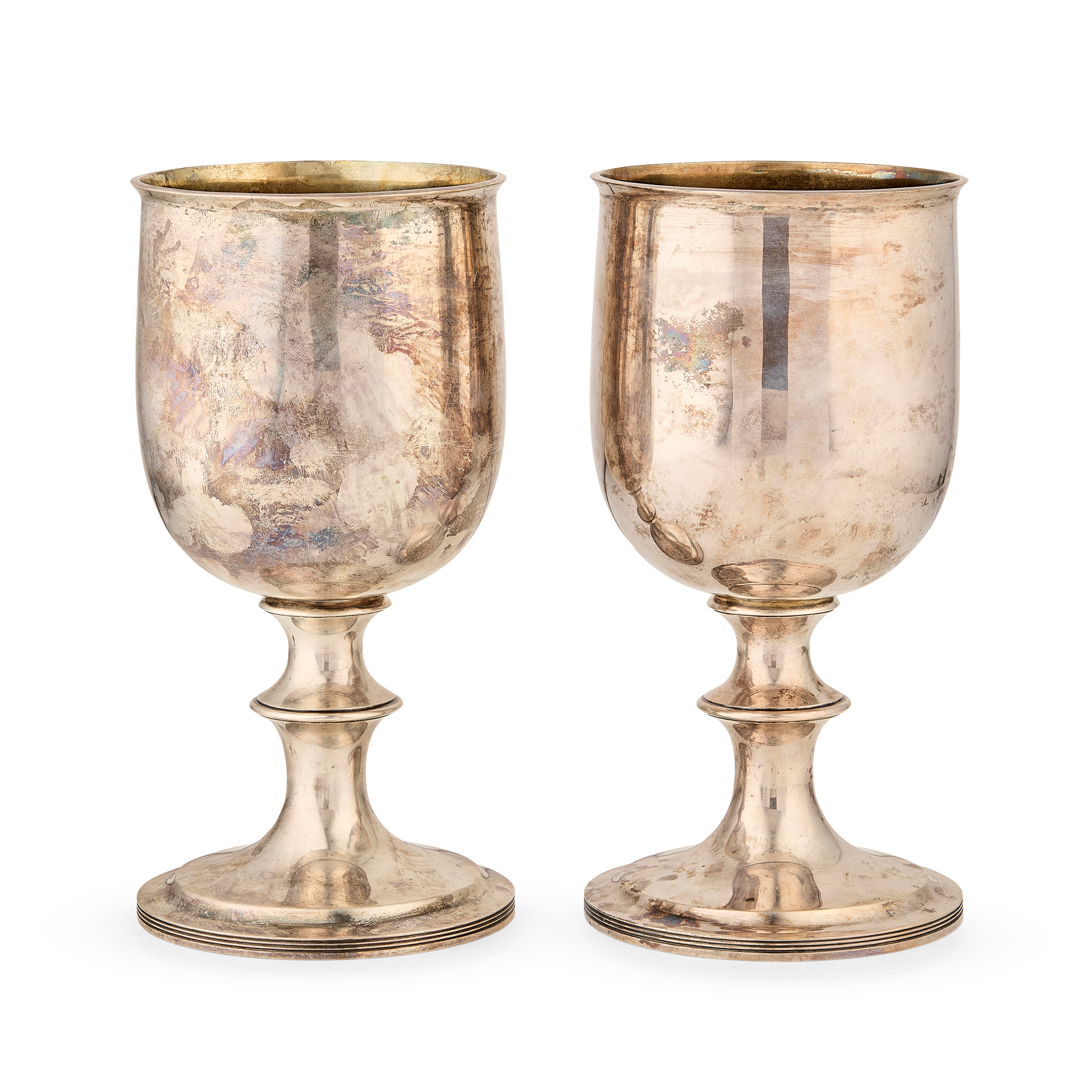
A PAIR OF VICTORIAN COMMUNION CUPS
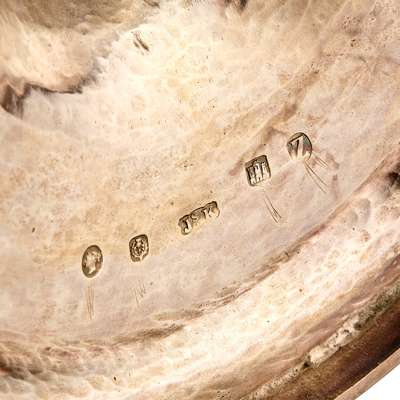
JAMES KIRKWOOD, EDINBURGH 1881
Auction: Day Two | Thursday 20 August from 10am | Lots 199 - 555
Description
The deep bell-shaped bowl with slightly everted rim, raised on a knopped stem with domed spreading foot and reeded foot rim(2)
Dimensions
23cm high, 14.3oz (each)
Footnote
Few objects better reflect the history of a Scottish Presbyterian congregation than its communion plate. Used in the administration of the Lord's Supper, these cups became central to congregational life, witnessing generations of worshippers gathered around the communion table.
As congregations divided, united, or moved to new buildings, the communion plate often remained their most enduring possession, linking successive generations through a shared act of worship. As Lyon & Turnbull celebrates its 200th anniversary, we are delighted to offer to sale part of the collection of communion silver which was used by Broughton Place Church when they resided in the building at 33 Broughton Place, where Lyon & Turnbull is now housed. Broughton Place is part of the New Town of Edinburgh where elegant Georgian streets, designed during the Scottish Enlightenment, attracted an expanding population of merchants, lawyers, physicians, academics and skilled craftsmen.
The church itself was founded by the followers of the Reverend James Hall, whose rapidly growing Secession congregation outgrew its earlier premises in Rose Street during the opening decades of the nineteenth century. Furthermore, opposition to the system of patronage within the established Church of Scotland led many ministers and congregations to separate, forming independent Presbyterian denominations that emphasised the authority of scripture, evangelical preaching, and the rights of individual congregations. In 1820, six years prior to the establishment of Lyon & Turnbull, construction began on a new church in Broughton Place to the designs of the distinguished architect Archibald Elliot. Completed the following year, the building remains one of Edinburgh's finest examples of Greek Revival architecture. Its monumental Ionic portico, restrained classical detailing, and harmonious proportions reflected the architectural ideals of the New Town, where elegance was achieved through balance rather than ornament. In 1821 the congregation entered its impressive new church on Broughton Place.
Within this elegant setting, the communion cups became an essential part of Presbyterian worship. Unlike Anglican churches, where communion was celebrated frequently at the altar, Scottish Presbyterians traditionally observed the Sacrament only a handful of times each year. These Communion Seasons were among the most important occasions in the religious calendar, often lasting several days and drawing worshippers from neighbouring congregations. The Communion ware would have been carefully prepared before each service and distributed amongst the elders as they served the congregation seated at long communion tables arranged throughout the church.
The Church has been an iconic setting in Edinburgh throughout its history and was even used in the 1981 film Chariots of Fire, where Eric Liddell the Olympic athlete took to the pulpit to deliver his sermon.
As Lyon & Turnbull celebrates its bicentenary in 2026, these communion cups offer a fitting reflection on two centuries of Edinburgh's cultural and commercial heritage. Created for a congregation at the heart of the city's expanding New Town, they have survived alongside the remarkable institutions that have shaped Scotland's artistic and historical landscape. Their preservation echoes Lyon & Turnbull's own long-standing commitment to documenting, researching, and bringing to market objects of national importance. Two hundred years after the firm's foundation, these cups continue to tell the story of faith, craftsmanship, and community, reminding us that the most enduring works of Scottish history are often those that remained in continuous use, quietly serving generations.