

Lot 252
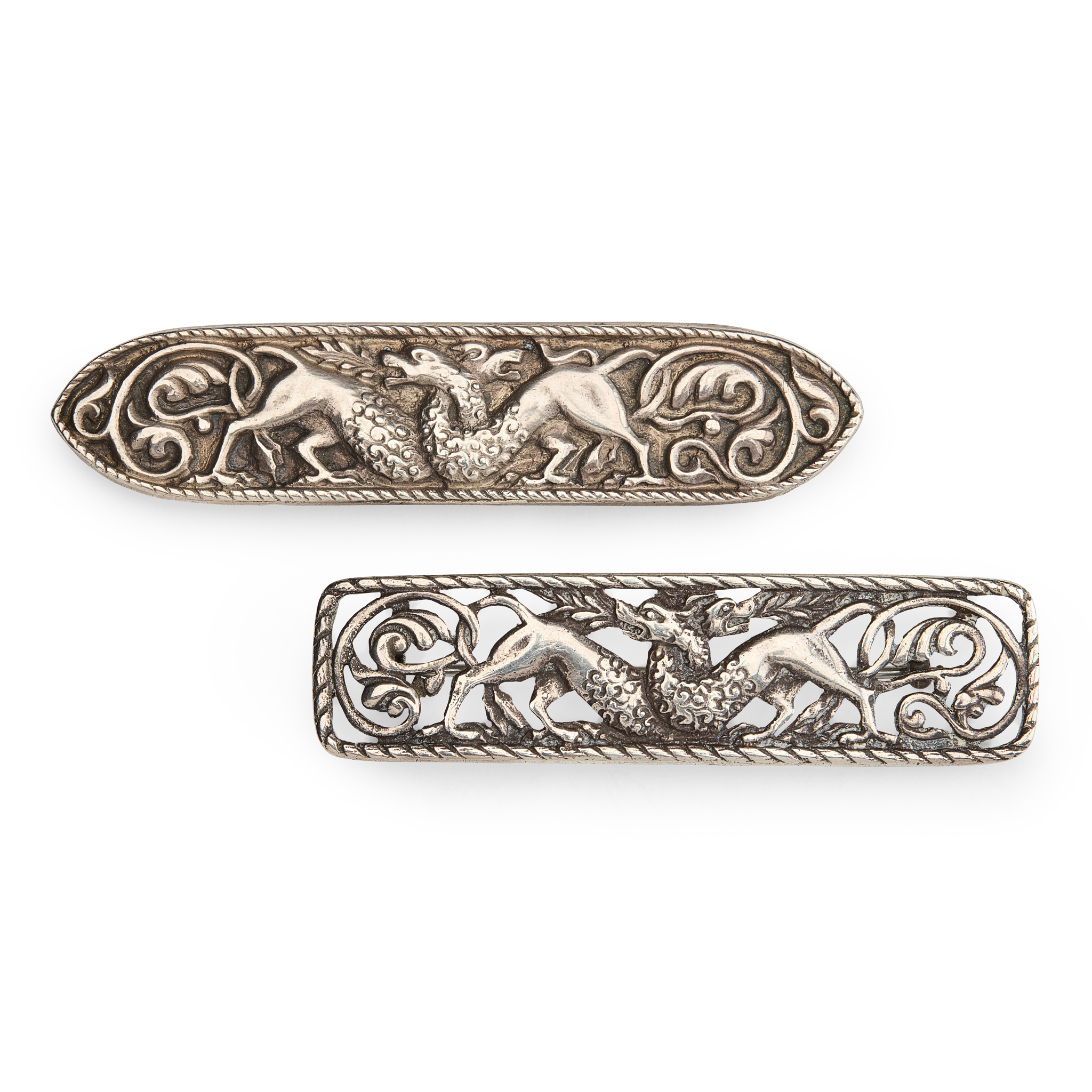
IONA - A SCOTTISH PROVINCIAL BAR BROOCH
ALEXANDER RITCHIE
Auction: Day Two | Thursday 20 August from 10am | Lots 199 - 555
Description
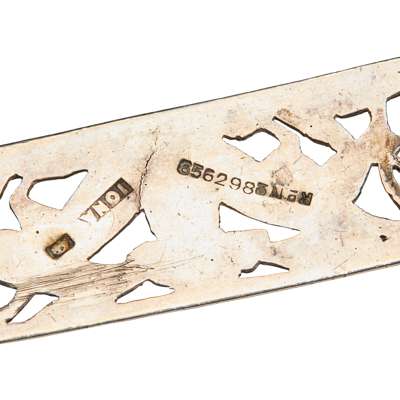
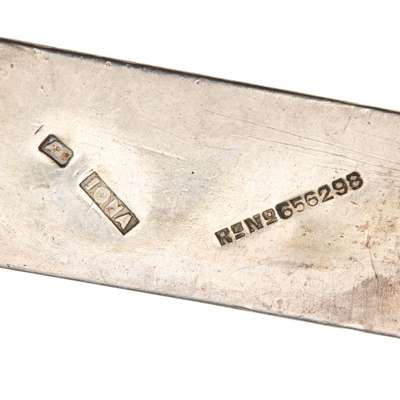
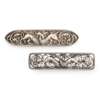
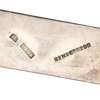
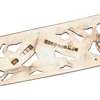
Marked AR, IONA, registration mark, 656298, of rectangular outline, with rope twist border enclosing pierced intertwined mythical beast and foliate scrolls; together with another similar not pierced bar brooch, marked AR, IONA, registration mark, 656298 of oval outline, rope twist border (2)
Dimensions
7.5cm wide (widest), 11g and 17g
Footnote
Alexander Ritchie: The Celtic Craftsman of Iona
Born in Tobermory on the Isle of Mull in 1856, Alexander Ritchie had his roots firmly in Scotland's west coast, surrounded by the sea that would shape much of his early life. Originally training as a marine engineer, he spent the first twenty years of his adult life travelling the world with the British India Steam Navigation Company. Even during these years at sea, Ritchie was known as a skilled woodworker, drawing inspiration from the ships, coastlines, and maritime landscapes that surrounded him.
It would be easy to assume that the Celtic wares produced on Iona at the turn of the twentieth century were simply created to satisfy the growing tourist trade. While their work undoubtedly appealed to visitors to the island, the legacy of Alexander Ritchie and his wife, Euphemia Catherine Ritchie (née Thomson), extends far beyond that of souvenir makers. Together, they became two of the most influential figures in Scotland's Arts and Crafts movement, helping to define a distinctly Scottish interpretation of the Celtic Revival.
A Creative PartnershipIt was not until his early forties that Alexander Ritchie decided to pursue art professionally. In the mid-1890s he enrolled at the Glasgow School of Art, where he met his future wife, Euphemia Catherine Thomson. Both artists were immersed in the emerging Glasgow Style, studying in an environment shaped by figures such as Francis Newbery and alongside contemporaries including Charles Rennie Mackintosh and Jessie M. King.
Following their marriage in Glasgow, the couple settled on the island of Iona, where they established their home at Shuna Cottage. More than simply a residence, it became a gathering place for artists, writers, and visitors inspired by the island's remarkable landscape and spiritual history. Among their regular guests was the Scottish Colourist Francis Cadell, who found lasting inspiration in Iona and produced some of his most celebrated paintings there.
An Island of InspirationThe Ritchies established Iona Celtic Art, a workshop and shop that reflected the breadth of their artistic talents. They produced jewellery, silverwork, leatherwork, embroidery, engraving, enamelling, and carved wooden objects, all drawing upon the rich visual language of early Celtic art. Ritchie's earliest surviving works are in wood, the medium in which he was initially most accomplished, before expanding into metalwork and jewellery.
Contemporary photographs of the workshop reveal an extraordinary display of craftsmanship. Mirrors with zoomorphic decoration, carved Celtic crosses, galleon ship pendants, penannular brooches, and countless other objects filled every available space. As demand for their work increased, elements of production were entrusted to specialist silversmiths, reflected in the range of assay marks found on surviving pieces from Glasgow, Birmingham, and Chester. These hallmarks illustrate both the popularity of the Ritchies' designs and the wider enthusiasm for the Arts and Crafts movement across Britain.
The Celtic RevivalThe Celtic Revival sought to rekindle interest in the artistic, literary, and spiritual traditions of the early medieval Celtic world. In Ireland, treasures such as the Book of Kells and the Tara Brooch became powerful symbols of national identity. In Scotland, masterpieces including the Hunterston Brooch inspired a renewed appreciation for the country's own artistic heritage, offering an alternative to the mass-produced goods of the Victorian industrial age.
For Alexander and Catherine Ritchie, however, the Celtic Revival was more than an artistic movement. They embraced the religious and cultural traditions of Celtic Christianity, becoming active participants in Iona's spiritual renewal. Alongside supporters such as Lady Victoria Campbell, daughter of the 8th Duke of Argyll, they helped foster renewed interest in the island's ecclesiastical heritage. In 1900, Alexander—known to friends as Alec—was appointed custodian of Iona Abbey, a role that reflected both his artistic abilities and his deep commitment to the island's history.
A Lasting LegacyThe Ritchies formed part of a thriving artistic community on Iona. Local craftsmen such as John McGilvray had been producing Celtic-inspired silverwork from at least the 1880s and offered friendly competition. Yet it was the Ritchies' exceptional craftsmanship, scholarly understanding of early Celtic art, and distinctive artistic vision that established their reputation.
Their influence continued long after their workshop closed. Craftsmen including Robert Allison continued producing jewellery based on Ritchie designs well into the mid-twentieth century, ensuring that their interpretation of the Celtic Revival remained alive for future generations. Today, their legacy endures through collections across Britain, while the Iona Heritage Centre preserves a permanent display celebrating their remarkable contribution to Scottish decorative arts.
Alexander Ritchie died in 1941, just two days after the death of his wife Euphemia. After a lifetime spent working side by side, they were buried together in Reilig Odhrain, Iona's ancient burial ground, a resting place traditionally associated with Scottish, Irish, and Norse kings. Their shared grave on the island that shaped both their lives and their art remains a fitting memorial to one of Scotland's most remarkable creative partnerships.