

Lot 102
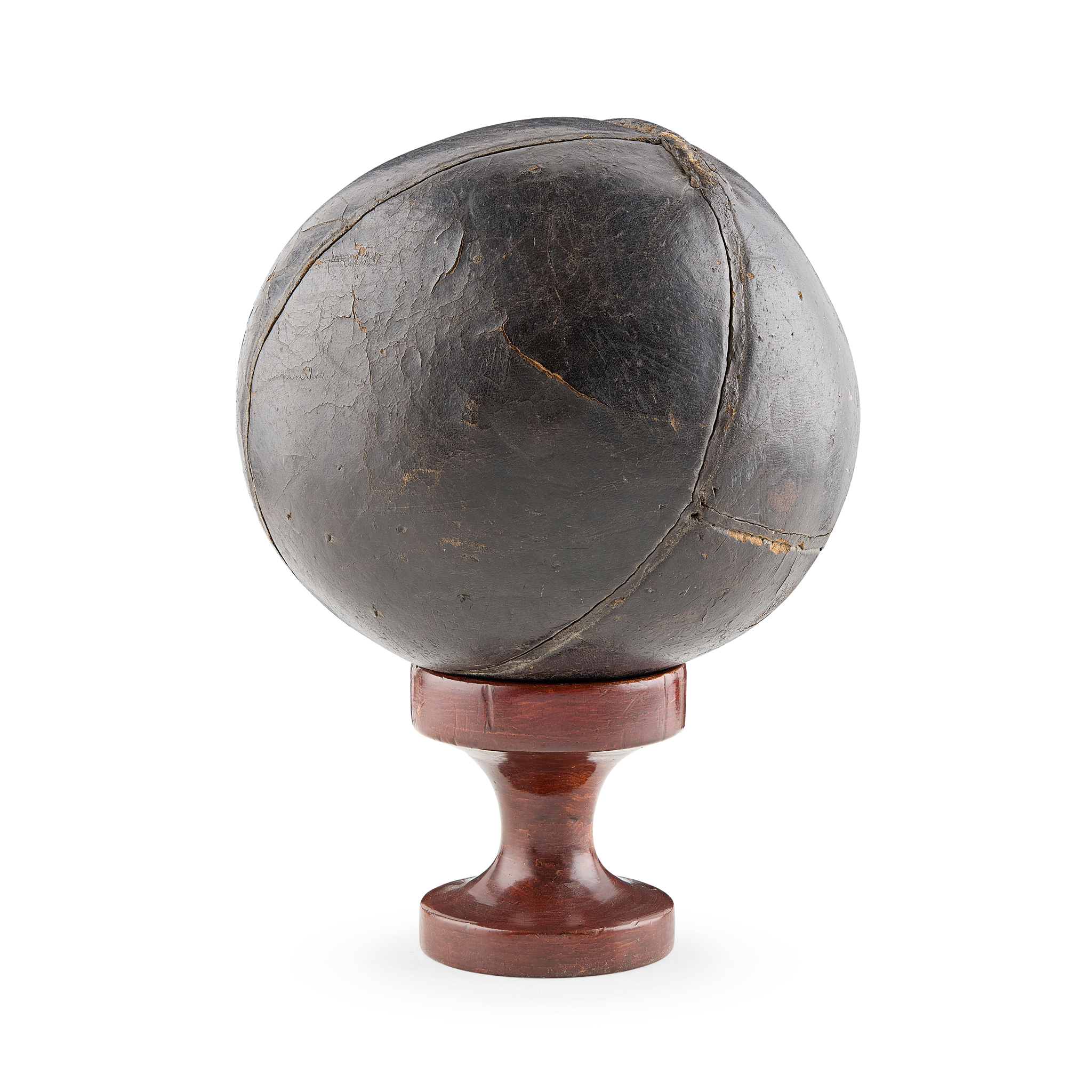
A KIRKWALL BA'
1907 CHRISTMAS DAY YOUTH'S BA', AWARDED TO PAT GUNN (UPPIES)
Auction: Day One | Wednesday 19 August from 10am | Lots 1 - 198
Description
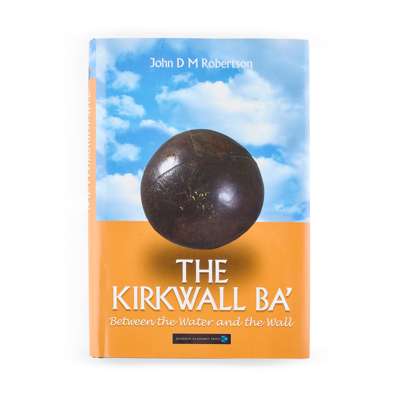
made by John Costie & Family, leather, of spherical form in four sewn sections, surmounted on a wooden turned plinth; together with a copy of the book by John D M Robertson, The Kirkwall Ba', Between the Water and the Wall, Dunedin Academic Press, Edinburgh, 2005 (3)
Dimensions
17cm diameter (approximately), 26cm high (on plinth)
Provenance
Literature: John D M Robertson, The Kirkwall Ba', Between the Water and the Wall, Dunedin Academic Press, Edinburgh, 2005, p.67, fig. 54, Ba's of different styles, where the present lot is illustrated in the centre of the display
Provenance: Personal collection of John Davie Manson Robertson CBE (Scottish 1929-2015), thence by descent
Footnote
The Kirkwall Ba' Game (known locally as The Ba') is one of the main annual events held in the town of Kirkwall, Orkney. It is one of a number of Ba' Games played in the streets of towns around Scotland and is an example of a medieval football game which is still played today. The games, both a boys' and a mens', are played twice a year, normally on Christmas Day and New Year's Day, unless those days fall on a Sunday in which case the game is moved to the following day. The Youths' Ba' was a separate short lived version, only being played from New Year's Day 1892 until 1910. It is played by two sides, known as the ‘Uppies’ and the ‘Doonies’, or more correctly, "Up-the-Gates" and "Doon-the-Gates". The tradition belongs to Kirkwall and the surrounding area of St Ola, and has always been played by men from those two areas since before records began. In the past 50 years, mainly due to improved transport, the game's popularity has grown to include players from all areas of Orkney, including some of the outer isles. The game has no official rules, but there is a code of honour among players whereby certain acts are considered strictly unacceptable. This code is generally adhered to extremely well by those who play the game and as a result the game is self-regulating and self-policing, requiring no intervention from outside parties.
The Men's Ba' is thrown up from the Merket Cross, when the St Magnus cathedral bell strikes one o'clock. The person chosen to "throw up" the ba', or begin the game, is usually an older Ba' stalwart, but the honour is occasionally given to a local public figure. The waiting scrum can number up to 350 men and is a sight to behold. Once thrown up, the Ba' disappears into the scrum and much surging play occurs while the two sides weigh each other up and determine who has the weight on their side on this occasion. Much exciting surging and turning play often occurs on this wider part of the street, which can frequently determine the outcome. Occasionally, the ba' appears out of the scrum and someone makes a dash through the crowds of spectators. To the casual onlooker this can happen at any moment, but the seasoned Ba' watcher can often see what is happening long before the ba' suddenly erupts. The rival sides then battle to move the ba’ through the town to their opposing goals. The Doonies' goal is the sea, normally within the Basin of the Harbour, but so long as it is immersed in the salt water of Kirkwall Bay, the Ba' has gone doon. The Uppies must round the Lang, or Mackinson's corner at the junction of Main Street with New Scapa Road, opposite the Catholic Church, which was the site of the old town gates. The last remains of the town gates were removed in the 1950s, leaving the Uppie goal as the gable end of a house on Mackinson's Corner.
Once the Ba' has been goaled Up or Doon, a lengthy argument often ensues among players on the winning side before a popular individual winner is acclaimed. To stalwart Ba' players, the ultimate honour is to be awarded a ba'. To have any chance of this honour, a player generally has to have played consistently well for a long period of time, usually around 20 years minimum. Ba' winners range from outstanding players in their early thirties to veterans in their mid to late forties. This winner is then awarded the trophy of the game, which is the ba' itself. When the winner is finally decided, he is normally held aloft and carried shoulder-high from the goal by his teammates in celebration, passing into the ranks of Ba' winners and into Kirkwall history.
The history and cultural importance of the Ba' is detailed by John Roberston in his book ‘Uppies & Doonies’, the story of the Kirkwall Ba’, of 1967, which he later revised and expanded on in ‘The Kirkwall Ba’, Between the Water and the Wall’ published in 2005. A lifelong enthusiast of the Ba’, he won the coveted trophy on New Year’s Day 1966, and was chairman of the Ba’ Committee for many years. He contributed significantly to the game’s robust following today. He owned several examples of historic ba', some of which he was known to have purchased at auction during his lifetime.