

Lot 8
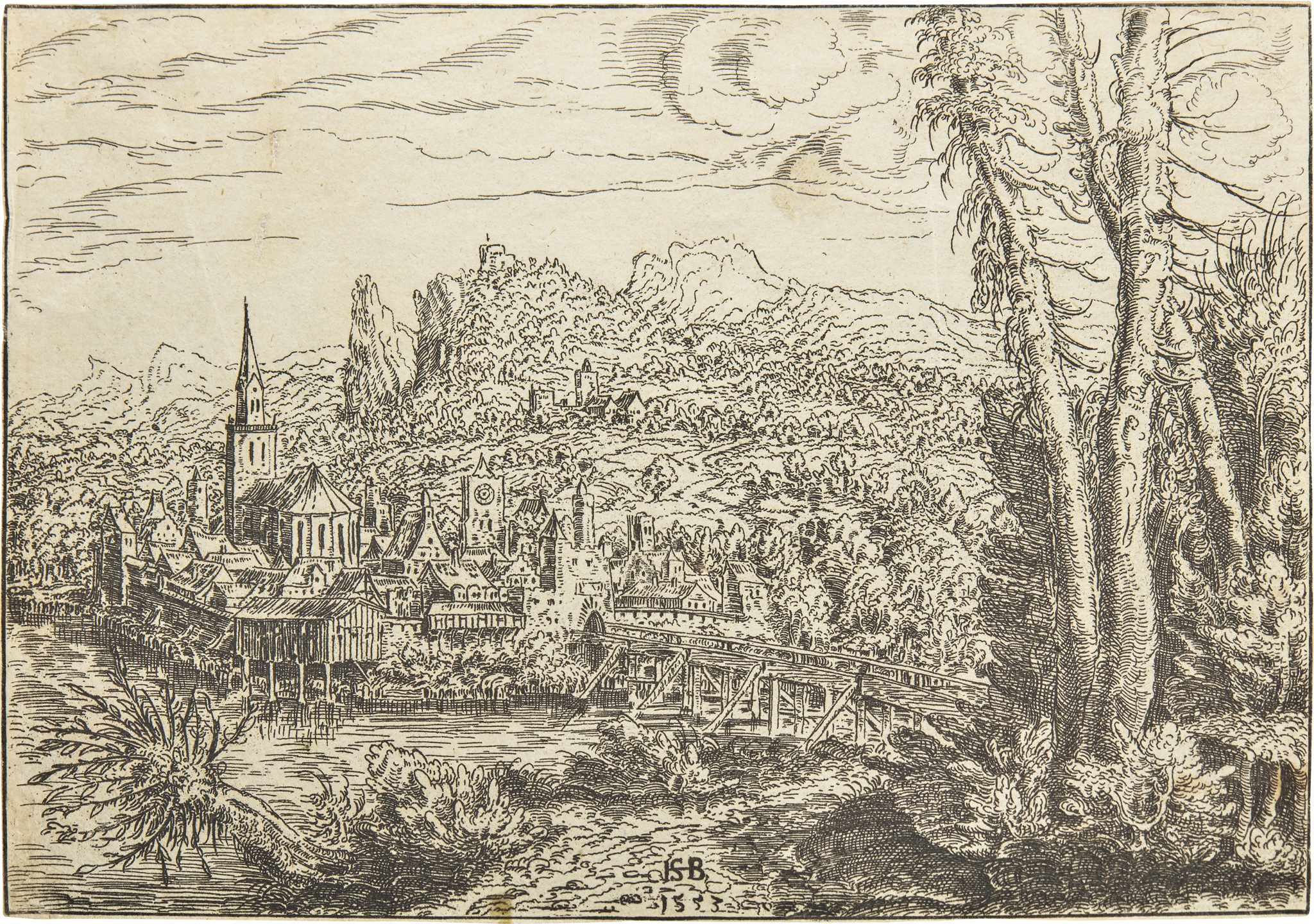
HANNS SEBALD LAUTENSACK (GERMAN 1520-1560)
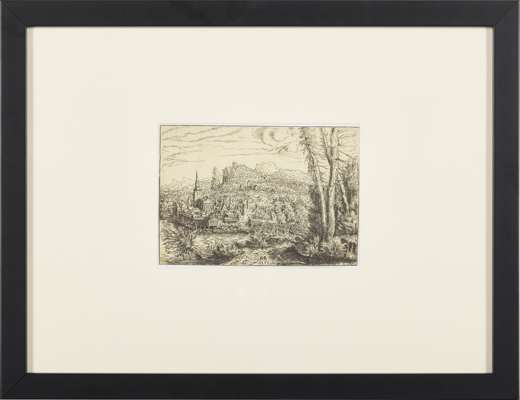
VIEW ON A CITY NEAR A RIVER (BARTSCH 41; HOLLSTEIN 31)

Auction: 13 October 2026 from 13:00 BST
Description
etching, 1553, a very good, delicate impression of Hollstein's second state (of two), though showing touches of wear to the dense foliage beneath the trees, on laid paper, framed
Dimensions
sheet: 11.7cm x 16.6cm (4 5/8in x 6 1/8in)
Footnote
A very scarce print and an important example of very early landscape etchings.
As a landscape artist Hanns Lautensack (1520-1564) stands in a direct, and not very long line of artists beginning with Albrecht Altorfer (1480-1538), who is regarded as the originator of landscape art.
Before Altdorfer, landscape was considered predominantly for background imagery. A landscape needed a biblical or mythological theme as a reason to exist. Altdorfer is remarkable for being one of the first artists to take an interest in landscape as an independent subject. His wooded wildernesses are often devoid of any figures, with dominant trees standing tall in the foreground, looming before wooded slopes and far distant mountains. A town or city may be seen somewhere in between.
Altdorfer made a small group of ten landscape etchings. These are only a very small part of his print output of more than two hundred prints. They are imaginary views which are not to be found on today’s market.
The landscape etchings of Hanns Lautensack (1524-1560) would not have been possible without Altdorfer’s groundbreaking innovations, they were made only thirty years later. Lautensack is best known as a printmaker and his two series’ of landscape etchings certainly show his awareness of Altdorfer though one must also consider the etchings of Altdorfer’s followers Wolf Huber (1485-1553) and Augustin Hirschvogel (1503-1553).
Lautensack’s landscape etchings came at a pivotal moment for the landscape print. They predate the first serious series’ of landscape prints, Hieronymous Cock’s (1518-1570) The Large Landscapes of 1555-6, published in Antwerp, which were based on drawings by Pieter Brueghel the Elder.
View on a City Near a River (1553) is a fine example. Like Altdorfer, Lautensack chooses to minimise human presence in his landscapes. The pine trees share the same droopy foliage, the willows their spikiness. In this scene, three pines intertwine on the right edge of the picture plane in a similarly characteristic manner. However, the main difference between these and Altorfer’s prints is that Lautensack’s prints came to be much more widely known.
We are grateful for the assistance of Geoffrey Bertram in the cataloguing of the present work.