

Lot 7
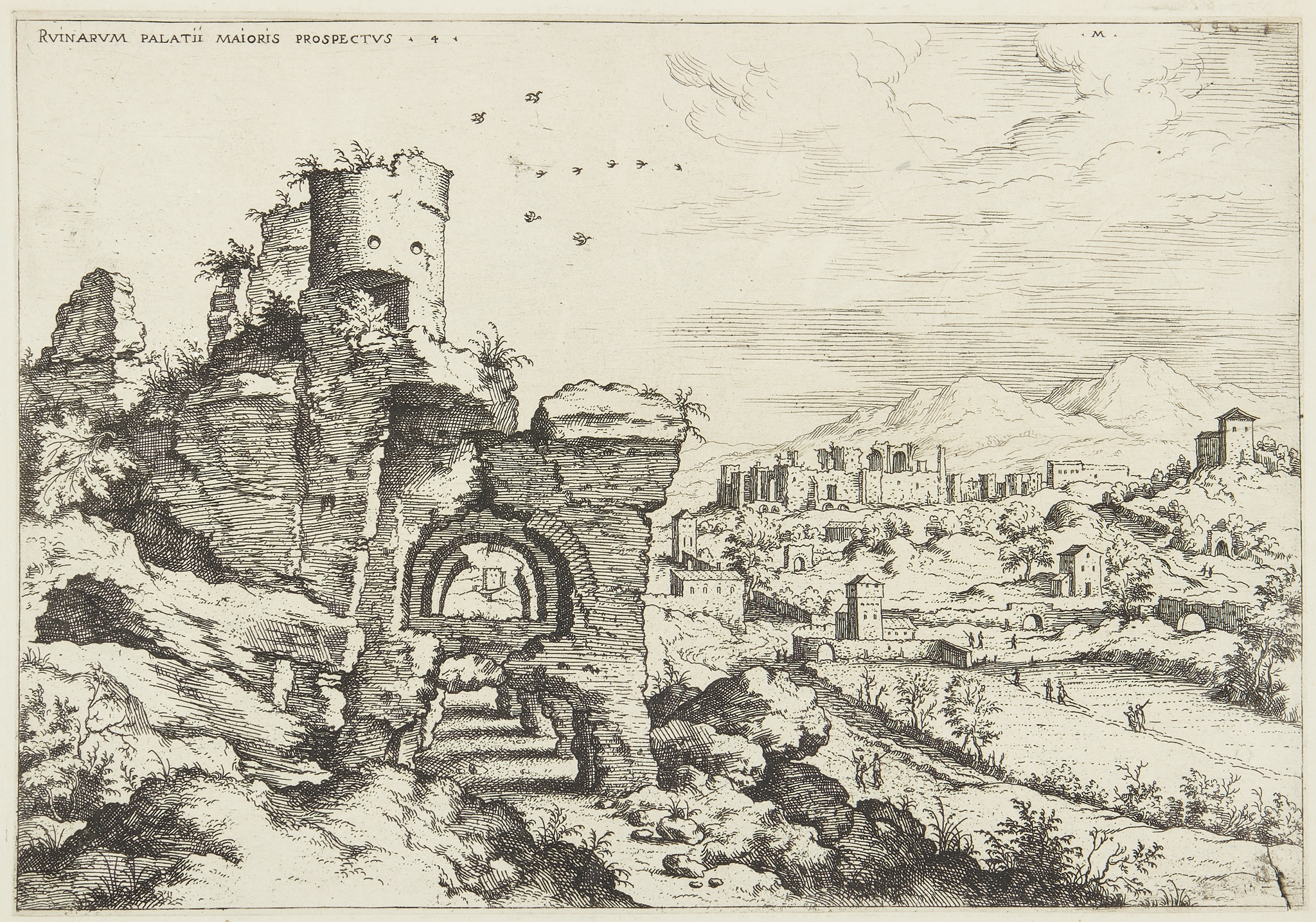
HIERONYMUS COCK (DUTCH 1510-1570)
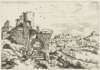
RUINARUM PALATII MAIORIS 4 (HOLLSTEIN 35)
Auction: 13 October 2026 from 13:00 BST
Description
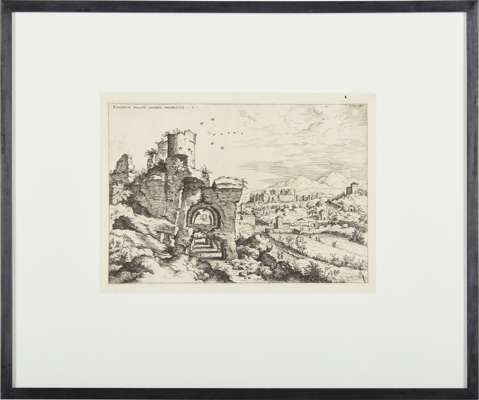
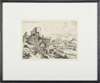
etching, 1550, a very good impression printing with clarity, on laid paper with a cross extending from a circle watermark, framed
Dimensions
plate: 22.8cm x 32.6cm (9in x 12 7/8in)
sheet: 30cm x 39cm (11 7/8in x 15 3/8in)
Footnote
Hieronymous Cock (1518-1570) was an innovator as an artist and as a publisher. It is not known for certain if he visited Rome but if he did it was likely to have been between 1546 and 1549 (or a little earlier), with his brother Matthijs, also an artist.
In 1551 Cock published his Praecipua Aliquot Romanae Antiquitatis Ruinarum Monimenta Vivis Prospectibus, a series of twenty four views of Roman ruins. Ruinarum Palatii Maioris is number four in the series. The interest in Rome’s ruins was not a new concept, and many northern artists made the journey to Rome to study them, making drawings which were foundational for their work when they returned home. These drawings were purchased by other artists as well as by collectors, thereby disseminating the imagery of the Roman ruins. The popularity of Cock’s prints was in his depiction of the process of decay, and they became source material for many future artists. Compared to other recorders of Rome’s ruins, Cock’s depictions focus far more on setting than architectural detail. It is generally accepted that Cock made the drawings of the ruins while in Rome, adding the landscape element on his return to Antwerp.
The first print publications of the Roman ruins were by Jacques Andouet du Cerceau (1515-1584) in 1550, after drawings by Léonard Thiry (1490-1550), a Netherlandish artist. Cock’s book of ruins followed swiftly after, the two sets of publications influencing generations of artists to come.
We are grateful for the assistance of Geoffrey Bertram in the cataloguing of the present work.