Lot 149
PAOLO SCHEGGI (ITALIAN 1940-1971) §
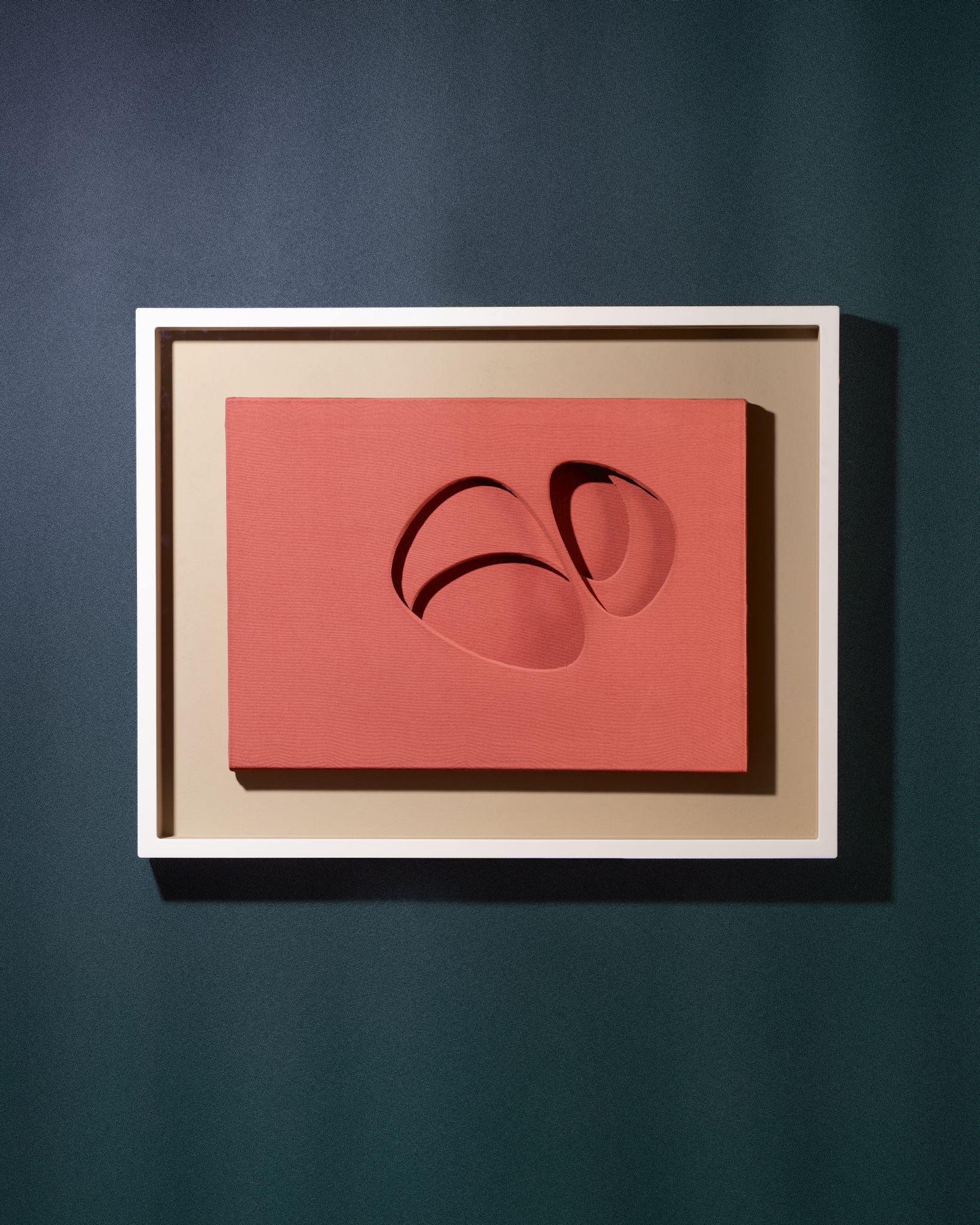
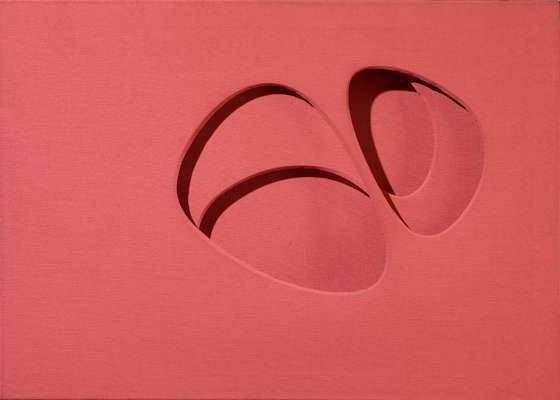
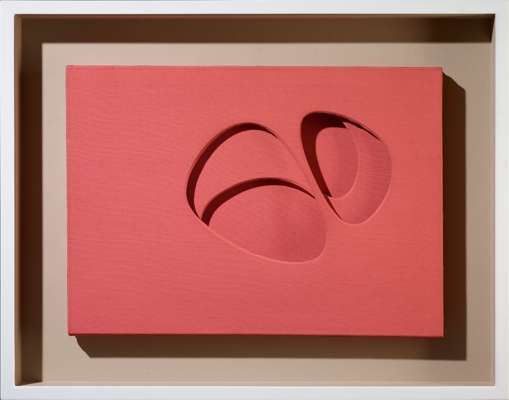
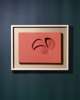
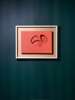
ZONE RIFLESSE, 1963
Auction: 30 October from 10:00 GMT
Description
signed, titled and dated (to reverse), acrylic on three superimposed canvases
Dimensions
50cm x 70cm x 5cm (19 ¾in x 27 ½in x 2in)
Provenance
Gianni and Mina Malabarba, Milan;
Galleria Il Cenobio, Milan;
Galleria Artesilva, Milan
Private Collection, Italy, by 2005;
Their sale, Sotheby’s Milan, Arte Moderna e Contemporanea, 20 May 2015, lot 5, where acquired by Hugo Burge;
Bequeathed by Hugo Burge to the Hugo Burge Foundation, 2023.
Footnote
Exhibited:
Galleria d’Arte Moderna, Bologna, Paolo Scheggi, October – November 1976, no.14;
Museo d’Arte dell’Otto e Novecento (MAON), Rende (Cosenza), Around Rotella: L’Artista e il suo tempo, 13 December 2008-18 January 2009.
Literature:
Barbero, Luca Massimo, Paolo Scheggi - Catalogue Raisonné, Skira, Milan, 2016, cat. no. 63 T 42 (illustrated).
This work is being sold by the Hugo Burge Foundation as part of its charitable aims to support the arts and crafts across the United Kingdom.
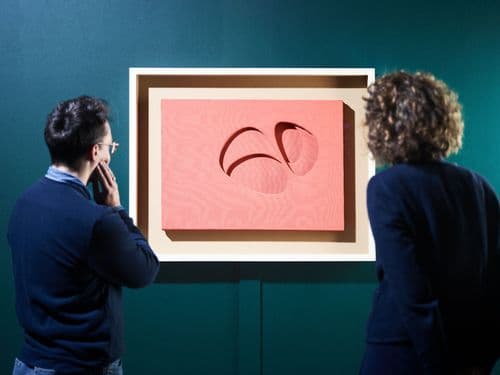
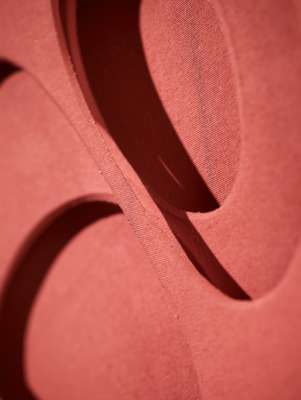
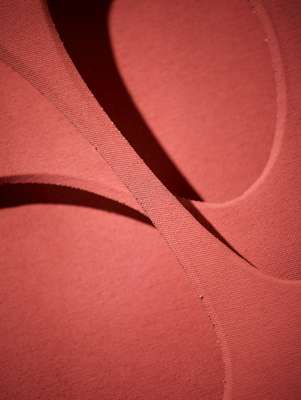
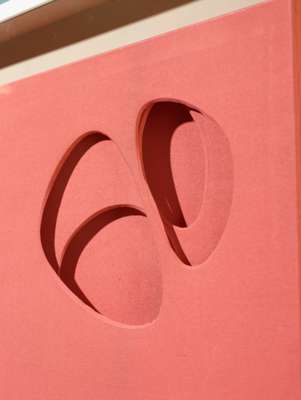
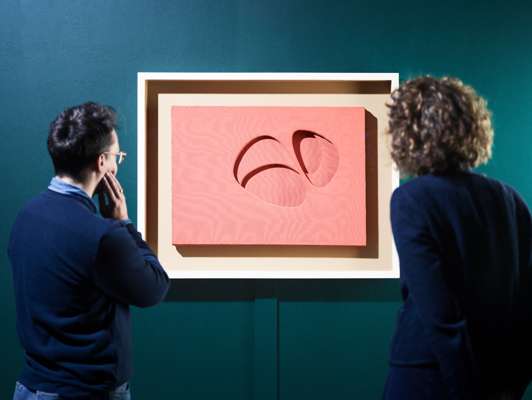
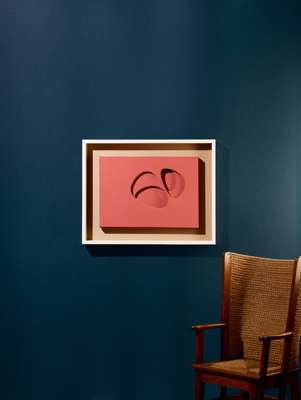
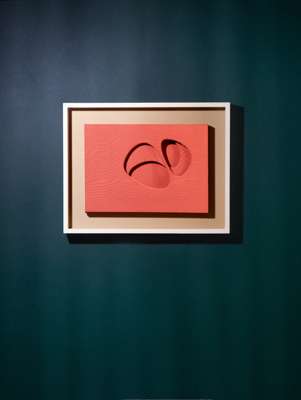
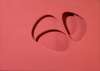
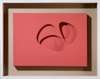
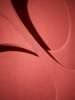
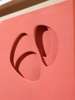
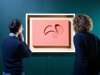
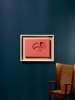
Zone Riflesse (Reflected Zones) comes from a celebrated series of that title created by Paolo Scheggi in the early the 1960s. Scheggi is recognised as one of the leaders of Spazialism (Spatialism) and the Italian neo-avant-garde of the period. The series consists of works which are as much sculptures as paintings and are constructed of three overlapping monochrome canvases into which irregular, elliptical or circular openings have been introduced. As the artist’s foundation has explained, Scheggi’s Intersuperfici (Intersurfaces), including Zone Riflesse, ‘are the matrix of a unique multidisciplinary research that in just ten years crossed all languages, from painting to architecture, from fashion to design, from poetry to theatre, and was analysed by the most important critics of the time, from Germano Celant to Carlo Belloli. ( ‘The Artist’, Associazione Paolo Scheggi website, accessed 8 September 2026).
Due to Scheggi’s premature death in Rome in 1971, at the age of thirty, his practice is not extensive and as a result his works are highly sought after by collectors. Born in Settignano in Tuscany in 1940, Scheggi trained at the Istituto Statale d'Arte (State Institute of Art) and the Accademia di Belle Arti (Academy of Fine Arts), both in Florence. A connection with London, unusual for his cohort, began when he was nineteen and moved to the city. As Hugo von Hoffmanstahl has explained: ‘it was here, not Paris – which remained a more common destination for young Italian artists in search of inspiration and rebellion – that Scheggi decided to reflect on the new ideas of the imminent cultural revolution.’ (Hugo von Hoffmanstahl, ‘Depth is hidden. Where? On the surface’, Paolo Scheggi: In Depth, Estorick Collection, London, 2019, unpaginated) He studied graphic design and researched the work of British artists, including Ben Nicholson’s reliefs whose spatial concerns and physicality can be seen informing the younger artist’s eventual oeuvre.
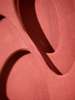
Initially working in metal sheet assemblages and collages, a move to Milan in 1961 resulted in Scheggi’s emergence as an artist of national importance. He attracted the attention of the master of modern Italian art, Lucio Fontana, the following year, who soon wrote to the Tuscan ‘I can only wish you a “happy” career and remind you to be humble, very humble, since in “time” we are “nothing”.’ (quoted by von Hoffmanstahl, op.cit.). Scheggi became a leading member of Milan’s art world and Zone Riflesse is a beautiful example of the ‘extraordinary poetic and formal coherence’ of the works he made between 1962 and 1964. (von Hoffmanstahl, ibid.). It inspires a rich viewer experience, starting with the particular pitch of the ‘rosa’ (pink) acrylic paint which vibrates on the colour spectrum somewhere between pink and orange. Shadows cast by the ovoids onto the multiple layers of canvas encourage close and lateral inspection, prompting a physical engagement with the work and the space within which it – and the viewer – exist together.
Professional momentum was built with Scheggi’s participation in landmark exhibitions such as 44 protagonisti della visualità strutturata (44 Protagonists of Structured Visuality) at the Lorenzellis Gallery in Milan in 1964 and by showing with the Zero and Nove Tendencjie (New Tendencies) groups. International stature came with the invitation to participate in the 33rdBiennale di Venezia (Venice Biennale) of 1966, followed by a solo exhibition at the Ewan Phillips Gallery in London that November.
Scheggi’s posthumous reputation has been secured with, for example, the publication of a catalogue raisonné in 2016, the Estorick Collection’s exhibition Paolo Scheggi: In Depth held in London in 2019 and the acquisition of Inter-ena-cubo of 1970 by the Tate in 2022 (acc.no.T15924). Zone Riflesse is being sold by the Hugo Burge Foundation as part of its charitable aims to support the arts and crafts across the United Kingdom.