Paolo Scheggi was an Italian artist associated with Spatialism and the neo-avant-garde of 1960s Milan. Best known for works such as his Zone Riflesse (Reflected Zones), Scheggi transformed the traditional flat surface of a painting through layers of overlapping canvas, openings and physical depth.
During his short career, Scheggi developed an international reputation, working across painting, sculpture and spatial experimentation and exhibiting at the Venice Biennale in 1966.
Who Was Paolo Scheggi?
Born in Settignano in Tuscany in 1940, Paolo Scheggi trained at the Istituto Statale d’Arte (State Institute of Art) and the Accademia di Belle Arti (Academy of Fine Arts), both in Florence.
A connection with London, unusual for his cohort, began when he was nineteen and moved to the city. He studied graphic design and researched the work of British artists, including Ben Nicholson’s reliefs, whose spatial concerns and physicality can be seen informing the younger artist’s eventual oeuvre.
Paolo Scheggi, Milan and Spatialism
A move to Milan in 1961 resulted in Scheggi’s emergence as an artist of national importance. Working within the experimental artistic environment of 1960s Milan, Scheggi became associated with Spatialism, the movement pioneered by Lucio Fontana that challenged the traditional boundaries between painting, sculpture and physical space.
Rather than treating the canvas simply as a surface on which to paint, Scheggi began constructing works in which the canvas itself became part of the composition.
What Is Paolo Scheggi’s Zone Riflesse?
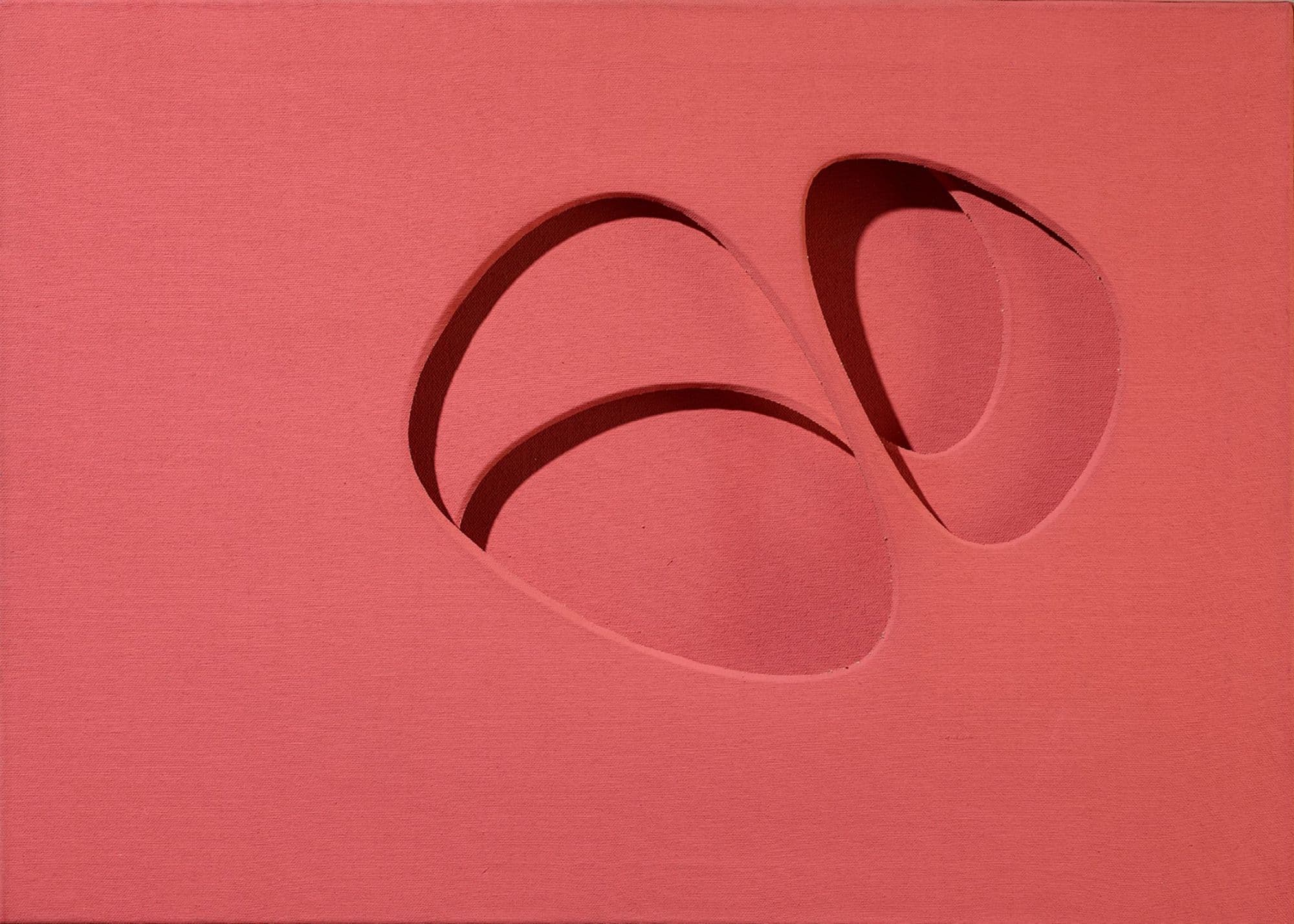
Zone Riflesse (Reflected Zones) is among the most celebrated series of Scheggi’s career. Created during the early 1960s, these works sit somewhere between painting and sculpture, constructed from overlapping monochrome canvases into which irregular, elliptical or circular openings are introduced.
Zone Riflesse, offered in our October 2026 MODERN MADE auction, is a beautiful example of what Hugo von Hofmannsthal described as the ‘extraordinary poetic and formal coherence’ of the works Scheggi made between 1962 and 1964.
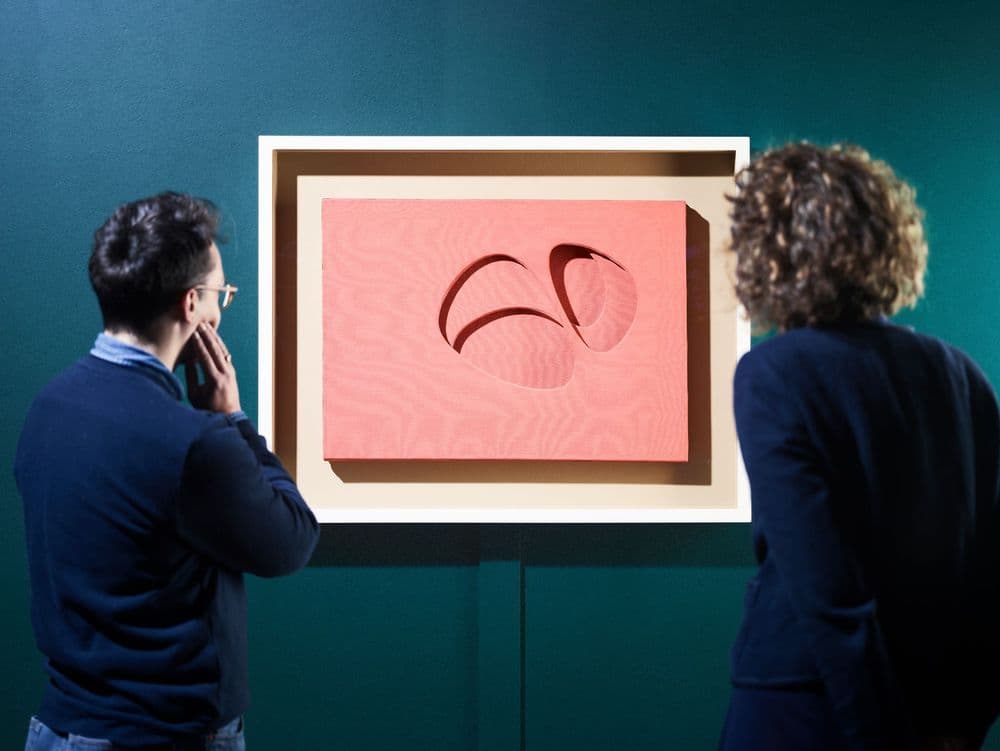
It inspires a rich viewer experience, starting with the particular pitch of the ‘rosa’ (pink) acrylic paint, which vibrates on the colour spectrum somewhere between pink and orange. Shadows cast by the ovoids onto the multiple layers of canvas encourage close and lateral inspection, prompting a physical engagement with the work and the space within which it, and the viewer, exist together.
How Did Paolo Scheggi Make His Paintings?
Works such as Zone Riflesse were constructed using multiple layers of canvas placed one behind another. Openings in the surfaces reveal the layers beneath, creating real rather than merely illusionistic depth. The shadows created within these openings change according to light and the position of the viewer. The result is a work that cannot be fully understood from a single viewpoint: moving around it becomes part of experiencing it.
This exploration of surface, depth and space places Scheggi firmly within the experimentation taking place in post-war Italian art.
Paolo Scheggi and Lucio Fontana
Scheggi’s work is closely associated with the ideas of Spatialism, pioneered by Lucio Fontana. Fontana famously disrupted the surface of the canvas through punctures and cuts. Scheggi developed a distinct approach to similar questions of space, using superimposed canvases and openings to create physical depth within the work itself.
Scheggi’s works therefore occupy an intriguing position between painting, sculpture and architecture: the surface is no longer simply something to look at, but something through which the viewer looks.
Paolo Scheggi at the Venice Biennale
Scheggi’s international reputation was secured by participation in the 33rd Biennale di Venezia (Venice Biennale) in 1966. His inclusion at the age of just twenty-six reflected the speed with which his work had become recognised within the Italian and international avant-garde. His career continued to encompass visual art, architecture, theatre and experimental spatial environments before his premature death in Rome in 1971, aged thirty.
Paolo Scheggi Art Auction Estimates and Valuations
The auction market for Paolo Scheggi encompasses works from across his short but highly productive career, with particular interest in the spatial works he developed during the 1960s. Factors considered when assessing a work can include its date, series, medium, dimensions, provenance, exhibition history, condition and relationship to other documented works by the artist.
If you own a work by Paolo Scheggi and are considering selling, Lyon & Turnbull’s specialists can provide a complimentary auction valuation and advice on its potential sale at auction.