Lot 112
BERNARD SCHOTTLANDER (BRITISH 1924-1999)
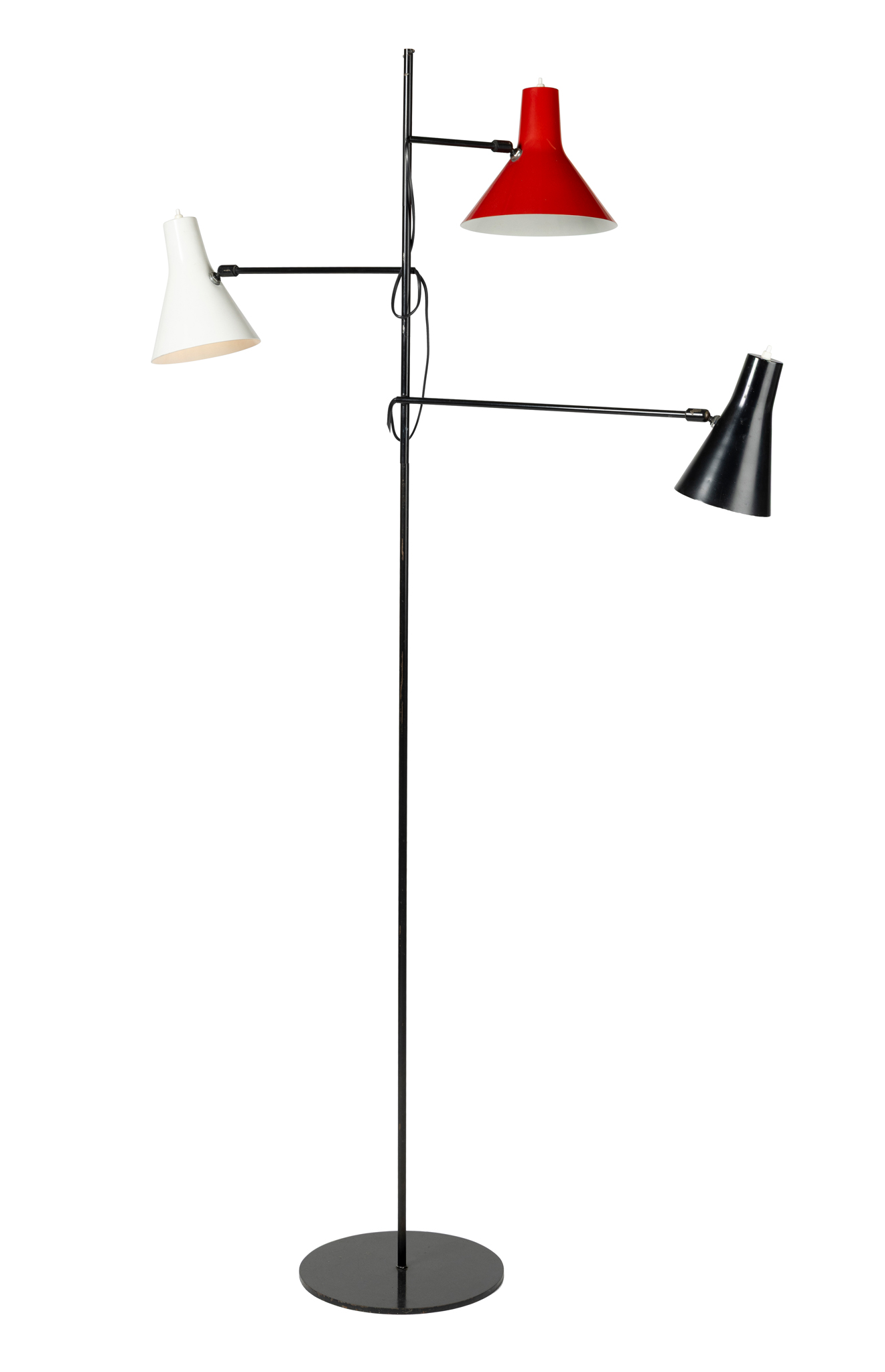
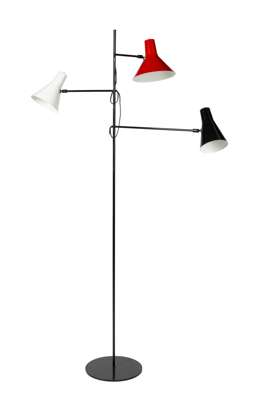
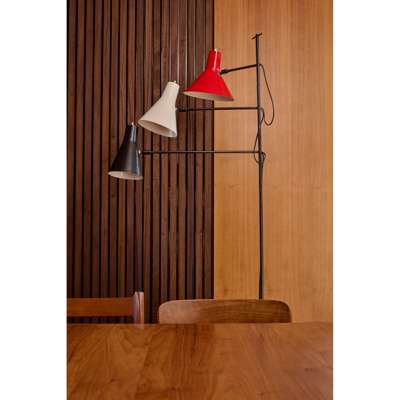
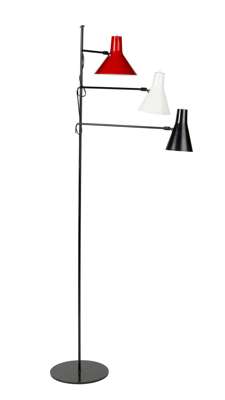
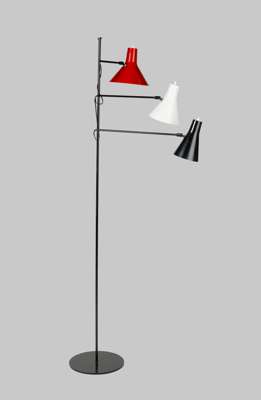
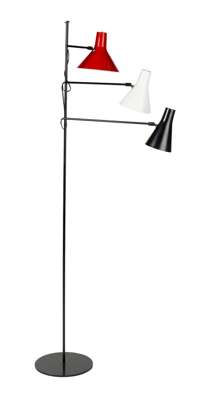
FLOOR LAMP, c.1957
Auction: MODERN MADE | Lots 1 - 422 | Fri 01 May at 10am
Description
painted aluminium and steel
Dimensions
178.5cm high, 70cm wide (70 ¼in high, 27 ½in wide)
Provenance
Target Gallery, London;
Private Collection, U.K.
Footnote
Although Bernard Schottlander is widely recognised for his large-scale sculptural works, his earliest creative achievements were in the field of lighting design. Born in Mainz, Germany, he emigrated to Britain in 1939, settling in Leeds after fleeing the political climate of his homeland. There he worked initially as a welder and undertook wartime service before enrolling at the Leeds College of Art to study sculpture. He later continued his training in London at the St John’s Wood Art Centre and the Central School of Art and Design, graduating in industrial design in 1951.
That same year Schottlander established a small workshop in Swiss Cottage, London, from which he began designing and fabricating lighting by hand. Working largely on his own, he produced a series of striking and inventive lamps that combined the precision of metalworking with the formal sensibility of sculpture. His early designs quickly attracted attention, and by 1952 they were prominently featured in an Architectural Review article highlighting innovative lighting being developed by contemporary British and European designers.
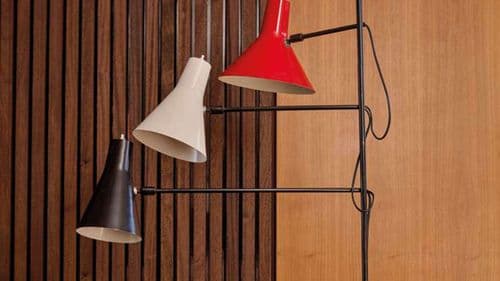
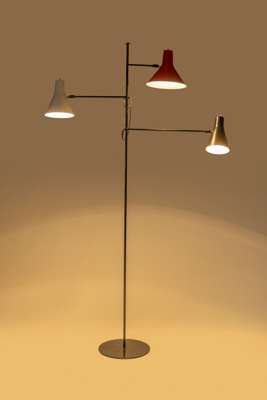
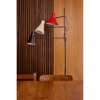
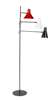
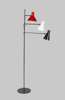
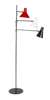
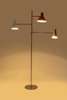
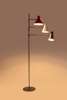
Schottlander’s early output included a number of distinctive multi-arm lamps produced in very small numbers, often assembled using carefully balanced metal frameworks and adjustable shades. The present example, likely dating from around the mid-1950s, demonstrates his characteristic approach. Rising from a slender vertical structure, three arms extend at varying heights and support coloured metal shades, each adjustable to direct light as required. The use of different coloured shades reflects the optimistic palette associated with post-war British design and recalls the aesthetic atmosphere of the Festival of Britain era.
The design exemplifies Schottlander’s interest in combining functional lighting with sculptural composition. The asymmetrical arrangement of arms and the interplay of colour and metal lend the lamp a strong architectural presence while retaining a sense of lightness and movement.
Although he continued to design lighting throughout the 1950s, Schottlander gradually shifted his focus toward sculpture. By the early 1960s he had devoted himself fully to large-scale works, eventually establishing an international reputation through public commissions and exhibitions. His dual practice as both designer and sculptor was later explored in the exhibition Indoors and Out: The Sculpture and Design of Bernard Schottlander, organised by the Henry Moore Foundation and held at Leeds Art Gallery in 2007–2008.