

Lot 80
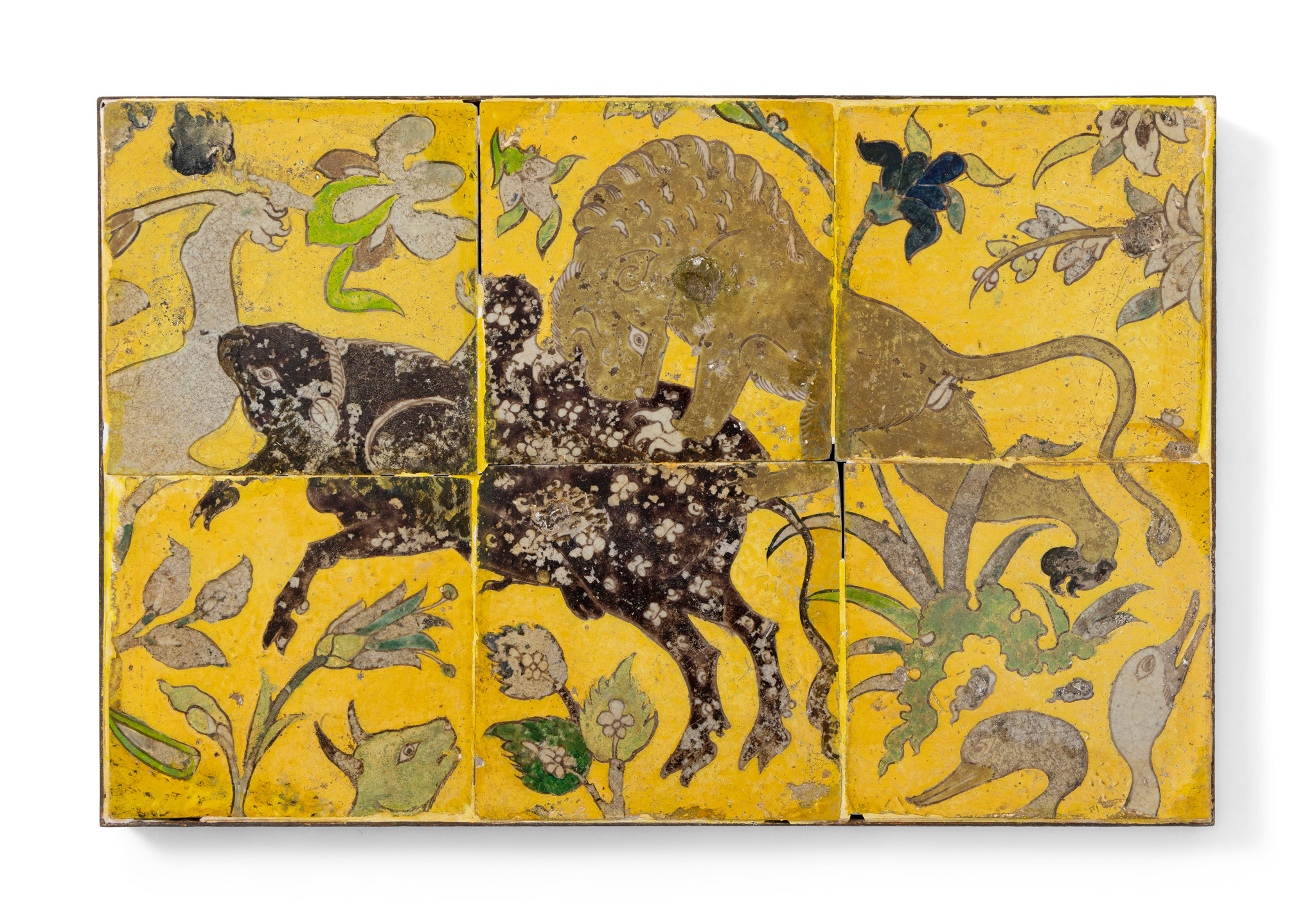
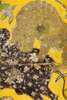
A RARE AND STRIKING MUGHAL CUERDA SECA POTTERY TILE PANEL
INDIA, LAHORE OR KASHMIR, 17TH CENTURY
Auction: 09 December 2026 from 14:00 GMT
Description
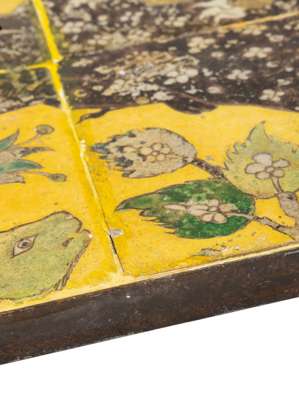
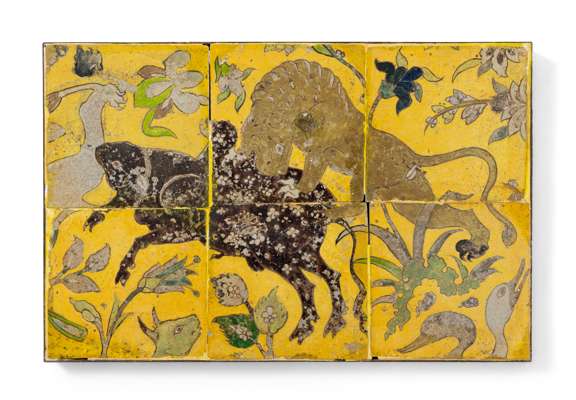
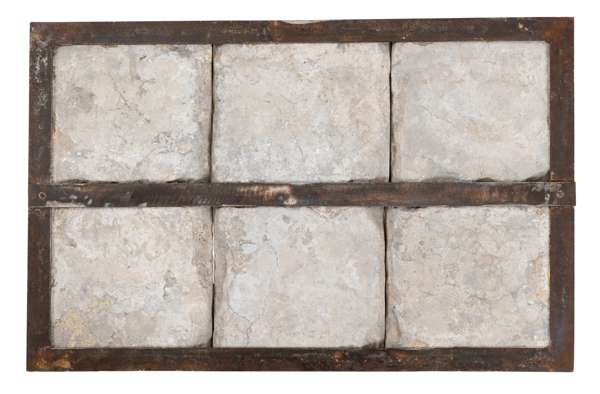
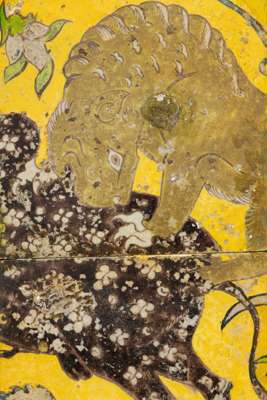
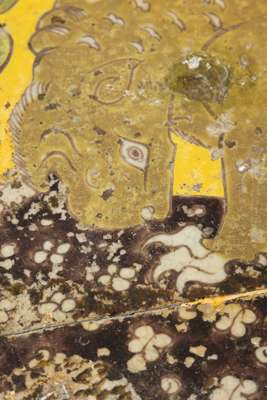
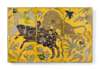
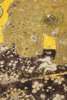
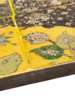
comprising six tiles decorated in the cuerda-seca technique, glazed in yellow, brown, manganese, different shades of green, white and dark blue, the scene depicting a bull mauling what appears to be a deer, in turn being mauled on the back by a fierce tiger, to the lower left a smaller animal's head peeps out from the foliage, in the lower right hand corner two long-necked cranes or geese are peering upwards, against a background of exotic vegetation, mounted and framed
Dimensions
44cm x 68cm
Provenance
By repute, formerly from an old French chateau since the 1860s; private Danish collection, since the 1970s.
Acquired through auction by the current owner.
Footnote
The panel depicts a classic and dramatic hunting scene set against a vibrant chrome-yellow glazed background with luscious vegetation. At its center, a powerful and fierce lion pounces onto the back of a dark bull covered in delicate white floral rosettes. The bull in turn appears to be mauling the neck of a white deer.
Mughal tiles are rare. This striking six-tile composite layout is an exceptional example of a Mughal cuerda-seca pottery tile panel dating to the mid-17th century, most likely produced in the imperial workshops at Lahore or Kashmir. The palette, with the yellow ground and manganese, blue, white and green floral designs, is similar to that found on tiles on the Mughal tomb of Madani at Srinagar in Kashmir, dating from circa 1640 (Susan Stronge, ‘The Tomb of Madani at Srinagar, Kashmir: A Case Study of Tile Revetments in the Reign of Shah Jahan’, in Ebba Koch (editor), The Mughal Empire from Jahangir to Shah Jahan, Marg Publications, vol. 70, nos 2 & 3, 2018, pp. 220-245. Other cuerda seca tiles with this palette are at the tomb of Asaf Khan at Shahdara in Lahore, circa 1645 (Arthur Millner, Indian Tiles, Prestel: Munich, 2021, p. 109, fig. 3-44). However, a tile with a yellow ground in the Victoria and Albert Museum, with two ibex on a yellow ground, has strong Persian characteristics, and may have been the work of Iranian craftsmen working in India (Victoria and Albert Museum, no. IS.1.1898; Robert Skelton et al, The Indian Heritage. Court Life and Arts under Mughal Rule, London: Victoria and Albert Museum, 1982, pp. 26-27, no. 6; Arthur Millner, Indian Tiles, Prestel: Munich, 2021, p. 112, fig. 3-48). It is possible that this tile panel may also be the work of Iranian craftsmen in Mughal India.