

Lot 65
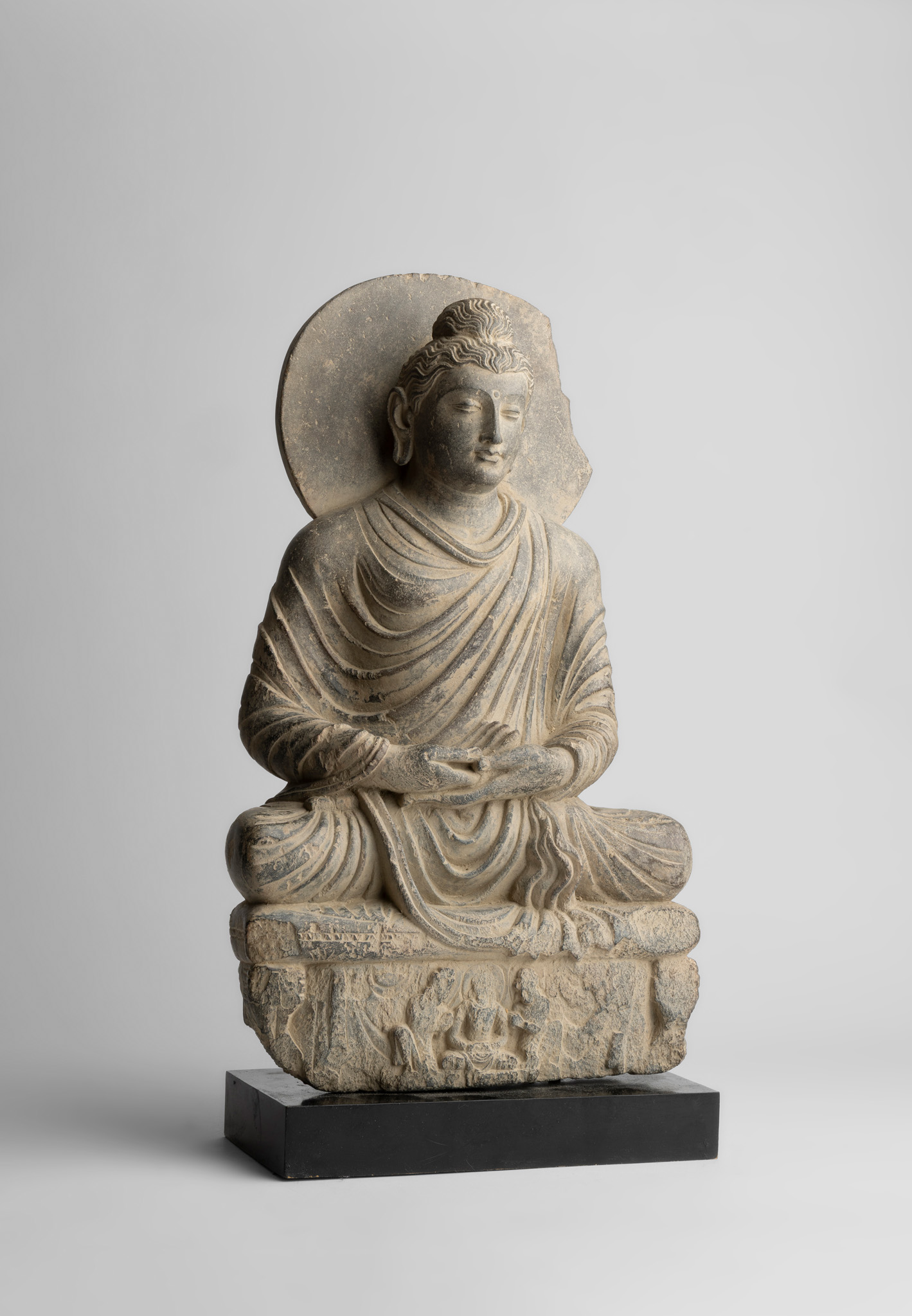
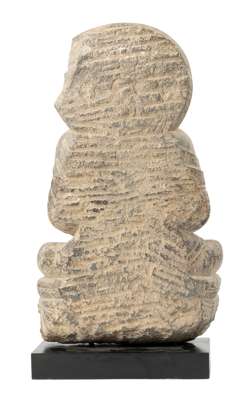
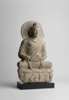
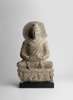
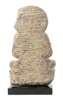
A GRAY SCHIST SEATED BUDDHA ‡
NORTHWESTERN INDIA, GANDHARA, 2ND/3RD CENTURY AD
Auction: 09 December 2026 from 14:00 GMT
Description
finely carved with hands in dhyanamudra, pair of heavy lidded eyes, centred by a raised urna, the wavy locks of hair tied up in a topknot, a voluminous robe draped across both shoulders with cascading folds of fabric, with a fragmentary halo, seated with legs crossed in vajraparyankasana on a cushioned pedestal draped with a throne cloth, a diminutive seated Buddha in meditation beneath flanked by devotees, mounted on stand
Dimensions
45cm x 26cm x 9.5cm
Provenance
Previously in an Important Private Collection, Japan, acquired prior to 1985 (by repute). Accompanied by Thai export licence.
Formerly Oriente Lux Limited, Hong Kong (piece stored in Europe).
Private Collection, Germany; acquired by the current owner in 2023.
Footnote
Gandhara
This piece represents a beautiful example of the Graeco-Buddhist style; such statues were commonly seen in the religious precincts of Gandhara, the birthplace of some of the most iconic and important works of Buddhist art.
Ancient Gandhara, nestled in the snowy speaks and lush valleys of the Hindu Kush, was a meeting place between East and West. The region’s strategic position encouraged successive waves of foreign invaders, whose cultures were aptly adopted and re-contextualised by the local population. This dynamic multiculturalism brought forth sculpture of incredible sophistication, melding the complex nontheistic world of Buddhism with the idealism of the Hellenistic art of the Greek settlers, who had been first lead into the region by Alexander the Great. This Indo-Greek population remained in contact with the Mediterranean world throughout antiquity, and through them the precepts of Buddhism became known to philosophers like Phyrro and Onesicritus, and even to early Church Fathers like Clement of Alexandria. This syncretic relationship also produced the first anthropomorphic depictions of the Buddha – who had previously been represented only in symbols, like the Bodhi tree or the empty chair – and so represents an important turning point in the history of Asian art, the impact of which would spread as far as Thailand and Japan.