

Lot 58
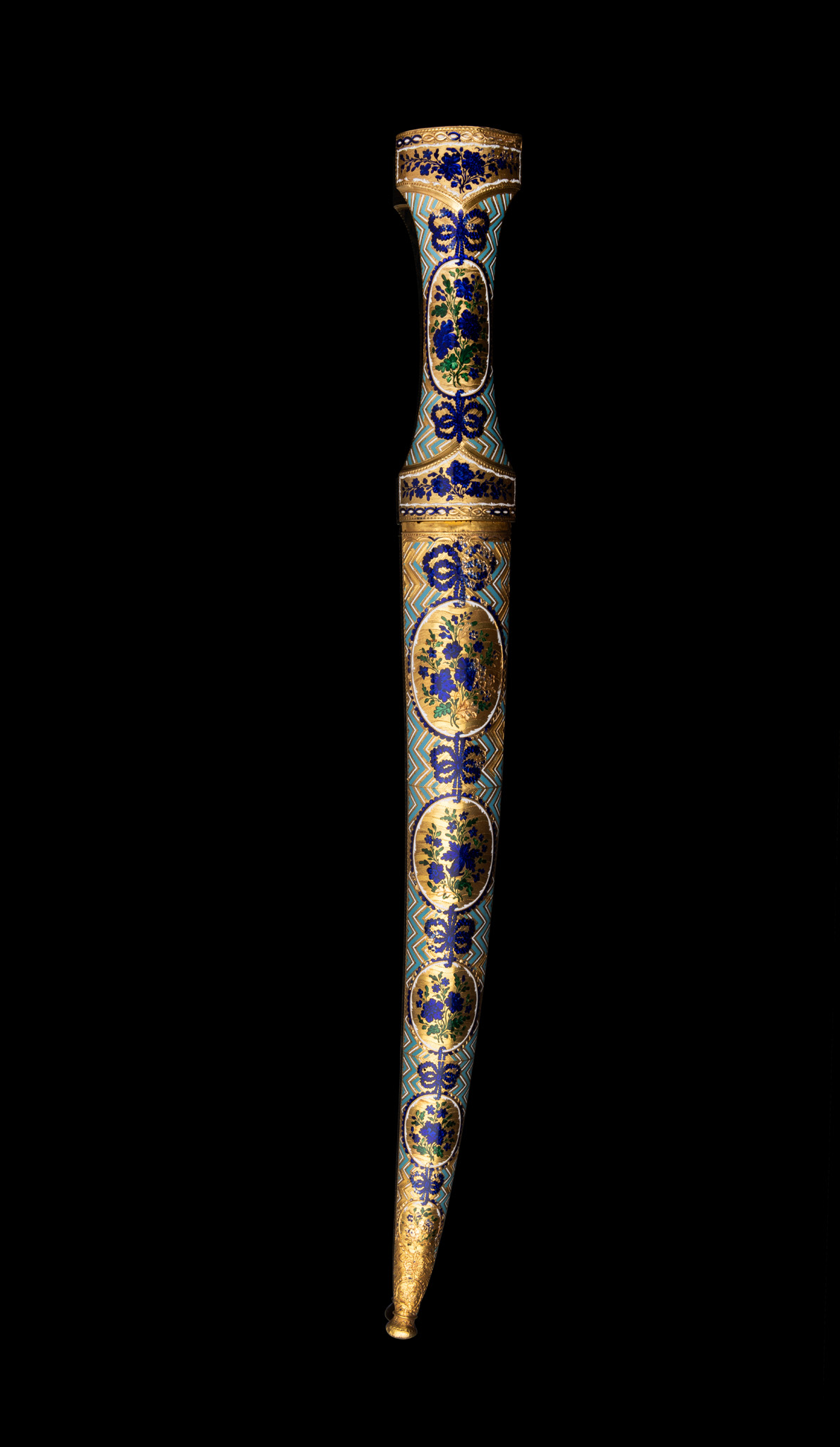
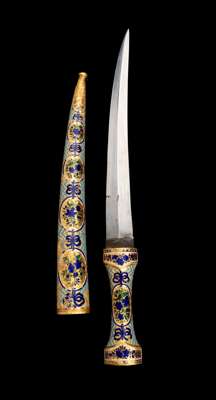
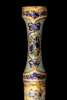
A RARE AND STRIKING ENAMELLED GOLD DAGGER
OTTOMAN TURKEY OR EUROPEAN MADE FOR THE OTTOMAN MARKET, LATE 18TH CENTURY

Auction: 09 December 2026 from 14:00 GMT
Description
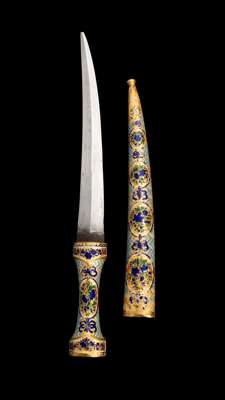
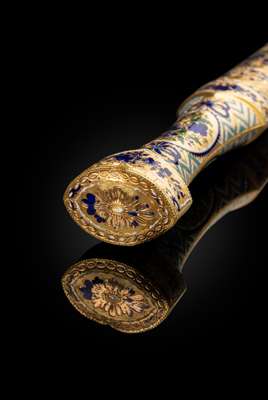
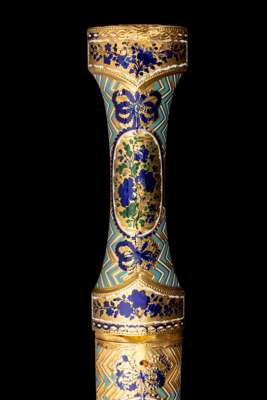
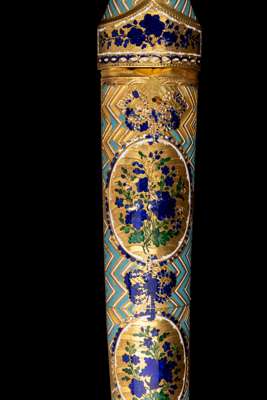
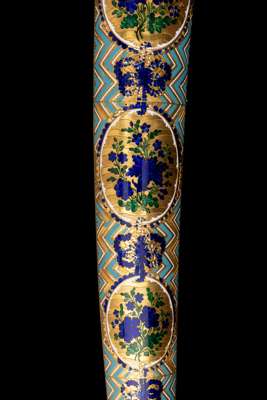
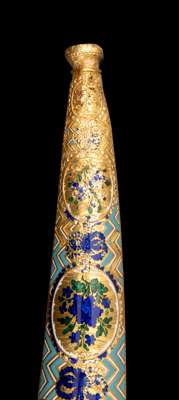
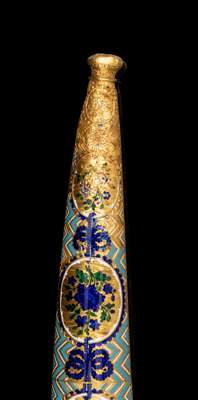
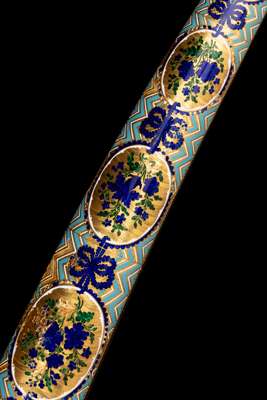
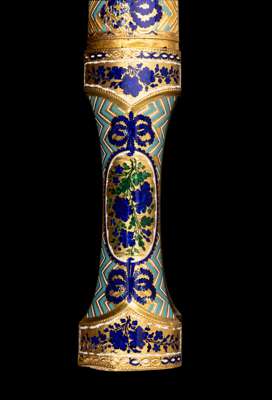
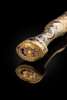
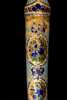
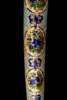
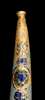
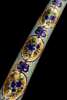
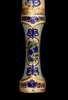
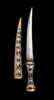
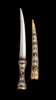
the steel blade of slightly curved, double-edged form, the grip and scabbard of sheet gold (22.8 carat) with a repeating chased design and basse-taille enamelled panels in translucent royal blue, opaque turquoise, opaque white, and transparent emerald green forming floral sprays in medallions joined by ribbons against a zigzag-patterned background, the scabbard formed of several sections joined with gold pegs
Dimensions
40.5cm long
Provenance
Formerly in a private UK collection.
Acquired by the current owner from Lennox Gallery in 1997.
Footnote
This opulent dagger and scabbard reflect the tastes of the Ottoman elite around 1800. It is a work of remarkable craftsmanship which highlights the links between Western Europe and the Ottoman Empire at the time, its hybrid decoration and technique suggesting either than it was made in Switzerland or France for export to the Istanbul market or alternatively by European craftsmen in the Ottoman capital.
The sheer quantity of gold used makes the ensemble quite remarkable as it was created using 22.8 carat gold. Not only is 22 carat gold considered to be the best quality for enamelling, but the material used here is of a much higher standard than European works of the same period, which tended to be 18 or 22 carats with the occasional use of 20.25 carat in France. Instead, this unusually pure metal (around 95.1% gold) is closest in makeup to Ottoman coins from the 18th and first half of the 19th century. These were 22.9 carat (95.6% gold) until the monetary reforms which took place in 1844 and reduced the gold to 22 carats (Hagen-Jahnke, U., and Walburg, R., Early Modern Gold Coins from the Deutsche Bundesbank Collection, Deutsche Bundesbank: 1985, p. XXIII).
The craftsmanship seen in the scabbard is extremely impressive. It was clearly made in several sections to fire the enamels separately and then joined together using small pegs. That the pieces fit together so neatly, and the design of the enamels remains continuous across separate pieces, is a testament to the skill of the craftsman. Although the Ottoman empire had a long history of producing fine enamelled weapons and other goods, the translucent blue is distinctively European and relates closely to the decoration of small boxes, such as a container for silk beauty spots now in the Khalili Collection (inv. no. FR 167) dated 1789-92 (Williams, H., Enamels of the World: 1700-2000, The Khalili Collections: 2009, p. 238 cat. 154). The combination of striking colour, extremely luxurious materials, and fine craftsmanship make this an unusually fine example of the jeweller’s art in the late Ottoman period as the influence of Europe became ever greater.