

Lot 57
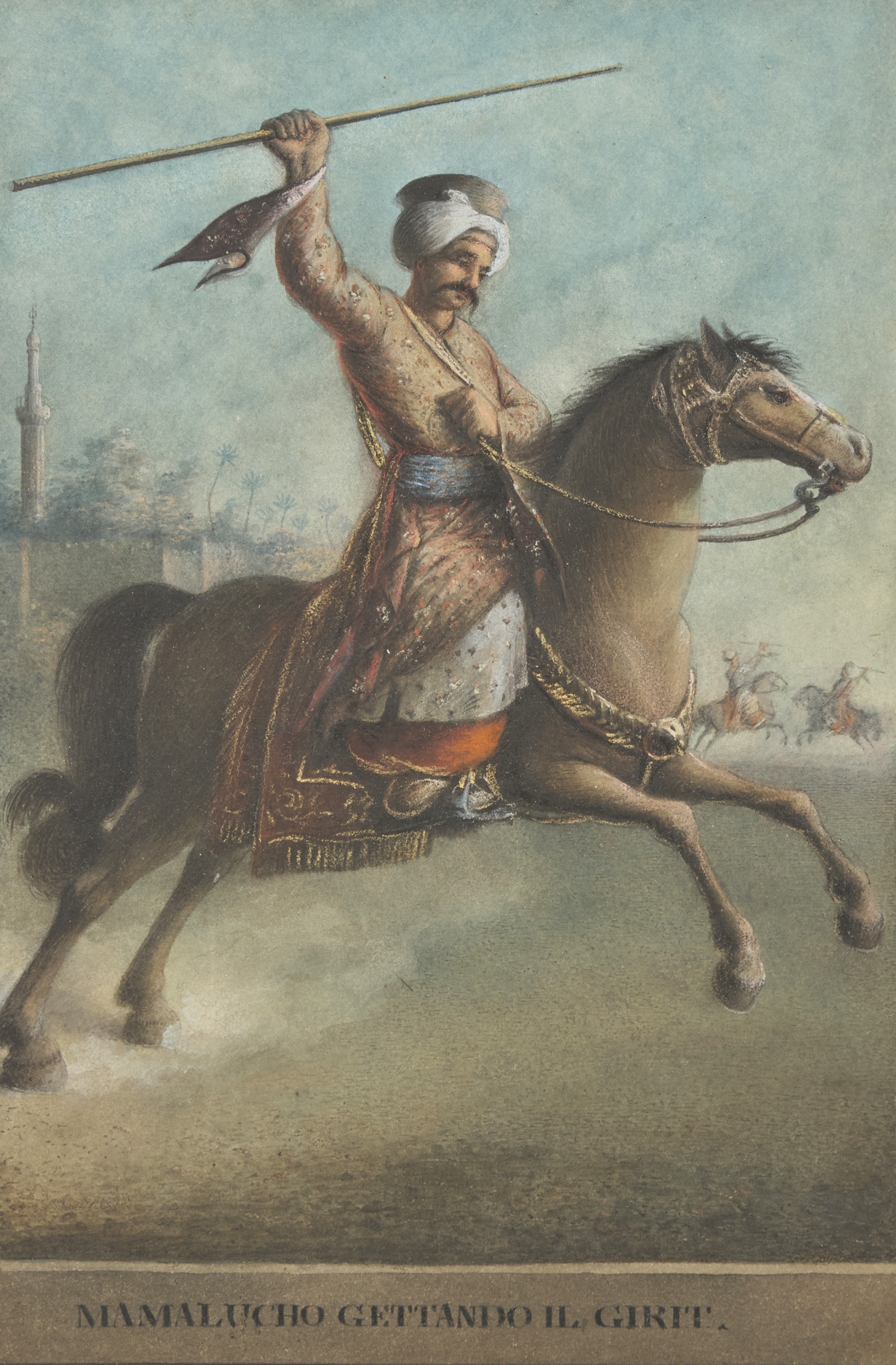
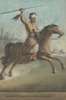
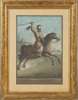
A MAMLUK HORSEMAN THROWING THE CIRIT
LUIGI MAYER (ITALIAN, 1755-1803)
Auction: 09 December 2026 from 14:00 GMT
Description
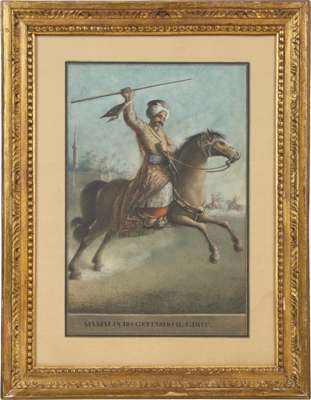
watercolour on paper, titled Mamalucho Gettando il Girit (Mamluk Throwing the Cirit) depicting a Mamluk on horseback, throwing his cirit, against the architectural backdrop of Murad Bey's Cairo Palace, mounted, glazed and framed
Dimensions
sight size 35cm x 23.4cm
Footnote
This original watercolour served as the basis for a hand-coloured aquatint plate published in Views in Egypt, the Original Drawings in the Possession of Sir Robert Ainsley, Taken during his Embassy to Constantinople (1801). The resulting aquatint is featured on page 7 of Fiona Barnard’s 2007 article, “Luigi Mayer, Views in Egypt, 1801,” published by the University of Reading Library Special Collections. This piece belongs to a broader collection of work by Luigi Mayer, whose detailed drawings offer essential visual documentation of Egypt and the eastern Mediterranean at the turn of the nineteenth century.
Cirit, also known as Jereed, is a traditional Turkish equestrian sport brought to Anatolia by Turkic nomads in the 11th century, which later spread to Egypt as a vital cavalry training exercise and festive game during the Mamluk and Ottoman eras. Played on a large open field between two teams of horsemen, riders score points by galloping toward the opposing team, throwing blunt wooden javelins at their rivals, and swiftly retreating while trying to evade being hit in return. In Egypt, this practice became a cornerstone of Mamluk furusiyya (martial horsemanship) and Ottoman military culture, widely performed by elite riders called cundis during public festivals and parades before modern military reforms caused it to fade from the region.