

Lot 12
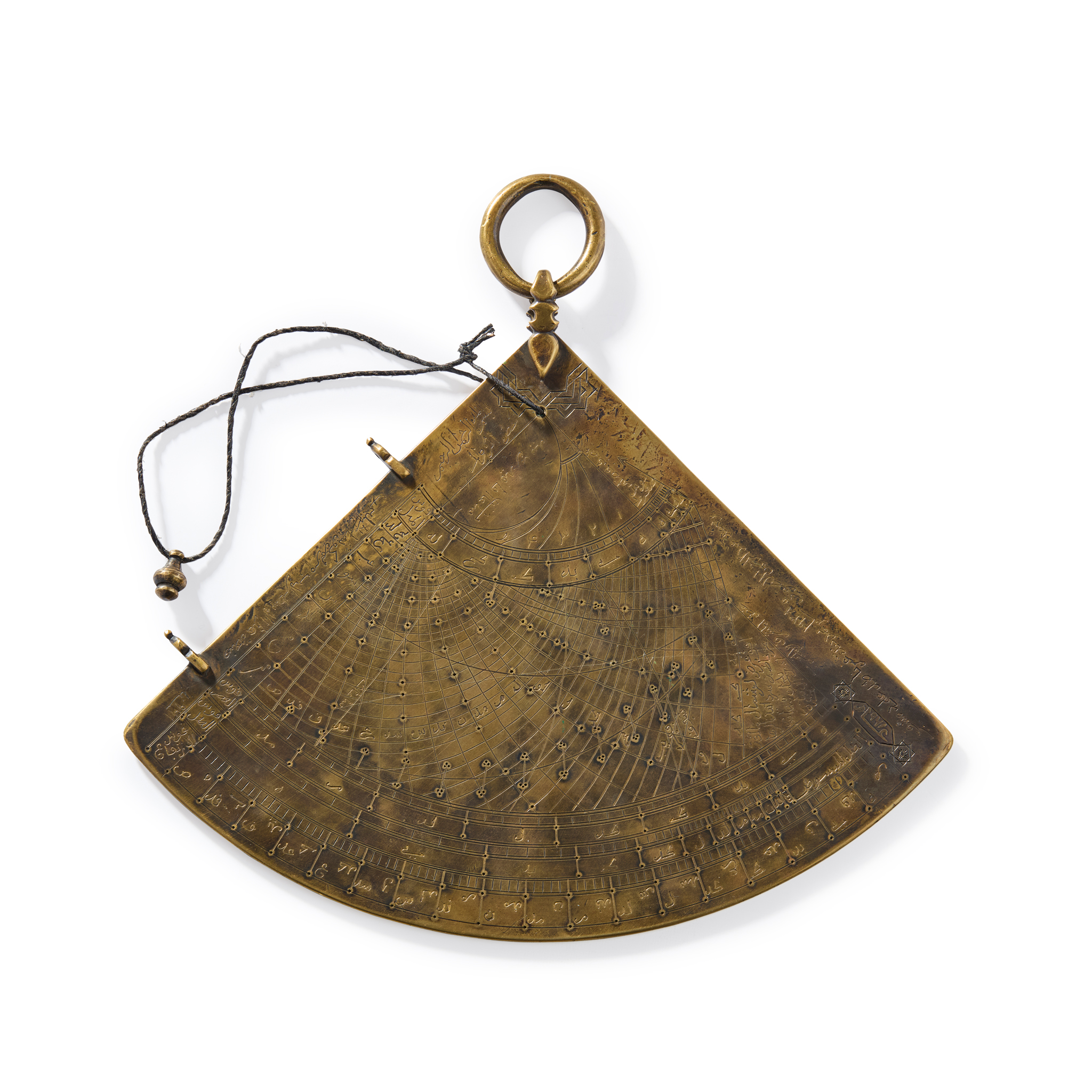
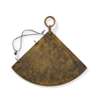
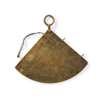
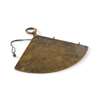
A MAGHRIBI BRASS ASTROLABIC QUADRANT
NORTH AFRICA, POSSIBLY DATED AH 961/AD 1533-34
Auction: 09 December 2026 from 14:00 GMT
Description
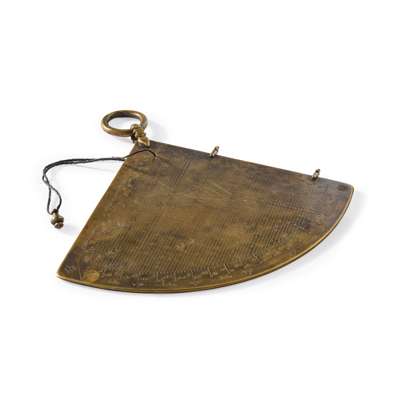
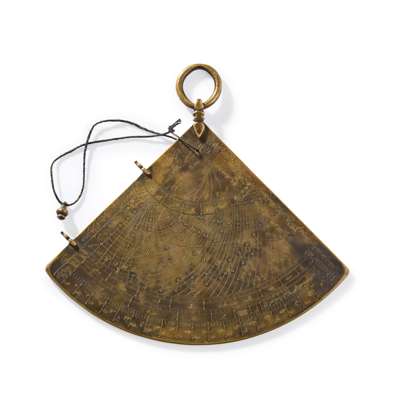
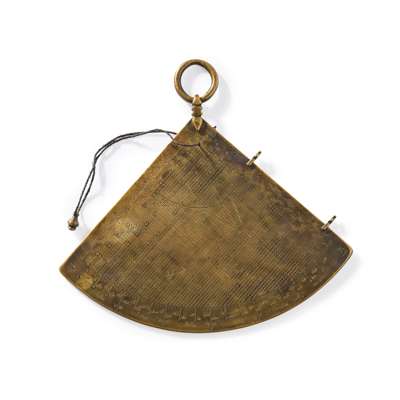
brass sheet, engraved on one side (A) with astrolabic projection, on the other (B) a trigonometric grid, various later inscribed ‘signatures’ and other information
Dimensions
17cm radius
Provenance
Private UK collection.
Footnote
This quadrant is something of an anomaly. While the body and the essential functions of the device appear to be of mid-16th century North African manufacture, there are a bewildering variety of names given on both sides which name famous astronomers and instrument-makers of some six centuries earlier. The Maghrib has a long and highly respected tradition of both astronomy and the manufacture of instruments for carrying out observations, including quadrants, and these tools for reading the skies were produced there into the 19th century (King, D.A., “On the history of astronomy in the medieval Maghrib”, in Abattouy, M. (ed.), Études d’histoire des sciences arabes, Fondation du Roi Abdul Aziz Al Saoud pour les Études islamiques et les Sciences humaines: 2007, esp. pp. 192-93).
The names given include some of the most celebrated individuals in the history of Islamic science, including the astrolabist Maryam al-‘Ijliyya (also known as ‘al-Asturlabiyya’, 10th century) and the scientist Abd al-Rahman al-Sufi (903-986), but their presence here matches neither the dates nor the geography mentioned elsewhere on this device. On side A, an inscription naming one Maryam al-Hushjar al-Majliyya (probably a garbled attempt at writing ‘Maryam al-‘Ijliyya’) says that she made the astrolabe in 961/1553-54, while another on the same side states that it was designed by al-Sufi in Granada in 938/1531-32; another inscription on the same side states that the device was made for use north of Malaga, in Granada, and in Sardinia. Two further inscriptions on side B again mention 961 as the date of production and given that this date is also found by itself on a cartouche on side A we can assume that this is the correct date of manufacture. It is highly unlikely that any Arabic-language scientific devices were being produced in Spain following the final conquest of Castile and Aragon over the Nasrids in 1492, let alone that they could be made by people who lived centuries earlier. It is much more likely that the inscriptions belong to a different period of European interest in Spain and its heritage.
A distinctively North African feature of the later inscriptions is the way the letters qaf and faa are written, with a single dot above the former and a single dot below the latter. This is a clear diagnostic of the maghribi hand and has been used in the region since as early as the tenth century (Safadi, Y.H., Islamic calligraphy, Thames and Hudson: 1978, p. 23). It is therefore highly likely that the ‘signatures’ and other elements were added during the 19th century, when foreign settlers, soldiers, administrators, and tourists were increasingly present in North Africa and would have sought such pieces as both working instruments and as curios. The repeated mentions of Granada and other cities of al-Andalus can perhaps be understood in the context of the European Romantic movement and its fascination with the lost Arab-Islamic culture of Spain. The American author Washington Irvin’s Tales of the Alhambra (published 1832) was a cornerstone of this interest and might have inspired the inscriptions seen here.