

Lot 11
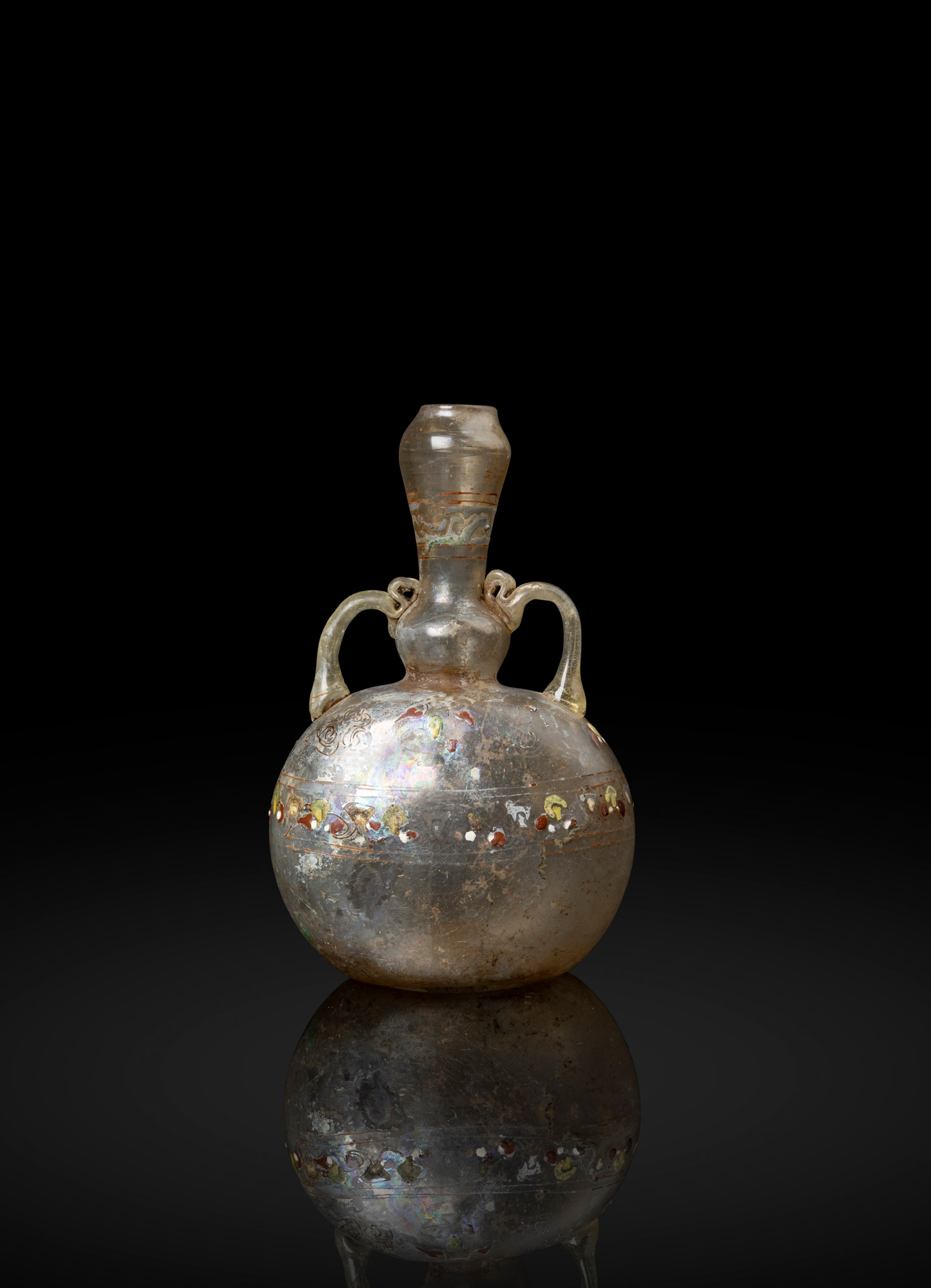
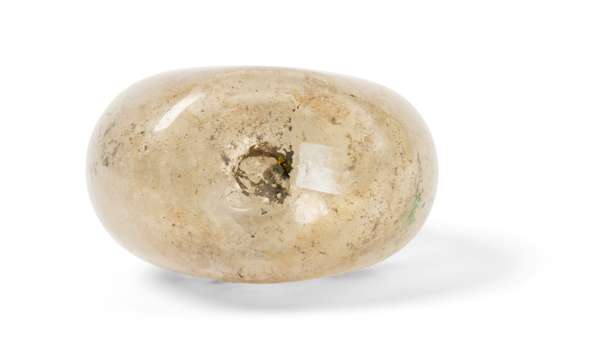
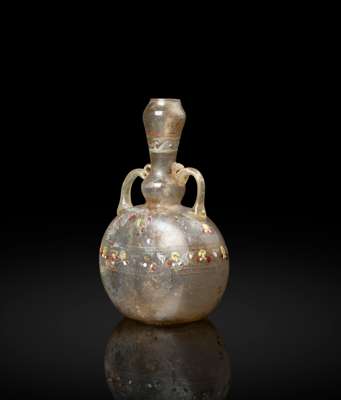
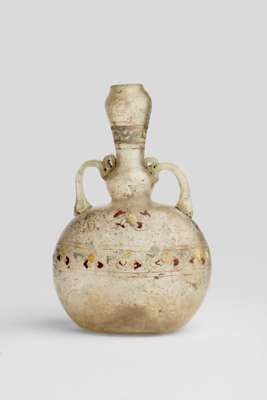
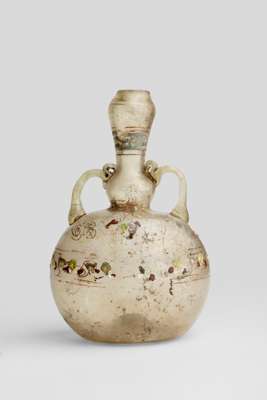
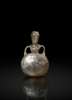
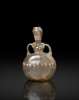
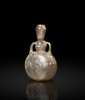
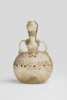
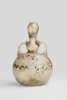
AN INTACT MAMLUK ENAMELLED GLASS PILGRIM'S FLASK
SYRIA, SECOND HALF OF 13TH/EARLY 14TH CENTURY
Auction: 09 December 2026 from 14:00 GMT
Description
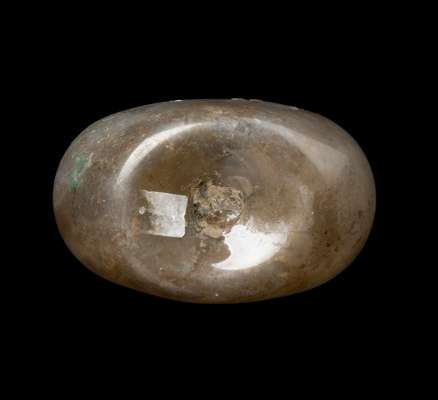
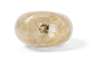
the body of globular form, the neck of double-bulbed shape at shoulder and mouth, two handles of applied glass, a band of vegetal scrolls in reserve on blue enamel around the neck, decorated with polychrome enamel around the body with vegetal arabesques and vine scrolls, traces of gilding all over
Dimensions
15.2cm high
Provenance
Formerly in a private UK collection since 1970.
Acquired by the current owner from Sotheby's, Arts of the Islamic World, London, 3 October 2012, lot 179.
Footnote
This handsome bottle relates to similar pieces in collections worldwide. The basic form, with a globular body, tapering neck, and small s-shaped applied handles, was commonly used for perfume sprinklers (Arabic qumqum) during the later Ayyubid and Mamluk period. A gilded and enamelled qumqum with a globular body in the Metropolitan Museum of Art (inv. no. 1974.120) bears the fesse blazon adopted by Sultan Lajin (r. 1297-99) and other emirs of the late 13th and early 14th century. Two related examples, but with slightly flattened bodies, are in the al-Sabah Collection (inv. nos. LNS 2 G and LNS 92 KG) and have been attributed to Syria c. 1260-80 (Carboni, S., Glass from Islamic Lands, Thames & Hudson: 2001, pp. 350-51 cats. 95a-b).
What sets this bottle apart from the otherwise quite common group of sprinklers is the unusual form of its neck and handles. These more closely resemble what have otherwise been referred to as ‘pilgrim flasks’, such as a remarkable example now in the Dom Museum Wien (inv. no. L-6) which was donated to the church by Duke Rudolf IV Habsburg in 1365. This was probably made in Syria during the third quarter of the 13th century, as it most likely entered into possession of the Habsburgs before the expulsion of the Crusaders from the Levant in 1291. Although the flask in Vienna is more heavily decorated, taller, and has a flatter body, it shares the same wide double-bulbed neck and elegant, almost Art Nouveau handles (Carboni, S., and Whitehouse, D., Glass of the Sultans, The Metropolitan Museum of Art, New York: 2001, pp. 249-52 cat. 124). Another bottle of similar form and decoration, but with a short straight neck, is the Musée des Beaux-Arts, Dijon (inv. no. CA T 995), where it is attributed to the 14th century (Labrusse, R. et al, Islamophilies: L'Europe moderne et les arts de l'Islam, Somogy éditions d'art: 2011, p. 321). Although much of the gilding which originally decorated the body of the present piece has now been rubbed away, the enamelled red outlines show that it was elaborately decorated when first made and would have been a truly luxurious object.