

Lot 114
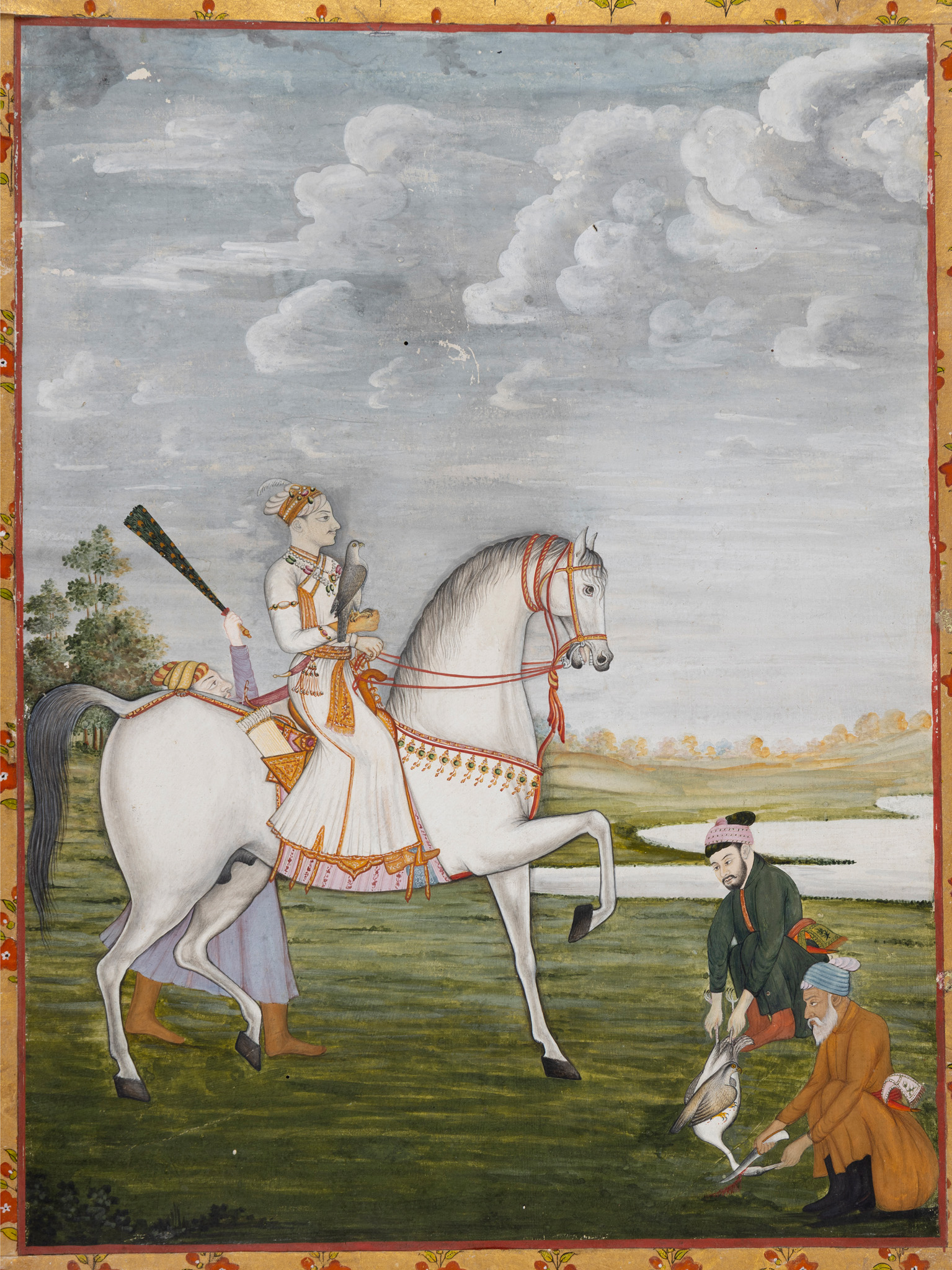
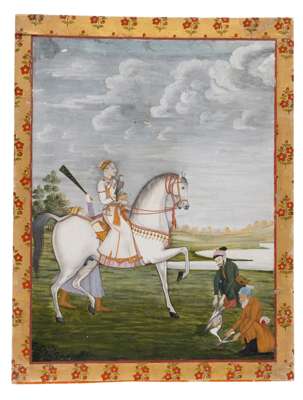
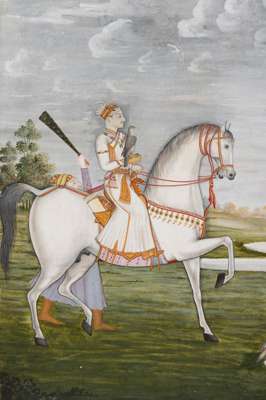
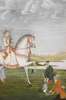
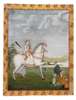
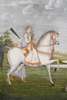
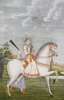
NAWAB ASHRAF KHAN ON HORSEBACK OUT HAWKING WITH HIS ATTENDANTS
INDIA, RAJASTHAN, KISHANGARH, CIRCA 1800
Auction: 09 December 2026 from 14:00 GMT
Description
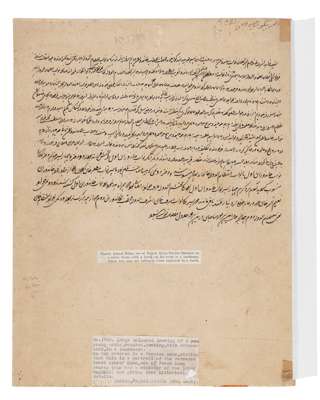
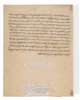
gouache on paper heightened in gold, Nawab Ashraf Khan on horseback out hunting cranes at a lakeside, the prince seated erect on a white stallion holding a falcon, dressed in white with a jewelled aigrette decorating his turban, an attendant walking alongside waving a morchal, shikaris seated in the foreground retrieving a bloodied crane, trees in a landscape in the background, dark clouds overhead, mounted on a later album page with gilt-decorated borders, nasta'liq and English texts on reverse naming Nawab Ashraf Khan, son of Nawab Khan Daulat Bahadur, mounted, glazed and framed
Dimensions
sight seen 34.5cm x 26.6cm
Provenance
Formerly, in the collection of Amy Alizer, New York, USA (according to a Sotheby's valuation letter dated to 13th April 1983); sold through Hammersite auctions, Decorative and Asian Art including an Important Damascene collection, 19 December 2017, lot 23082.
Footnote
This extraordinary painting is a highly detailed and realistic representation. A lot of attention has been given to the stormy clouds, landscape as well as the two attendants in the foreground who are handling the caught prey, on which the hunting bird stands proudly. Such attention to detail is common with Mughal paintings dating to the early 18th century. Kishingarh artists were highly influenced by paintings of the Mughal court. For a Mughal painting of a Prince out Hawking displaying the same amount of detail, see P. Pal et al, Pleasure Gardens of the Mind: Indian Paintings from the Jane Greenough Green Collection, LACMA, 1993, no. 46.
Hawking on horseback was an important aristocratic pastime during the Mughal Empire (1526–1857). More than simply a form of entertainment, it was associated with royal prestige, hunting traditions, military training, imperial authority and the relationship between the Mughal rulers and the natural world. Mughal emperors, particularly Akbar, Jahangir and Shah Jahan, took an interest in hunting with trained birds of prey, often combining falconry with horseback riding.