

Lot 113
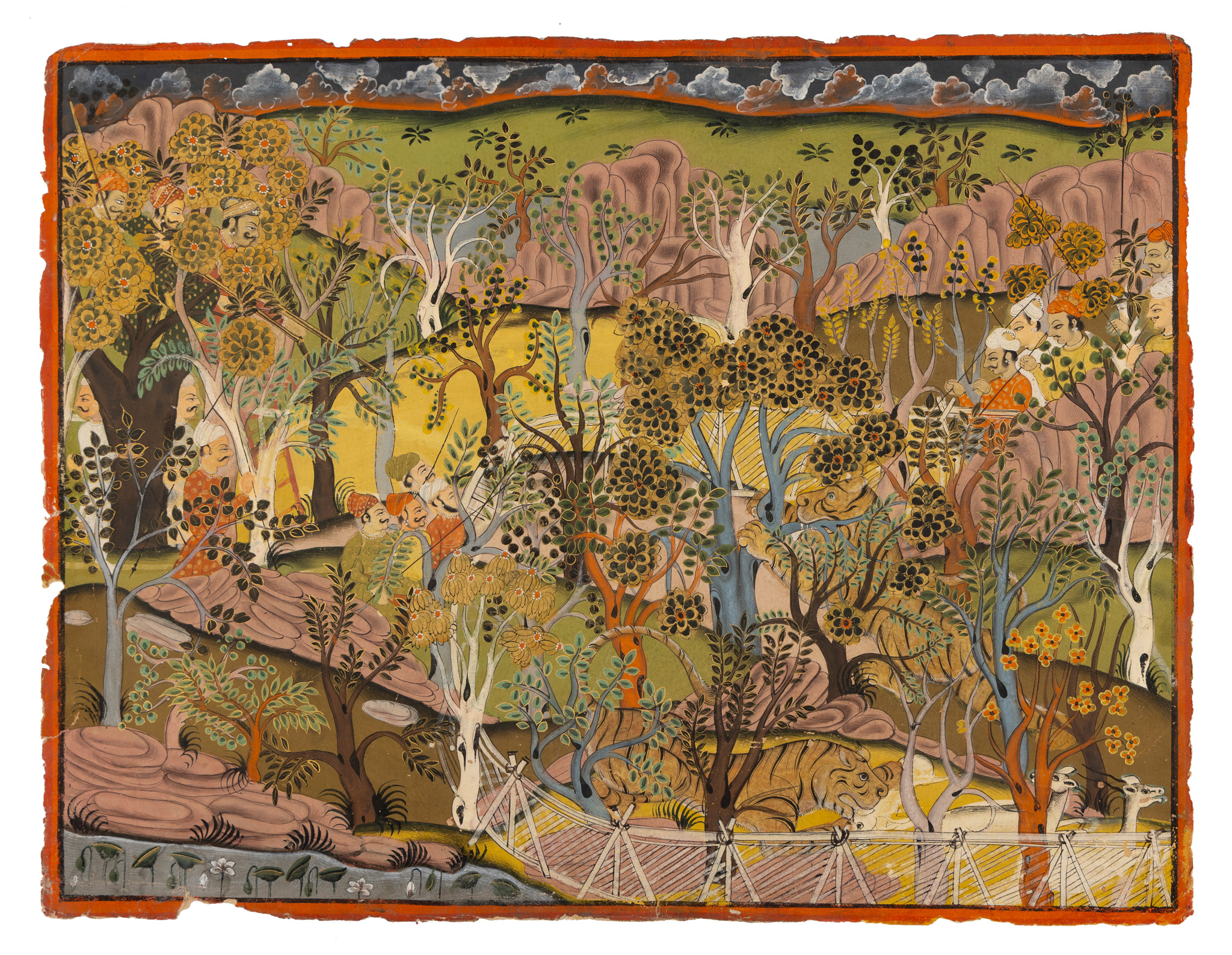
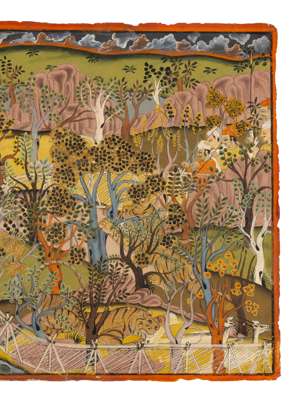
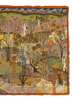
A TIGER HUNT WITHIN A LUSCIOUS FOREST HILLY LANDSCAPE
INDIA, RAJASTHAN, KOTAH, CIRCA 1850

Auction: 09 December 2026 from 14:00 GMT
Description
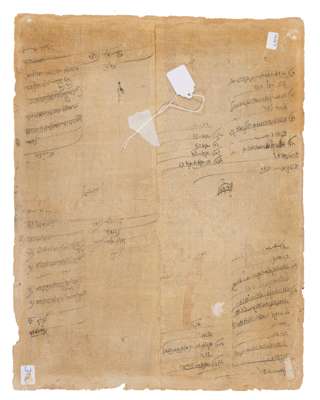
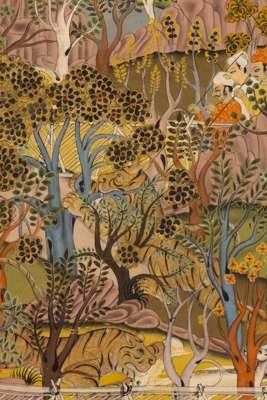
gouache and gold on paper, depicting two large tigers in the foreground within a white enclosure near a lake, one prowling behind two deer whilst the other appears startled behind, the luscious forest landscape outside the enclosure is teemed with hunting figures holding spears, the main party of hunters including the ruler, are camouflaged sitting up in a tree to the back left hand side waiting and holding guns pointing towards the tigers, another group of hunters are watching from behind rocks on the right hand side, the horizon with a line of moody dark clouds, within a red border with inner black line, verso with several lines of nagari script in black ink
Dimensions
42.5cm x 33cm
Footnote
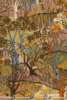
This superbly coloured and busy tiger hunt scene demonstrates immense creativity and fluidity by the artist. Each of the hills is painted in a different earthly colour in order to illustrate a certain depth of perspective, whilst some of the bushy trees are highlighted in gold to bring them forward within the painting. The figures are cleverly arranged within the landscape to appear to be hiding, whether behind the trees, rocks or hillsides.
Indian painting, particularly the Rajput painting traditions of Rajasthan, developed distinctive regional styles that combined the refinement of Mughal painting with the cultural and political ideals of the princely courts. Among the most remarkable examples are these tiger-hunt paintings of Kotah (Kota), which flourished during the eighteenth century under rulers such as Maharao Umed Singh (r. 1771–1819). These paintings transform the royal hunt, or shikar, into a dramatic spectacle of movement, danger and royal authority. Rather than placing the ruler at the centre of an ordered composition, Kotah artists often immersed the viewer in dense forests, tangled branches and rugged ravines, where tigers emerge from the undergrowth and hunters appear partially concealed within the landscape, such as in the case of this painting. The animals are depicted with extraordinary vitality, while the complex, panoramic compositions convey the unpredictability of the hunt and the ruler’s courage in confronting the natural world. These images were more than records of royal pastimes: they expressed ideals of kingship, martial prowess and the ruler’s ability to impose order upon a challenging environment.
For further discussion and comparison see, J.P. Losty, Indian Court Painting, Forge and Lynch Exhibition Catalogue, London, 2019, no. 20, and; P. Pal et al, Pleasure Gardens of the Mind: Indian Paintings from the Jane Greenough Green Collection, LACMA, 1993, no. 53.