

Lot 3
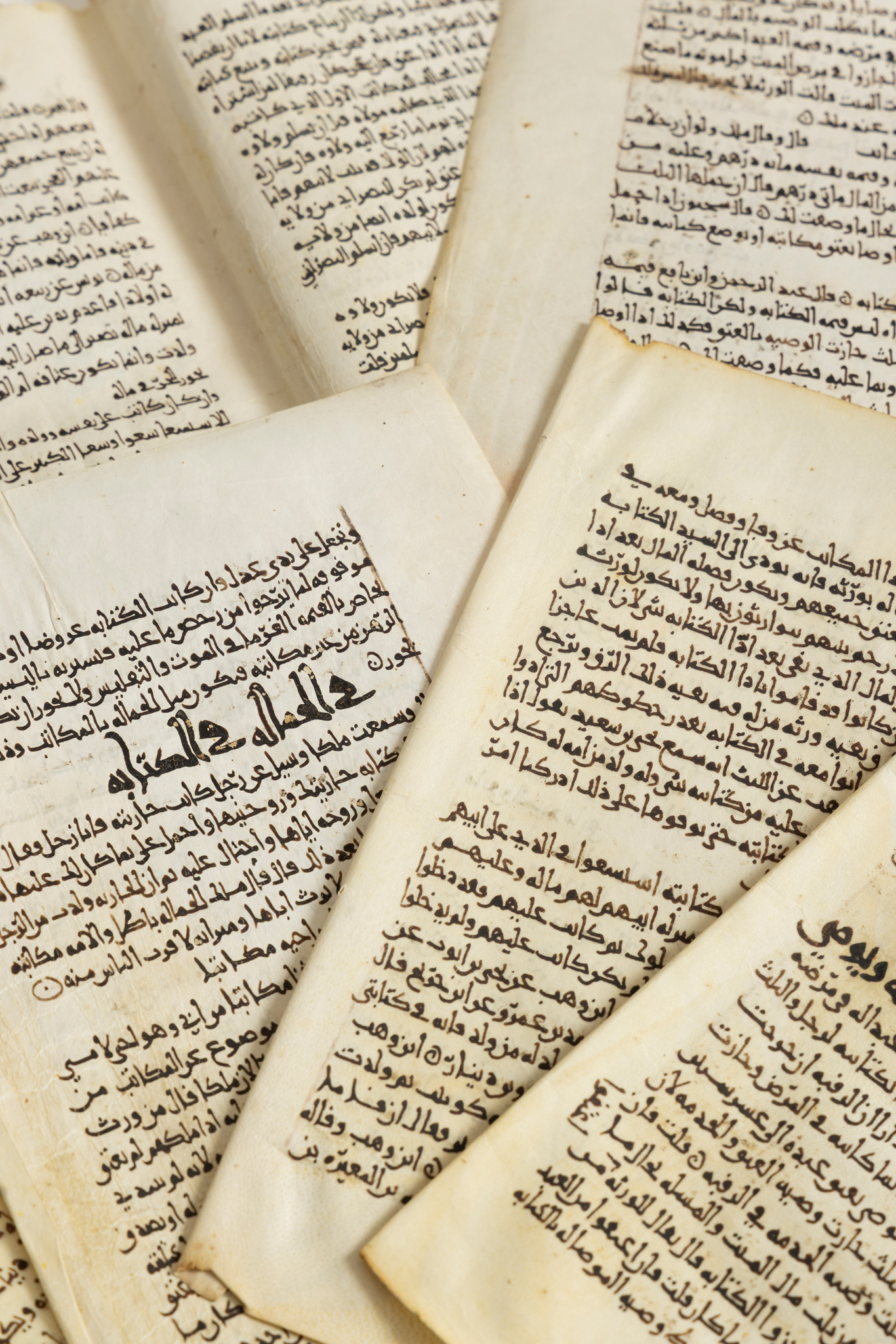
SAHNUN BIN SA’ID BIN HABIB AL-TANUKHI (D. 854 AD): KITAB AL-MUDAWWANA AL-KUBRA
NORTH AFRICA, PROBABLY TUNISIA, KAIROUAN, 11TH CENTURY

Auction: 10 June 2026 from 14:00 BST
Description
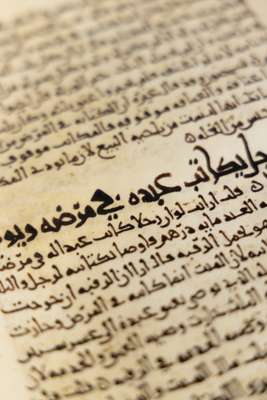
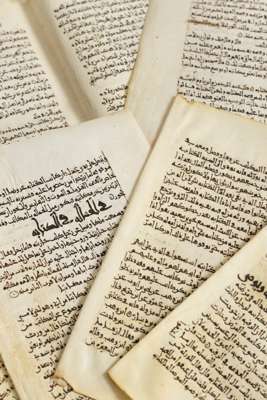
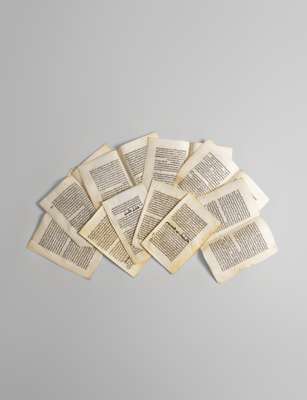
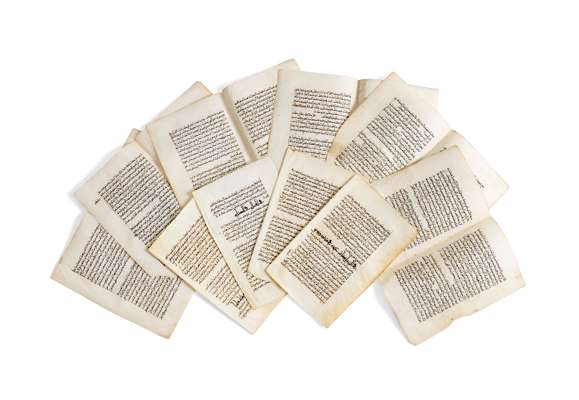
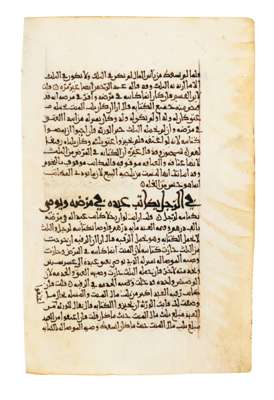
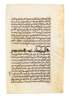
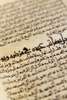
section of the first volume of the great compendium of law, Arabic manuscript on vellum, comprising 6 bifolium (sewn together) and 4 detached folios, totalling 16 folios, 25 lines to the page written in elegant maghribi or Ifriqi script in sepia ink, each folio arranged around a two-paragraph format, headings and important words written in larger script
Dimensions
single folio 29.3cm x 19cm
Provenance
Acquired from the London art market in circa 1995.
Footnote
The hand of the scribe is superbly controlled, elegant and measured, providing a beautiful visual as well as an important historical document. No doubt that it was copied for a learned and powerful patron. Ifriqi script, derived from the ‘New Style’ of Qur'anic calligraphy, is a distinctive scholarly script that was used and developed in Kairouan from 9th until the mid-11th century. Kairouan and its scholarly milieu played a decisive role in the intellectual history of the early Islamic Maghrib, particularly in the formation and transmission of foundational works of Maliki jurisprudence. As the capital of the province of Ifriqiya (approximately modern-day Tunisia), Kairouan was home to some of the most influential students of the Islamic west. As a definitive text of the Maliki school, the Mudawwana consists of legal opinions issued by ‘Abd al-Rahman b. al-Qasim al-Utaqi (d. 806 AD) in reply to questions from Sahnun al-Tanukhi (d. 240 AH/854 CE). These rulings derived from the foundational principles established by Malik b. Anas (d. 179 AH/795 CE), the founder of the Maliki school (madhhab) and ‘Abd al-Rahman’s mentor. Sahnun further enriched the work by appending prophetic traditions (hadith) to validate the expressed opinions. Comprising 16 parts subdivided into various books, the text’s doctrines were rapidly adopted in the Maghrib and the Iberian Peninsula, becoming the primary rite for the Andalusian Umayyads.
The libraries of the Kairouan have yielded the earliest dated Arabic literary manuscripts from the Islamic West, many of which concern Maliki law. The manuscripts typically survive as narrow, unbound parchment quires of varying quality, dated or datable from the mid-9th century to the 11th century, as with the present manuscript. There are several studies dedicated to these manuscripts which shed light both on the history of the Great Mosque of Kairouan as a centre of learning and on the development of Islamic jurisprudence in North Africa from its beginnings through to the 11th century. For these, please see M. Maruanyi and J. Brockopp, “Early Maliki Manuscripts: A Retrospective” in Asiatischen Studien - Études Asiatiques 78/1, 2024, pp. 3-17; and Bongianino, U., and Salah, C., “The Earliest Manuscript of Qairouan, 9th-11th centuries: New Approaches for a more Accurate Dating” in Arabica 71 (2024), pp. 247-303. Comparable examples can be found in the British Library (ms or. 9810 c) and the Great Mosque of Kairouan (ms Rutbi 424/2, ff. 1-2), and a Spanish copy of the Muwatta of Malik b. Anas dated 20 Dhu’l-Hijja 490 AH/8 December 1097 is in Zayed National Museum (inv. no. ZNM.2009.00038).
Sections from a manuscript of Kitab al-Mudawwana dated 1133 AD were sold in Christie’s', 25 April 1997, lot 41; 11 October 2005, lot 32 and 23 October 2007, lot 59. Another copy, attributed to 11th century Spain, was sold in Christie’s, 24 April, 2015, lot 247.