

Lot 21
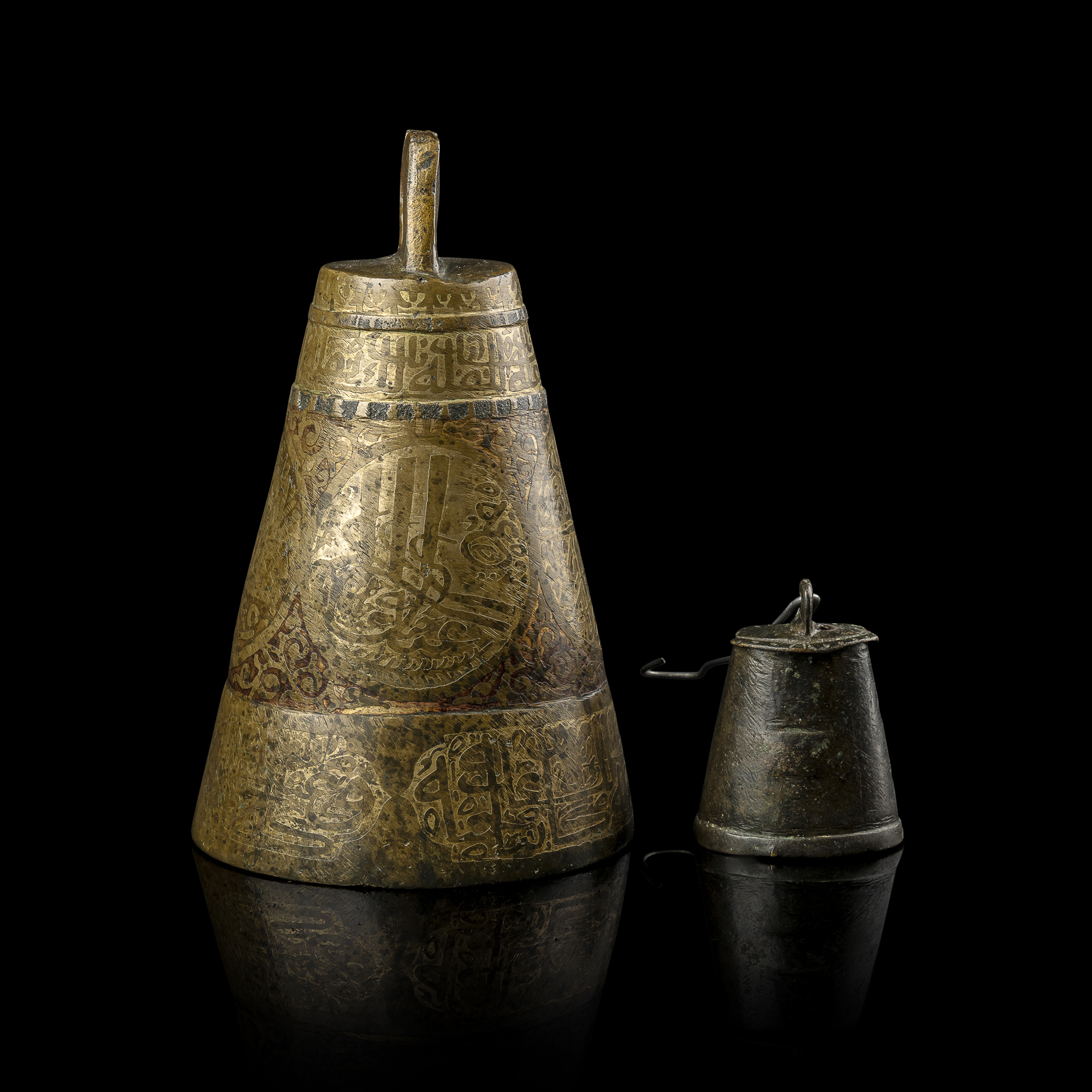
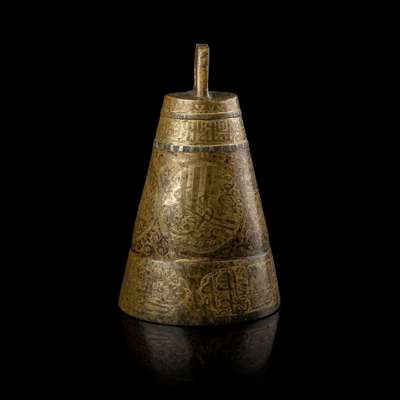
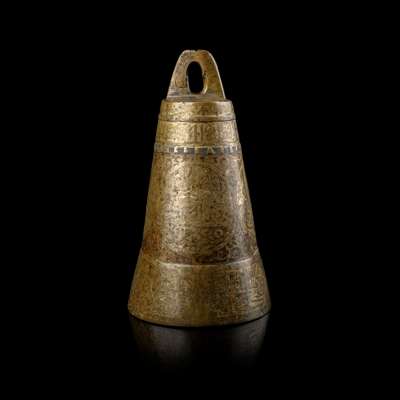
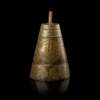
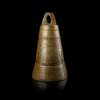
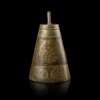
AN OTTOMAN ENAMELLED BRONZE HAJJ CAMEL BELL WITH TUGHRA
PROVINCIAL OTTOMAN, SYRIA OR EGYPT, DATED AH 1254/ AD 1829-30
Auction: 10 June 2026 from 14:00 BST
Description
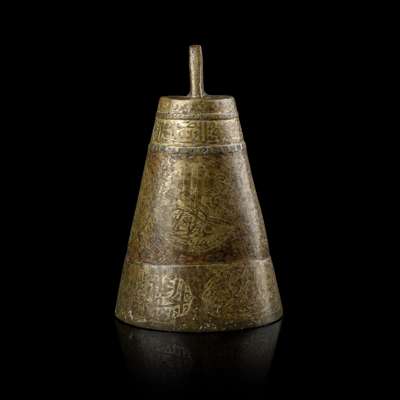
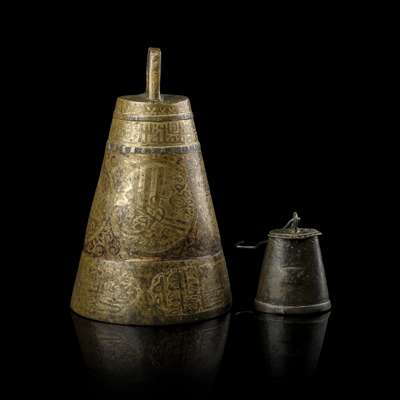
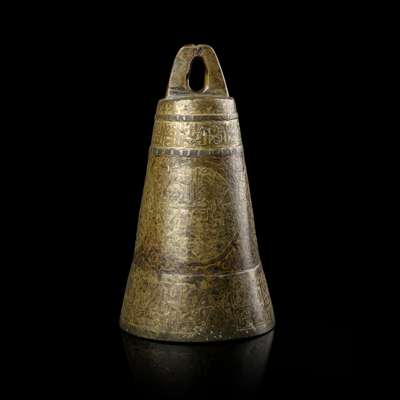
of conical form surmounted by a loop, engraved with bands of calligraphy, calligraphic medallions and cartouches, remnants of coloured enamels in black and red, with associated inner bronze plain gong
Dimensions
25cm high, 15.1cm diameter max.
Footnote
A particularly fine camel bell such as this would only have been used for important and highly visible occasions, the most obvious of which would be the Hajj procession. During the Ottoman era, the Surre Regiment was the official convoy tasked with delivering annual gifts and funds (the Surre-i Hümayun or ‘Imperial Purse’, from which the regiment took its name) from Istanbul to the holy cities of Mecca and Medina. At the heart of this magnificent caravan was the Mahmal, the sultan's personal offerings borne by a grandly decorated camel. The lead camels, particularly those bearing the Mahmal, were adorned with traditional ornaments including specialised camel bells. The rhythmic chiming of the bells maintained caravan discipline, signalling movement to the pilgrims and announcing the regiment's arrival to nearby towns. Their sound also heightened the ceremony's grandeur, echoing the collective longing and devotion for the Hijaz. Typically cast from brass or bronze, these bells were often engraved with intricate prayers, Ottoman motifs, or sacred verses, as seen here. The tughra here is difficult to read but there is a date of AH 1245, which corresponds to AD 1829/ 30, suggesting it would have been made during the reign of Sultan Mahmud II.
The use of camel bells on the Hajj can be seen across the centuries, shown in a manuscript of the Anis al-Hujjaj copied in late 17th century Gujarat now in the Khalili Collection (inv. no. MS 1025, see Porter, V. (ed.), Hajj: journey to the heart of Islam, The British Museum Press, 2012, p. 153 fig. 106) as well as a British print of 1882 showing the blessing of the Mahmal also in the Khalili Collection (inv. no. ARC.pt 101). This bell is therefore an important and rare example of the material culture of the pilgrimage and its sultanic patronage under the Ottoman Empire.